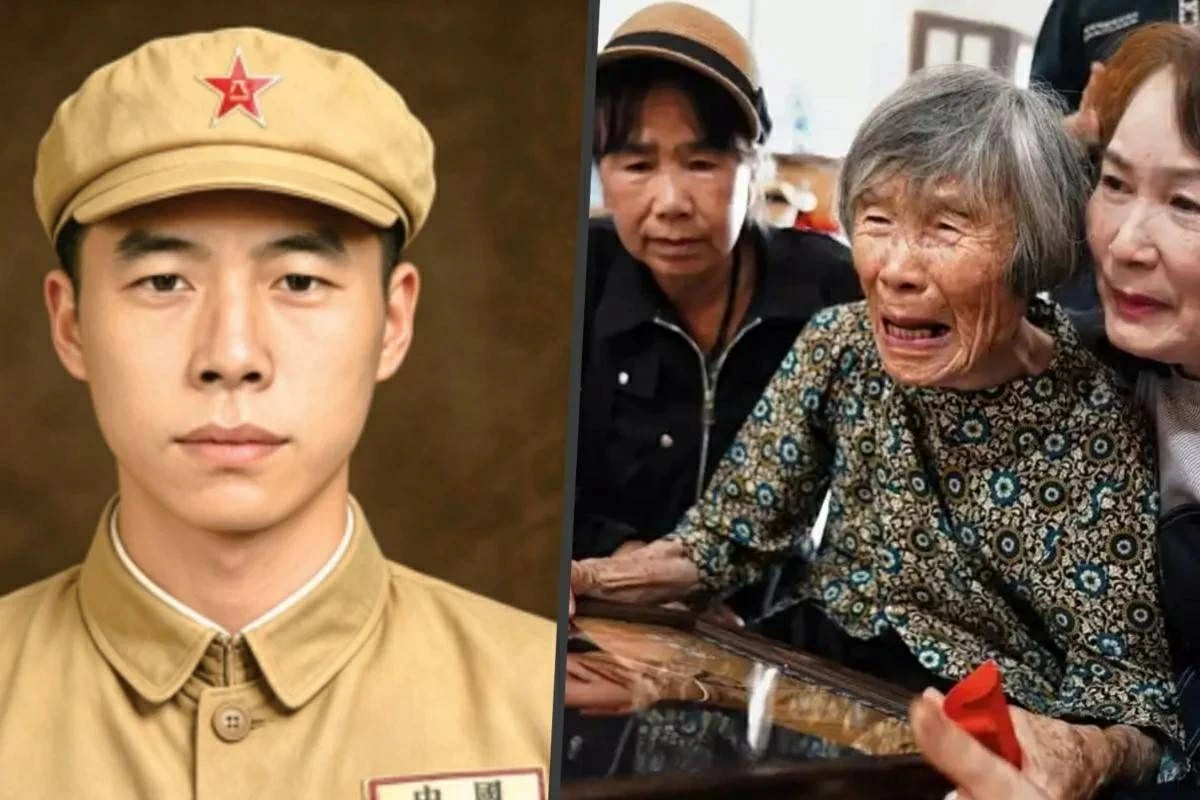
AI-powered photo restoration has allowed a woman to see a clear image of her late husband for the first time in 70 years, according to reports from Al Khaleej and other regional outlets. By using advanced generative AI tools to sharpen a blurred, decades-old photograph, the technology reconstructed facial details that had been lost to time and physical degradation.
The process involves deep learning algorithms that analyze existing pixels and fill in missing data based on patterns from millions of other human faces. This specific instance highlights a growing trend in “digital nostalgia,” where families use artificial intelligence to recover visual memories of ancestors or lost loved ones when no high-quality imagery exists.
This development reflects a broader shift in consumer AI application, moving from productivity tools to emotional and archival recovery. While the restoration provides significant emotional closure, it also raises technical questions about the accuracy of AI-generated likenesses and whether the software “creates” a face or truly “restores” one.
The Mechanics of AI Image Restoration
Modern photo restoration relies on a process called image inpainting and super-resolution. According to technical documentation from AI research labs, these systems use Generative Adversarial Networks (GANs) to identify noise, scratches, and blur in an old photo. The AI doesn’t just “clean” the image; it predicts what the missing pixels should look like by comparing the blurred areas to a vast database of high-resolution facial features.

In the case of the 70-year-old photograph, the AI likely employed a “face restoration” model. These models are specifically trained to recognize the geometry of human eyes, noses, and mouths. When the software encounters a smudge or a fade, it replaces those areas with a reconstructed version that maintains the original’s structural proportions while adding synthetic clarity. This allows a person who may have only seen a grainy silhouette for seven decades to see a defined expression and gaze.
The result is a high-definition image that looks as if it were taken with a modern camera, despite the original source being a physical print from the mid-20th century. This capability is now accessible through various consumer apps and professional services, making the recovery of ancestral imagery a scalable possibility for millions of people worldwide.
Emotional Impact and the Ethics of Synthetic Memory
The ability to see a spouse’s face after 70 years introduces a complex intersection of grief and technology. For the woman in this account, the restoration served as a bridge to a lost past, providing a visual confirmation of a memory that had faded or remained blurred. This “visual closure” is a primary driver for the adoption of AI in genealogy and family history projects.
However, computer science experts note a critical distinction between a “restored” photo and a “generated” one. Because GANs predict features, there is a possibility that the AI introduces traits the person did not actually possess. If the original photo is too blurred, the AI may “hallucinate” a specific shape of a nose or a curve of a lip based on its training data rather than the actual person’s biology. This means the image is a highly educated guess—a synthetic approximation of a human being.
This creates a paradox: the image is emotionally authentic to the viewer, but technically approximate. For many, the emotional value of seeing a clear face outweighs the mathematical uncertainty of the pixel reconstruction. The technology transforms a static, decaying piece of paper into a dynamic, clear representation of a human life.
The Rise of Digital Archiving and AI Genealogy
This incident is part of a larger movement in the tech industry toward “AI Genealogy.” Companies are now integrating AI not just to colorize black-and-white photos, but to animate them and restore them to a state of near-perfection. This allows descendants to interact with their family history in ways that were previously impossible.
The impact extends beyond individual sentiment. Museums and national archives are utilizing similar AI tools to restore historical figures whose only remaining images are damaged. By applying these algorithms to public records, historians can create more accurate visual representations of the past, though they must carefully document which parts of the image are original and which are AI-interpolated to maintain historical integrity.
As these tools become more sophisticated, the barrier to entry for high-end restoration is dropping. What once required hours of manual retouching by a professional artist can now be achieved in seconds via a cloud-based server. This democratization of restoration is turning private family albums into high-fidelity digital archives.
Comparing Traditional Restoration vs. AI Reconstruction
To understand the difference between the old way of saving photos and the new AI-driven method, it is helpful to look at the technical approach:

| Feature | Traditional Manual Restoration | AI-Powered Restoration |
|---|---|---|
| Method | Physical cleaning and manual digital painting. | Algorithmic prediction and pixel synthesis. |
| Accuracy | High fidelity to the original (only removes damage). | Variable; may “invent” details to fill gaps. |
| Timeframe | Days or weeks of expert labor. | Seconds to minutes of processing. |
| Result | Cleaned version of the original blur. | High-definition, reconstructed likeness. |
While traditional restoration preserves the “truth” of the original image’s state, AI restoration prioritizes the “visibility” of the subject. For a woman waiting 70 years to see her husband’s face, visibility is the primary objective.
As AI models continue to evolve, the next step is likely the integration of multiple low-quality sources—such as several blurry photos of the same person—to create a “composite” restoration that is mathematically more accurate than a single-image reconstruction. This would reduce the risk of AI hallucination and increase the biological accuracy of the final image.
The intersection of technology and human emotion continues to evolve as these tools move from the laboratory into the hands of the public. For those with fragmented family histories, AI is no longer just about efficiency; it is about the recovery of identity.
Updates on the accessibility of these specific restoration tools and further developments in generative AI for archival use are expected as new model versions are released by major AI research firms. We encourage readers to share their experiences with digital restoration in the comments below.