Reclaiming the Forgotten Histories: New Research Illuminates Women’s Lives in Early Medieval Europe
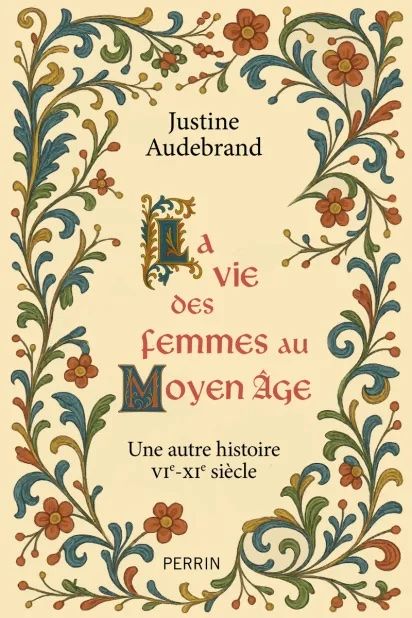
For centuries, the narrative of the Middle Ages has been dominated by tales of kings, knights, and religious figures – overwhelmingly male. While names like Joan of Arc, Eleanor of Aquitaine, Christine de Pizan, and Hildegard of Bingen resonate through history, the lives of countless other women remain obscured. A growing body of scholarship, exemplified by Justine Audebrand’s recent function, La vie des femmes au Moyen Âge (The Life of Women in the Middle Ages), is challenging this imbalance, revealing a far more complex and nuanced picture of women’s roles and agency in the centuries following the fall of the Roman Empire. This period, often overlooked in historical accounts, witnessed a unique position for women, differing significantly from the later medieval era of the 12th to 15th centuries. The exploration of women’s power, intellectual contributions, and labor during this time is reshaping our understanding of early medieval society.
Audebrand’s research, and the broader wave of historical inquiry it represents, focuses on the period between the 6th and 11th centuries – a time often considered a historical “dark age.” However, this designation obscures a period of significant social and political transformation, and, crucially, a period where women often held positions of considerable influence. Contrary to popular imagination, women were not simply relegated to domesticity. They engaged in trade, managed estates, participated in religious life, and even wielded political power. Understanding these roles requires a deliberate effort to uncover the fragmented evidence – legal codes, charters, letters, and archaeological findings – that offer glimpses into their lives. The challenge lies in reconstructing these lives from often incomplete and biased sources, a task Audebrand undertakes with meticulous detail.
The traditional image of the medieval woman as powerless and voiceless is increasingly being challenged by historians. While patriarchal structures undoubtedly existed, limiting women’s opportunities and freedoms, they were not insurmountable. Women found ways to navigate these constraints, exercising agency within the boundaries of their social context. This agency manifested in various forms, from controlling property and businesses to influencing political decisions through their relationships with powerful men, and even through direct participation in governance. The study of women like Dhuoda, a 9th-century noblewoman who wrote a detailed account of her life while her husband was at war, Radegonde, a 6th-century Frankish queen known for her piety and charitable works, and Æthelflæd, the 10th-century Anglo-Saxon ruler of Mercia, demonstrates the diverse roles women occupied and the impact they had on their societies. Æthelflæd, for example, is recognized as a skilled military leader who defended her kingdom against Viking incursions.
Beyond the Stereotypes: Diverse Roles and Realities
The lives of women in early medieval Europe were remarkably diverse, shaped by their social class, geographic location, and individual circumstances. Audebrand’s work emphasizes this diversity, moving beyond the focus on elite women to explore the experiences of those lower down the social hierarchy. Peasant women, for instance, played a crucial role in agricultural production, contributing to the economic survival of their communities. They were responsible for tasks such as tending crops, raising livestock, and processing food. Artisans’ wives often participated in their husbands’ trades, and some women even ran their own businesses. Britannica’s overview of the Middle Ages provides a broader context for understanding the social structures of the period.
Religious life offered another avenue for women to exercise agency, and influence. Convents provided opportunities for education, intellectual pursuits, and spiritual fulfillment. Women like Hildegard of Bingen, a 12th-century Benedictine abbess, became renowned theologians, composers, and natural scientists. While Hildegard lived slightly outside the core timeframe of Audebrand’s study (6th-11th centuries), her legacy highlights the potential for women to achieve intellectual and spiritual prominence within the confines of the Church. Earlier examples include women who established and led their own monastic communities, becoming influential figures in their local areas. These communities often provided social services, such as caring for the sick and the poor, and served as centers of learning and artistic production.
Legal codes of the time, while generally favoring men, too recognized certain rights for women, particularly in relation to property ownership and inheritance. The extent of these rights varied depending on the region and the specific legal system, but they demonstrate that women were not entirely without legal protection. For example, in some areas, women could inherit land and manage their own finances, even if they were married. However, these rights were often limited and subject to the control of male relatives. The study of these legal frameworks provides valuable insights into the social and economic status of women during this period. The legal status of women was often tied to their marital status, with married women generally having fewer rights than unmarried women.
The Importance of Recovering Forgotten Voices
The renewed focus on women’s history in early medieval Europe is not simply an academic exercise. It has broader implications for our understanding of the past and our perceptions of gender roles in the present. By recovering the forgotten voices of women, historians are challenging traditional narratives and offering a more inclusive and accurate account of the Middle Ages. This work also sheds light on the enduring challenges faced by women throughout history and the ongoing struggle for gender equality. The exploration of women’s experiences in the past can inform our understanding of contemporary issues and inspire efforts to create a more just and equitable society.
Audebrand’s work, and the scholarship it builds upon, highlights the importance of interdisciplinary approaches to historical research. Combining textual analysis with archaeological evidence, art historical analysis, and anthropological insights allows for a more comprehensive understanding of women’s lives. For example, archaeological excavations have uncovered evidence of women’s involvement in crafts and trades, while art historical analysis has revealed the presence of female patrons and artists. This collaborative approach is essential for reconstructing the complex and multifaceted experiences of women in the past. The use of digital humanities tools, such as databases and mapping software, is also facilitating this research, allowing historians to analyze large datasets and identify patterns that might otherwise be missed.
The study of women in the early medieval period also challenges the notion of a linear progression of history. It reveals that the status of women was not always declining throughout the Middle Ages, as was once commonly believed. In some respects, women enjoyed greater freedoms and opportunities in the early medieval period than they did in later centuries. This challenges us to rethink our assumptions about the past and to recognize the complexity and contingency of historical change. The period between the 6th and 11th centuries represents a unique moment in history, where women were able to exercise a degree of agency and influence that would be diminished in subsequent eras.
Key Takeaways
- The period between the 6th and 11th centuries witnessed a more diverse and influential role for women than often portrayed in traditional historical narratives.
- Women’s agency manifested in various forms, including economic activity, religious leadership, and political influence.
- Recovering the stories of these women requires a critical examination of fragmented historical sources and an interdisciplinary approach to research.
- Challenging traditional narratives about the Middle Ages is crucial for a more inclusive and accurate understanding of the past.
As research continues to uncover new evidence and challenge existing assumptions, our understanding of women’s lives in early medieval Europe will undoubtedly continue to evolve. The work of scholars like Justine Audebrand is essential for reclaiming these forgotten histories and ensuring that the contributions of women are recognized and celebrated. Further research is needed to explore the experiences of women from different social classes and geographic regions, and to investigate the impact of specific historical events on their lives. The ongoing exploration of this period promises to reveal even more about the resilience, resourcefulness, and agency of women in the face of societal constraints.
The next step in this ongoing historical investigation will likely involve a deeper analysis of regional variations in women’s status and opportunities. Scholars are increasingly focusing on the specific contexts in which women lived, recognizing that their experiences were shaped by local customs, laws, and economic conditions. Continued archaeological work and the digitization of historical documents will also play a crucial role in uncovering new evidence and expanding our knowledge of this fascinating period. We encourage readers to engage with this evolving scholarship and to share their own insights and perspectives.
Worth a look