
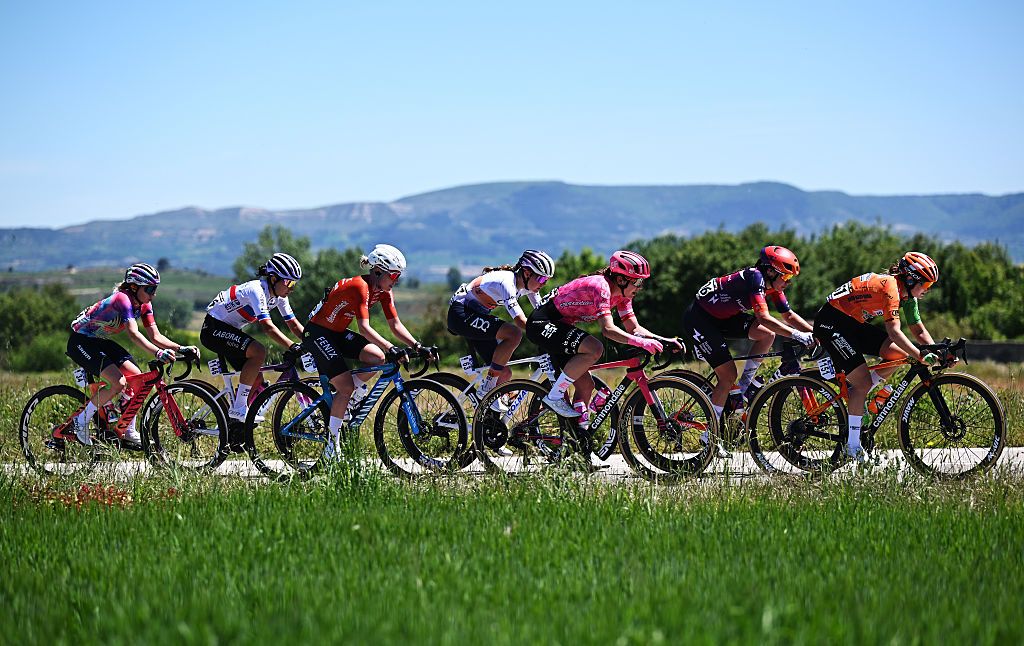
The images coming out of the Spanish roads during the women’s professional cycling season are often breathtaking: thousands of cheering fans lining the steep climbs, high-definition broadcasts capturing every tactical move, and the prestige of a growing global audience. At the summit of this pyramid stands La Vuelta Femenina, a race that has rapidly evolved from a nascent project into a powerhouse of the women’s calendar, signaling a golden era for the sport in Spain.
However, beneath the glossy surface of the WorldTour, a more precarious reality exists. While the elite few enjoy the benefits of professionalization, a significant portion of Spain’s female cyclists are fighting a grueling battle for survival. For those riding for Continental teams or regional clubs, the dream of professional cycling often comes with a financial burden that threatens to push talented athletes out of the sport before they ever reach the world stage.
The disparity in women’s professional cycling in Spain has created a “two-speed” system. On one hand, the UCI Women’s WorldTour teams operate with structured budgets, medical support, and guaranteed minimum salaries. On the other, the lower tiers struggle with a lack of institutional support, unstable sponsorships, and a race calendar that often leaves riders scrambling for meaningful competition. This gap is not merely a matter of prestige; it is a systemic failure that risks stifling the next generation of Spanish talent.
As Spain continues to position itself as a hub for women’s cycling, the success of its premier events is masking a fragile foundation. The transition from a promising amateur to a sustainable professional remains a precarious leap, often depending more on personal wealth or family support than on raw athletic ability.
The Ascent of La Vuelta Femenina
The growth of La Vuelta Femenina has been nothing short of meteoric. Once a shorter, less visible event, it has transformed into a cornerstone of the season, attracting the world’s best riders and significant media attention. The race has succeeded by leveraging Spain’s iconic geography and a growing appetite for women’s sports, proving that there is a massive commercial market for high-level women’s cycling.
The visibility provided by the race is invaluable. It offers Spanish riders a chance to compete against the global elite on home soil, providing a psychological and professional boost. The increased broadcast coverage has as well made it easier for top-tier teams to secure sponsors, as the return on investment is now measurable in viewership numbers and social media engagement.
Yet, this success creates a paradox. The more the “peak” of the sport shines, the more obvious the darkness becomes at the base. The prestige of the Grand Tour format in Spain has highlighted the extreme contrast between those who are paid to race and those who pay to race.
The Continental Struggle: Racing on a Budget
For riders outside the WorldTour, the experience of professional cycling is vastly different. In Spain, many women compete for Continental teams—the second tier of professional cycling—where the financial protections found at the top level are virtually non-existent. Unlike the WorldTour, where the Union Cycliste Internationale (UCI) has implemented minimum wage requirements to ensure a baseline of living, Continental riders often operate without a guaranteed salary.
Many of these athletes are forced to balance full-time training with part-time jobs, or rely on small stipends that barely cover the cost of nutrition, and equipment. The “professional” label in these tiers is often a misnomer; for many, it is a period of financial sacrifice in hopes of being scouted by a WorldTour team. The costs of travel, bike maintenance, and physiotherapy often fall on the rider, creating a barrier to entry that favors those from affluent backgrounds.
The struggle is not just financial but structural. While WorldTour teams have dedicated staff, including soigneurs, mechanics, and performance directors, Continental teams in Spain often operate with skeleton crews. This lack of support increases the risk of burnout and injury, as riders are forced to manage their own recovery and logistics while maintaining a professional training load.
The Systemic Gap and the ‘Glass Ceiling’
The divide in women’s professional cycling in Spain is rooted in a global structural issue: the lack of a comprehensive “pyramid” of competition. In men’s cycling, there is a clear pathway from amateur to Continental, ProContinental, and WorldTour levels, with a dense calendar of races at every stage. For women, the calendar is top-heavy. There are plenty of elite races, but a dearth of high-quality, well-funded races for the second and third tiers.
This creates a “glass ceiling” effect. A rider may be the best in her region or even the best in a Continental team, but without a consistent schedule of high-level races to prove her worth, she remains invisible to the WorldTour scouts. The lack of mid-level races means there are fewer opportunities to earn the points required to move up the UCI rankings, which are the primary currency for securing a professional contract.
the sponsorship landscape in Spain remains skewed. While large corporations are beginning to invest in the visibility of the WorldTour, smaller local businesses—the traditional lifeblood of Spanish cycling—are often unable or unwilling to provide the level of funding needed to sustain a professional Continental team. This leaves teams in a constant state of fragility, where the loss of a single small sponsor can lead to the immediate collapse of the entire project.
The Role of the RFEC and Institutional Support
The Real Federación Española de Ciclismo (RFEC) faces the daunting task of bridging this gap. While the federation has made strides in promoting women’s cycling and supporting the national team, critics argue that the focus has been too heavily weighted toward the elite conclude of the spectrum. The challenge lies in creating a sustainable ecosystem that supports the development of riders from the grassroots level up to the professional ranks.

Institutional support is needed not just in the form of funding, but in the creation of a more robust national calendar. By incentivizing the creation of more women’s races at the regional and national levels, the RFEC could provide the necessary “stepping stones” for riders to gain experience and visibility. Without this, the talent pool remains shallow, and the risk of losing promising athletes to other sports or early retirement increases.
Experts in sports management suggest that a more integrated approach—linking the success of La Vuelta Femenina to the development of lower-tier races—could be the key. This could involve a “trickle-down” sponsorship model where the commercial success of the Grand Tour is used to seed funding for development teams.
What This Means for the Future of the Sport
The current state of women’s professional cycling in Spain is a microcosm of the broader struggle for gender equity in sports. The visibility of the elite is a victory, but it is an incomplete one. If the sport is to truly thrive, the definition of “professional” must expand to include those who are currently operating in the shadows of the WorldTour.
The impact of this disparity is felt most acutely by the riders themselves. When a sport requires a high level of personal wealth to succeed, it ceases to be a meritocracy. The loss of potential champions who simply cannot afford to race is a tragedy for the sport and a failure of the system. For Spain to maintain its position as a leader in women’s cycling, it must ensure that the path to the top is open to all, regardless of their economic status.
The path forward requires a concerted effort from the UCI, the RFEC, and private sponsors to create a more equitable distribution of resources. This includes expanding the minimum wage protections, diversifying the race calendar, and creating more sustainable funding models for Continental teams.
Key Challenges in Spanish Women’s Cycling
| Feature | UCI WorldTour Teams | Continental/Club Teams |
|---|---|---|
| Salary | Guaranteed UCI minimum wage | Often no minimum; variable stipends |
| Support Staff | Full staff (Mechanics, Soigneurs, Doctors) | Limited or shared staff |
| Race Access | Automatic entry to top-tier events | Dependent on invitations/wildcards |
| Financial Risk | Low (contractual stability) | High (often self-funded) |
The Next Checkpoint
The cycling community now looks toward the upcoming UCI season meetings and the subsequent release of the 2027 race calendars, which will determine if more opportunities are being created for non-WorldTour teams. The RFEC is expected to provide updates on its development programs for the next cycle, which may include new initiatives to support Continental-level riders.
The growth of the sport is undeniable, but the sustainability of that growth depends on the strength of its foundation. Spain has the passion and the talent; it now needs the structure to ensure that no rider is left behind in the pursuit of excellence.
Do you think the current UCI structure does enough to protect riders outside the WorldTour? Share your thoughts in the comments below or share this article to join the conversation on the future of women’s cycling.