The Evolution of the World Cup Ball: A Journey Through Innovation and Design
for decades, the official ball of the FIFA world Cup has been more than just equipment – it’s a symbol of the tournament itself. Each iteration represents a blend of cutting-edge technology,artistic inspiration,and a nod to the host nation’s culture. Let’s explore the fascinating evolution of these iconic spheres, culminating in the design for the 2026 tournament.
2022: Qatar – Al Rihla (“The Journey”)
The 2022 World Cup in Qatar saw the introduction of the Al Rihla, a name beautifully translating from Arabic to “the journey.” Adidas crafted this ball with a unique 20-panel design, drawing inspiration from Qatar’s stunning architecture, vibrant art scene, and national flag.
Considerations for the challenging desert climate were paramount. To minimize air resistance during what became one of the hottest World Cup finals ever recorded, the Al Rihla featured a seemingly seamless construction. The thermally bonded panels were specifically shaped after the sails of conventional Dhow boats, emblematic of the Gulf state’s maritime heritage.
2026: United States, Mexico & Canada – Trionda (“Three Waves”)
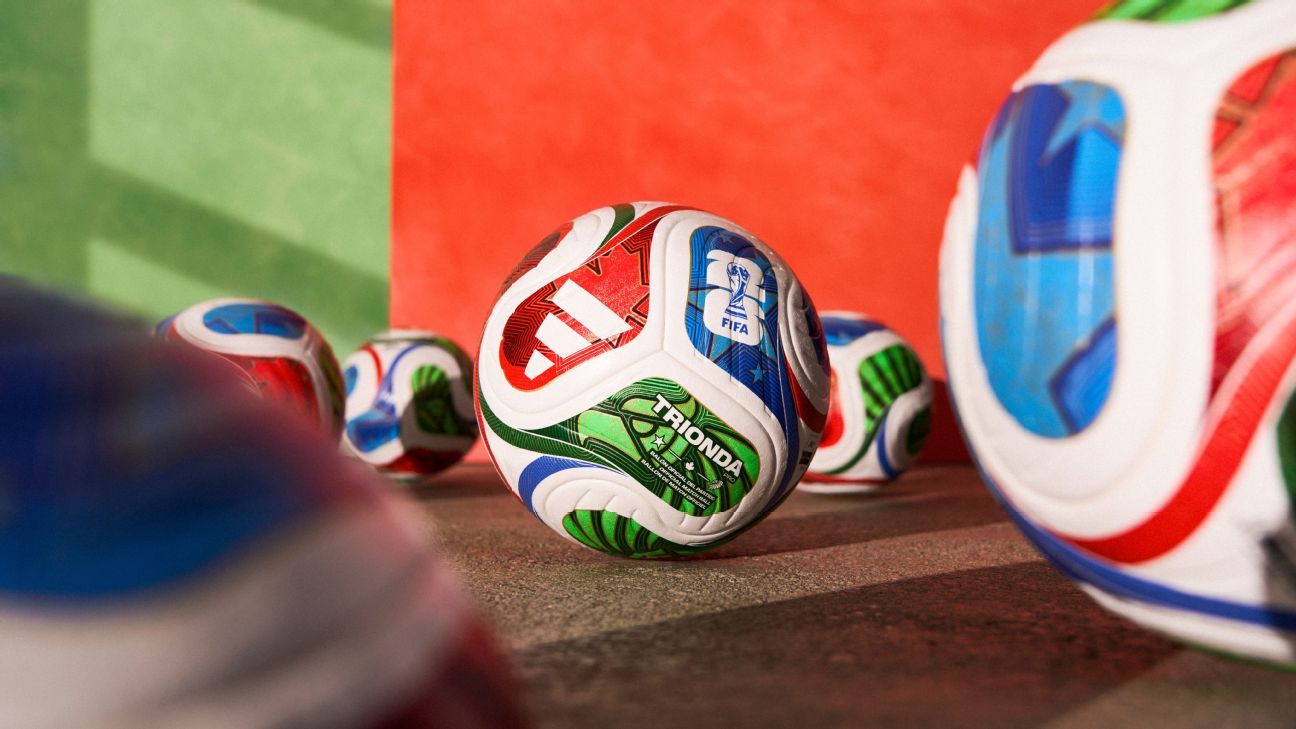
As the world anticipates the 2026 tournament hosted jointly by the United States, Mexico, and canada, Adidas unveils the Trionda. This design is a vibrant celebration of the three host nations, seamlessly blending their national colors into a dynamic swirling graphic of red, green, and blue.
You’ll notice distinct details representing each country:
* Canada: Red panels proudly display the iconic maple leaf.
* United States: Blue panels are adorned with a constellation of stars.
* Mexico: Green swathes feature a graphic inspired by the revered Aztec eagle.
Furthermore, gold accents are incorporated as a visual homage to the coveted World Cup trophy. The name “trionda” itself is a clever fusion, with “Tri” signifying the three host nations and “Onda” meaning “wave” in both Spanish and Portuguese.
Interestingly, the Trionda represents a significant simplification in construction. It’s comprised of just four panels, utilizing debossed lines and embossed country icons. Adidas claims this innovative surface design will “produce optimal in-flight stability by ensuring there is sufficient and evenly distributed drag as it travels through the air.”
Ultimately, we’ll have to wait until next summer to see how this translates to performance on the field and the challenges it presents for goalkeepers.
The World Cup ball continues to evolve, reflecting not only advancements in sports technology but also the spirit and identity of each host nation. It’s a testament to the power of design and its ability to capture the excitement and global unity of the beautiful game.
Related reading