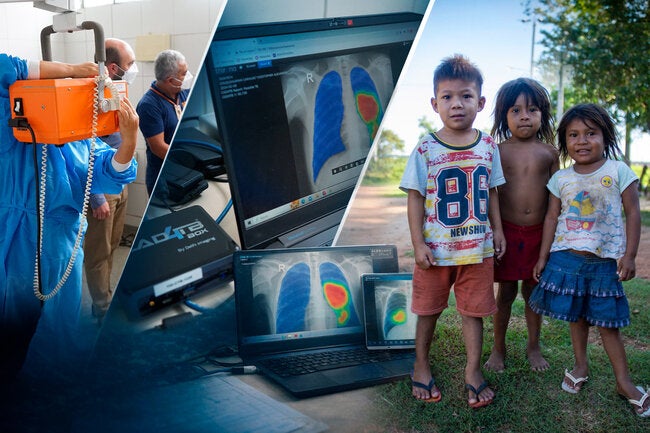
The global fight against tuberculosis (TB) faces persistent challenges, but a renewed focus on strengthening primary healthcare systems, coupled with innovative technologies and dedicated community engagement, offers a pathway towards elimination. This message underscored the significance of World Tuberculosis Day, observed annually on March 24th, and highlighted in a recent Pan American Health Organization (PAHO) event held on March 25, 2026. The event, as outlined in the PAHO agenda, served as a platform to reinforce the urgency of accelerating efforts to end TB, particularly in the Americas.
Tuberculosis remains a significant public health threat worldwide. According to the World Health Organization (WHO), an estimated 10.6 million people fell ill with TB globally in 2022, and 1.3 million people died from the disease. The WHO reports that TB is the second leading infectious killer after COVID-19, and remains one of the top causes of death globally. The Americas region is particularly affected, with approximately 350,000 new cases and 30,000 deaths reported in 2024. A concerning 29% of these deaths were linked to co-infection with HIV, highlighting the complex interplay between the two diseases. While incidence and mortality rates are stabilizing, a substantial number – 77,000 people – remained undiagnosed in 2024, underscoring the need for improved detection strategies.
The Critical Role of Primary Healthcare
The PAHO event and the broader global health consensus emphasize the pivotal role of primary healthcare (PHC) in combating TB. PHC serves as the first point of contact for many individuals seeking medical attention, making it ideal for early detection, prompt diagnosis, and consistent treatment adherence. Effective integration of TB services within PHC systems is crucial for patient-centered care, reducing barriers to access, and achieving sustainable progress towards elimination. This integration must prioritize accessibility, affordability, and a stigma-free environment for those seeking care.
The challenges in tackling TB are often deeply rooted in social determinants of health. Poverty, social exclusion, malnutrition, co-morbidities, discrimination, and stigmatization all contribute to the spread and severity of the disease, particularly in Latin America and the Caribbean. Addressing these underlying factors is essential for a comprehensive and equitable response. A holistic approach that considers the social and economic context of individuals affected by TB is vital for long-term success.
Innovation and Technology in TB Control
Recent advancements in technology are playing an increasingly important role in TB control efforts. The PAHO report highlights the positive impact of incorporating new technologies such as computer-aided detection (CAD) assisted digital radiology and rapid molecular tests for diagnosis. These innovations have improved access to both diagnosis and treatment, leading to better patient outcomes. Shorter treatment regimens are likewise contributing to improved adherence and reduced treatment failure rates. Antiretroviral therapy (ART), crucial for individuals co-infected with HIV and TB, has also seen significant advancements, improving treatment efficacy and reducing transmission rates.
However, the implementation of these technologies requires sustained investment and capacity building within healthcare systems. Ensuring that healthcare workers are adequately trained to utilize these tools and interpret the results is paramount. Equitable access to these technologies must be prioritized, particularly in underserved communities where the burden of TB is often highest.
Regional Collaboration and Political Commitment
The PAHO event on March 25th featured a distinguished panel of experts, including Dr. Jarbas Barbosa, Director of PAHO, and Mónica Alonso, Head of the HIV/ITS/Hepatitis Virales/Tuberculosis Unit at PAHO. The discussions focused on progress made in the Americas towards TB elimination and the critical role of primary healthcare in achieving this goal. Representatives from Brazil, Peru, Honduras, and Costa Rica shared their experiences and innovative approaches to integrating TB services into their respective primary healthcare systems.
The event also highlighted the importance of strong political commitment and adequate investment in TB control programs. Dr. Luis Gallo, Co-President of the Parliamentary Front for TB in the Americas, emphasized the need for strategic priorities and accelerated action to eliminate the disease. The participation of community representatives underscored the importance of engaging those directly affected by TB in the development and implementation of effective interventions.
Agenda Highlights from the PAHO Event
- Welcome: Pedro Avedillo, Advisor, Prevention, Control and Elimination of Tuberculosis, PAHO
- Launch of World TB Day: Dr. Jarbas Barbosa, Director, PAHO
- Advances in the Americas towards the elimination of TB: Mónica Alonso, Head of Unit, HIV/ITS/Hepatitis Virales/Tuberculosis, PAHO
- Panel Discussion: Primary Healthcare and TB Elimination: Representatives from Brazil, Rio de Janeiro (Brazil), Peru, Honduras, and Costa Rica shared insights into their national and regional strategies.
- Priorities for accelerating TB elimination: Dr. Luis Gallo, Co-President of the Parliamentary Front for TB of the Americas, and community perspectives were presented.
Addressing the HIV-TB Co-Infection
The disproportionately high rate of TB deaths among individuals co-infected with HIV – 29% in the Americas in 2024 – demands a targeted and integrated approach. Individuals living with HIV are significantly more likely to develop active TB disease, and TB can accelerate HIV progression. Routine TB screening for people living with HIV, and routine HIV testing for people diagnosed with TB, are essential components of a comprehensive response. The Centers for Disease Control and Prevention (CDC) provides detailed guidance on managing HIV-associated TB, emphasizing the importance of early diagnosis and treatment for both conditions.
Looking Ahead: Sustained Commitment and Innovation
The theme of the 2026 World Tuberculosis Day – “One can end TB: driven by strengthened primary healthcare, innovation, and committed health workers and communities” – serves as a powerful call to action. Ending TB requires a sustained commitment from governments, healthcare providers, researchers, and communities. Continued investment in innovative technologies, strengthened primary healthcare systems, and a focus on addressing the social determinants of health are essential for achieving this goal.
The PAHO event underscored the importance of regional collaboration and knowledge sharing. By learning from each other’s successes and challenges, countries in the Americas can accelerate progress towards TB elimination. The ongoing efforts to integrate TB services into primary healthcare, coupled with a commitment to innovation and community engagement, offer a realistic pathway towards a future free from the burden of this preventable and curable disease.
The next key checkpoint in this ongoing effort will be the release of updated TB prevalence and mortality data by the WHO in late 2026. This data will provide a crucial assessment of progress made and inform future strategies. We encourage readers to share their thoughts and experiences on TB prevention and control in the comments below.
Related reading