
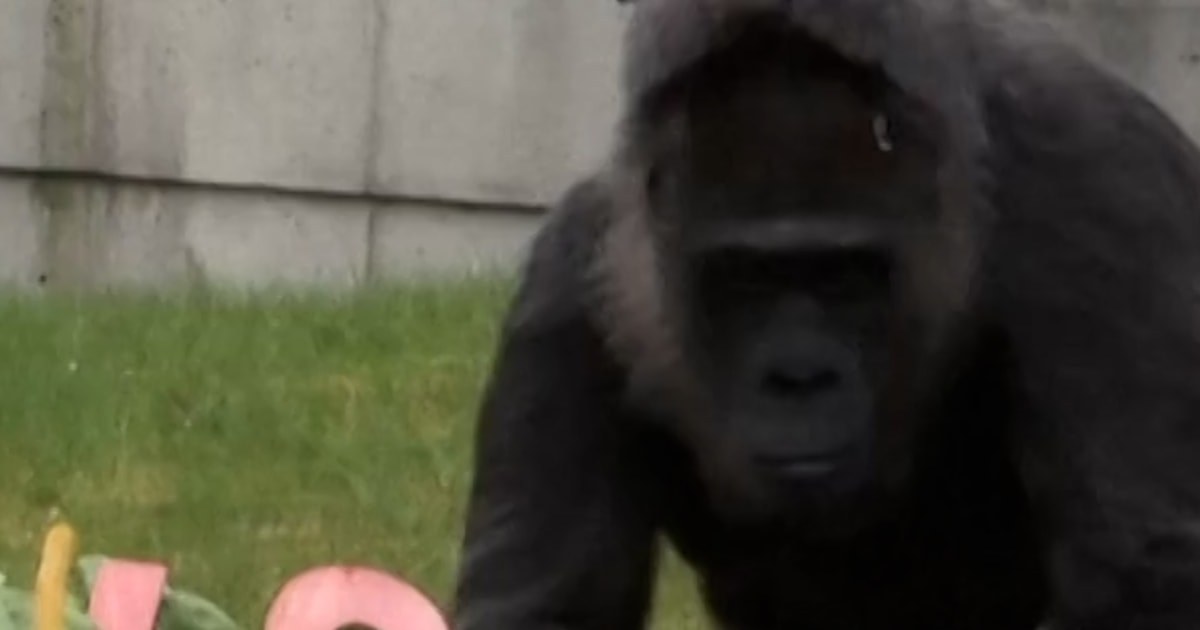
The Berlin Zoo is celebrating a remarkable milestone in primate longevity as Fatou, the world’s oldest known gorilla in captivity, celebrates her 69th birthday. On Monday, April 13, 2026, the western lowland gorilla marked the occasion with a specialized diet designed to accommodate her advanced age, consisting of cherry tomatoes, beets, leeks and lettuce according to the Associated Press.
Fatou’s lifespan is an extraordinary anomaly in the animal kingdom. While western lowland gorillas in the wild typically live between 35 and 40 years, Fatou has nearly doubled that expectancy. Even within the controlled environments of captivity, where primates often live longer than their wild counterparts, reaching 69 years is considered an exceptional achievement per Woman’s World.
The celebration at the Berlin Zoo was carefully managed by staff to prioritize the elderly primate’s health. While the feast included a variety of vegetables, traditional birthday cake was omitted due to health considerations for her aging body. This level of specialized care has helped Fatou become the longest-residing animal at the Berlin Zoo, with a tenure spanning more than 65 years.
A Journey from West Africa to Berlin
Fatou’s history reflects a bygone era of animal procurement. Believed to have been born in 1957 in West Africa, her exact birthdate is not recorded; April 13 was designated as her official birthday. According to Guinness World Records, her journey to Europe began in 1959 via Marseille, France, after she was reportedly taken from the wild by a French sailor and subsequently sold to the zoo as reported by Woman’s World.

Since her arrival in Berlin, Fatou has outlived multiple generations of other primates and humans. Her resilience is further highlighted by her physical condition; despite having lost all of her teeth, she continues to enjoy her vegetable-based meals, which are tailored to her specific nutritional and physical needs.
Understanding Primate Longevity and Care
The case of Fatou provides a significant look into the potential for longevity in great apes when provided with consistent, high-quality veterinary care and a stable environment. The disparity between her age and the typical wild lifespan of 35 to 40 years underscores the impact of removing environmental stressors—such as predation, food scarcity, and disease—that typically limit the lives of western lowland gorillas.
Zoo staff at the Berlin Zoo have adapted Fatou’s care routines to meet the challenges of senescence. The decision to provide a “birthday spread” of soft vegetables like cherry tomatoes and beets is a practical response to her lack of teeth, ensuring she can still receive essential nutrients while enjoying the stimulation of a celebratory meal.
Key Facts: Fatou’s Record-Breaking Life
| Detail | Information |
|---|---|
| Species | Western lowland gorilla |
| Current Age | 69 years old |
| Birth Year (Estimated) | 1957 |
| Arrival in Europe | 1959 via Marseille, France |
| Residency at Berlin Zoo | Over 65 years |
| Wild Lifespan Average | 35 to 40 years |
As Fatou continues her residency at the Berlin Zoo, she remains a rare example of primate longevity, offering researchers and the public a unique glimpse into the aging process of the world’s oldest known gorilla in captivity. While no further official celebrations have been scheduled, the zoo continues to monitor and maintain her health through specialized dietary and medical care.
We invite our readers to share their thoughts on primate conservation and the role of zoos in animal longevity in the comments section below.