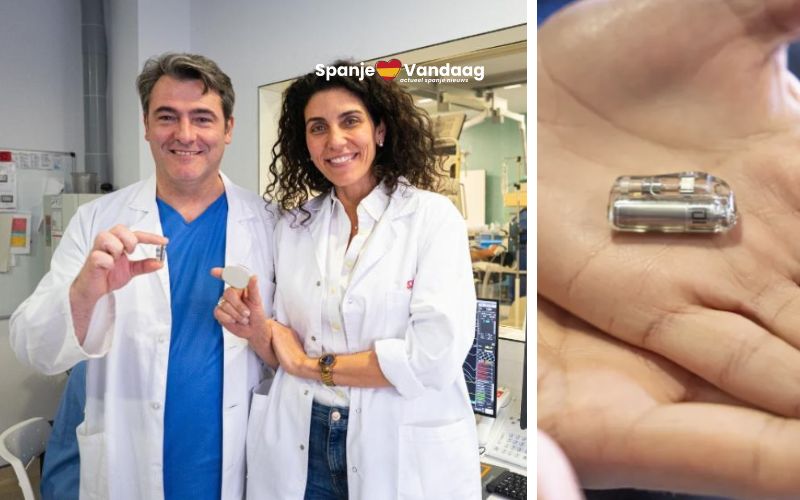
Barcelona, Spain – In a landmark achievement for pediatric cardiology, doctors at the Sant Joan de Déu (SJD) Barcelona Children’s Hospital have successfully implanted the world’s smallest pacemaker into a newborn baby weighing just 2.1 kilograms. The groundbreaking procedure, performed earlier this month, offers a life-saving solution for infants born with severe heart conditions that traditional pacemakers cannot address.
The baby girl, born on February 2nd, was diagnosed during a routine prenatal check-up with a complete atrioventricular block, a serious condition where electrical impulses are not properly transmitted between the heart’s chambers. This disruption leads to a dangerously slow heartbeat, known as bradycardia, hindering the organ’s ability to effectively pump oxygenated blood throughout the body. The condition caused the baby’s heart to enlarge, a concerning sign observed by specialists at the hospital in Esplugues de Llobregat. The successful implantation of this miniature pacemaker represents a significant leap forward in treating complex congenital heart defects in newborns.
Traditional pacemakers, typically around six centimeters in length, are often too large and can pose risks of complications, such as pressure on developing organs or infections, when implanted in tiny infants. Recognizing this challenge, the medical team at SJD Barcelona Children’s Hospital collaborated with Abbott, a medical device company, to develop a custom-designed pacemaker measuring just two centimeters. This bespoke device is specifically engineered to regulate and synchronize the infant’s heart rhythm, a critical function for a small and vulnerable heart. The hospital confirmed the collaboration with Abbott was essential to creating a viable solution.
A Critical Diagnosis and Race Against Time
The diagnosis of the complete atrioventricular block during the second trimester prompted close monitoring of the pregnancy. As the baby’s condition deteriorated in late January, doctors made the tough decision to induce early delivery. Upon birth, the newborn exhibited severe bradycardia and was at immediate risk of cardiac failure. A temporary pacemaker was immediately implanted to stabilize her condition while the team prepared for the permanent solution. This initial stabilization was crucial in buying time for the creation and implantation of the specialized, smaller device.
The definitive implantation, a complex procedure, was carried out by a multidisciplinary team of sixteen specialists, including cardiologists, cardiac surgeons, and engineers. According to a hospital statement reported by Europa Press, the team worked meticulously to ensure the precise placement and functionality of the tiny pacemaker. The successful operation highlights the power of collaborative innovation in pediatric healthcare. The hospital’s expertise in congenital heart disease, combined with Abbott’s technological capabilities, proved instrumental in achieving this medical milestone.
The Technology Behind the Breakthrough
The development of the world’s smallest pacemaker involved significant engineering challenges. Traditional pacemaker components had to be miniaturized without compromising their functionality or reliability. The device needed to deliver precise electrical impulses to stimulate the heart and maintain a healthy rhythm. Abbott’s expertise in cardiac rhythm management technology was pivotal in overcoming these hurdles. The company has a long history of innovation in the field of pacemakers and implantable cardioverter-defibrillators (ICDs).
The two-centimeter pacemaker is designed to adapt to the baby’s growth and changing needs. While the initial implantation provides immediate life support, the device is also intended to support the long-term health and development of the child. Regular monitoring and adjustments will be necessary to ensure optimal performance. The hospital team is committed to providing comprehensive follow-up care to the baby and her family.
Impact on Pediatric Cardiology and Future Innovations
This groundbreaking procedure at SJD Barcelona Children’s Hospital has far-reaching implications for the field of pediatric cardiology. It demonstrates the feasibility of using highly miniaturized devices to treat complex heart conditions in newborns and infants. The success of this case is likely to pave the way for further innovations in pediatric cardiac rhythm management. Researchers are already exploring the potential of even smaller and more sophisticated pacemakers that can be tailored to the individual needs of each patient.
Dr. Stefano Congiu, head of the Cardiac Surgery Department, and Dr. Georgia Sarquella-Brugada, head of the Cardiology Department, led the team responsible for the successful implantation. Their expertise and dedication were instrumental in achieving this remarkable outcome. The hospital’s commitment to providing cutting-edge medical care has established it as a leading center for pediatric cardiology in Europe. SJD Barcelona Children’s Hospital is a non-profit entity dedicated to providing the highest quality care to children and families.
The baby girl was discharged from the hospital after twenty days and is now thriving at home with her family, under the close supervision of her medical team. Doctors anticipate she will lead a normal life with regular check-ups. This case underscores the importance of early diagnosis and intervention in congenital heart disease. The ability to detect and treat these conditions before birth or in the early stages of life can significantly improve outcomes for affected children.
Understanding Complete Atrioventricular Block
A complete atrioventricular block is a serious heart condition that occurs when the electrical signals between the atria (upper chambers) and the ventricles (lower chambers) of the heart are completely blocked. This prevents the ventricles from receiving the signals they require to contract and pump blood effectively. The condition can be congenital (present at birth) or acquired (developed later in life). In newborns, it is often caused by maternal autoimmune antibodies that cross the placenta and attack the fetal heart tissue. Symptoms of complete atrioventricular block include a slow heartbeat, fatigue, shortness of breath, and dizziness. Without treatment, the condition can lead to heart failure and even death.
The Sant Joan de Déu hospital is hosting an open house for residents on March 18th, offering prospective medical professionals a chance to learn more about training opportunities at the facility. More information about the hospital and its programs can be found on its website.
This pioneering procedure at SJD Barcelona Children’s Hospital represents a beacon of hope for families facing the challenges of congenital heart disease. The successful implantation of the world’s smallest pacemaker demonstrates the power of medical innovation and the unwavering commitment of healthcare professionals to improving the lives of children. The hospital continues to push the boundaries of pediatric cardiology, offering new possibilities for treatment and care.
The next scheduled event at SJD Barcelona Children’s Hospital is the open house for residents on March 18th. Stay tuned to the hospital’s website for further updates on research and clinical advancements. We encourage readers to share this story and contribute to the conversation about pediatric heart health.
Keep reading