
When discussing the polarizing legacy of high-budget science fiction, few titles elicit as much debate as Valerian and the City of a Thousand Planets. Directed by Luc Besson and released in 2017, the film represented a massive financial gamble and a long-cherished passion project for the French filmmaker. While some audiences praised its visual ambition, the movie remains a frequent subject of intense critical scrutiny, often cited in discussions regarding the most divisive projects in Besson’s storied filmography.
The conversation surrounding the film’s reception often centers on whether it represents a singular misfire or an ambitious experiment that simply failed to connect with a broad audience. As an editor in the entertainment space, I have observed that when a director of Besson’s stature—responsible for cult classics like The Fifth Element—delivers a project with such a distinct visual language, the reaction is rarely muted. Instead, it tends to split critics and fans into two camps: those who admire the sheer scale of the world-building and those who find the narrative execution lacking.
The Scale of Ambition and Financial Stakes
To understand the reception of Valerian, one must look at the immense pressure placed on the production. According to Box Office Mojo, the film was a significant undertaking, requiring substantial investment to bring its complex visual effects to life. When a studio commits to a project of this magnitude, the expectations for both critical acclaim and box office performance are exponentially higher.

Besson’s career has been defined by his ability to blend European sensibilities with Hollywood-style spectacle. However, Valerian faced a unique set of challenges. The film was based on the long-running French science fiction comics series Valérian and Laureline, which had cultivated a devoted fanbase over several decades. Adapting such source material often creates a tension between satisfying existing fans and appealing to a global audience unfamiliar with the lore.
Critical Reception and the Question of Legacy
The term “most hated” is a subjective label often applied to films that underperform relative to their budget or expectations. In the case of Valerian, critics were notably divided. While many reviewers lauded the film’s vibrant color palette and imaginative creature designs, others pointed to issues with pacing and character development. This divergence in opinion is a hallmark of “divisive” cinema rather than universally panned work.
For context, Luc Besson’s career spans over four decades, including iconic works such as Léon: The Professional and Nikita. Comparing a singular project like Valerian to his entire body of work requires a nuanced understanding of his creative evolution. Is it his most disliked? That depends heavily on whether one prioritizes narrative cohesion over visual spectacle. For many, the film stands as a testament to what happens when a director is given total creative freedom—a “calvaire” (or ordeal) for some viewers, but a visual feast for others.
Contextualizing the Creative Process
The discourse surrounding Valerian highlights a broader trend in modern entertainment reporting: the tendency to categorize films in binary terms of “success” or “failure.” Yet, the history of cinema is filled with projects that were initially dismissed by critics only to find a dedicated following years later. Whether Valerian will undergo a similar reassessment remains to be seen. Its reliance on groundbreaking motion capture and digital environments set a high bar for visual standards at the time of its release, even if the storytelling did not resonate with every viewer.
the film serves as a case study in the risks of big-budget filmmaking. When an auteur is allowed to pursue a vision without compromise, the results are rarely mediocre; they are either transformative or jarring. For Luc Besson, Valerian represents a high-water mark of his creative ambition, regardless of the mixed critical reception that followed its theatrical run.
Key Insights on Film Reception
- Visual Ambition: The film is widely acknowledged for its high-end visual effects and world-building capabilities.
- Narrative Divide: Critics frequently cite the script and character arcs as the primary points of contention.
- Source Material: Adapting the Valérian and Laureline comics provided a rich, albeit challenging, foundation for a modern blockbuster.
- Career Context: The film occupies a complex space in Besson’s filmography, distinct from his gritty thrillers and smaller-scale projects.
As we look back at the cinematic landscape of the late 2010s, Valerian and the City of a Thousand Planets remains a focal point for debates about the role of the auteur in an era of franchise-dominated cinema. It invites us to consider what we value more in our entertainment: a safe, predictable narrative or a risky, visually daring experiment that might not land for everyone.
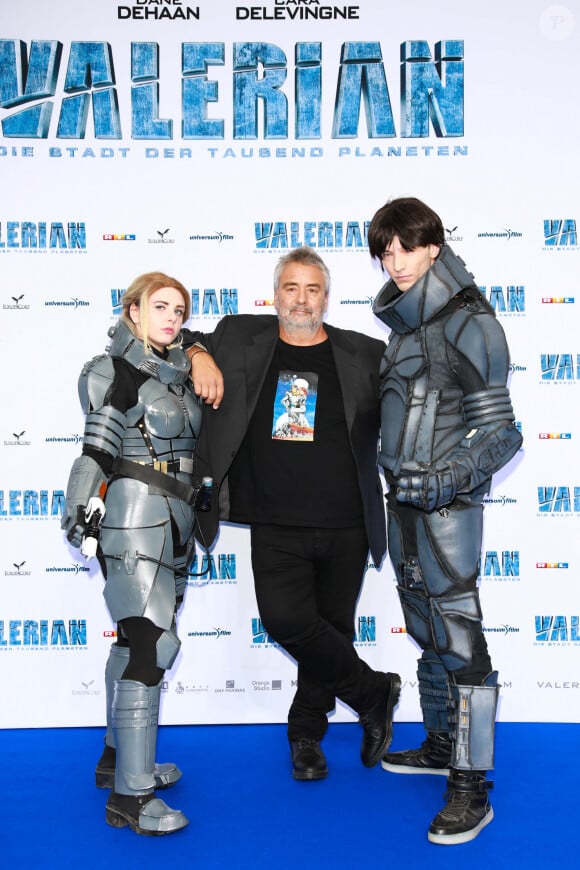
For those interested in the latest updates regarding Luc Besson’s upcoming projects or retrospective analyses of his work, official press releases and industry trade reports remain the most reliable sources of information. We welcome your thoughts on whether Valerian deserves its reputation or if it has been unfairly maligned—share your perspective in the comments below.