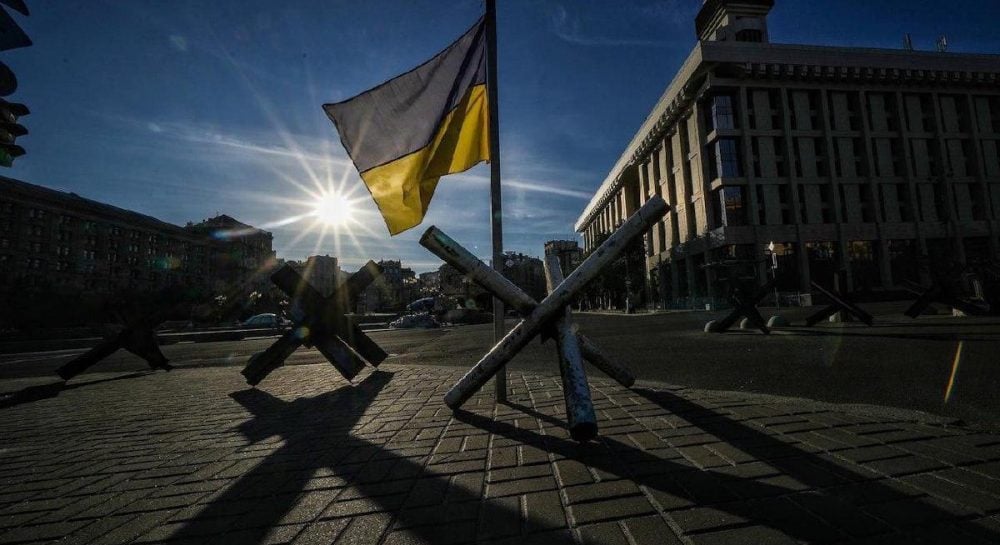
The geopolitical architecture of Eastern Europe is currently defined by a stark contradiction between public diplomacy and private strategic calculation. Whereas European leaders maintain a steadfast public commitment to Ukraine’s democratic evolution and sovereignty, a growing internal consensus suggests a more pragmatic, and perhaps more cynical, objective: the maintenance of Ukraine as a strategic buffer zone to safeguard the European Union from Russian aggression.
This tension highlights a “dangerous duality” in Western foreign policy. On the global stage, the narrative remains centered on a moral mission to defend the rule of law and democratic values. However, behind closed doors, the priority has shifted toward security pragmatism, where Ukraine is viewed less as a partner in democratic transition and more as a tool for buying time and deterring a regional adversary.
The Strategic Buffer: Analysis of the Rodnyansky Column
The disconnect between rhetoric and reality was recently detailed by Alexander Rodnyansky in a column for The Wall Street Journal. Rodnyansky argues that European leaders are increasingly avoiding public discussions regarding the challenges facing democracy in Ukraine, choosing instead to prioritize their own collective security via TSN. According to the analysis, the support provided to Kyiv is increasingly viewed through the lens of deterrence rather than solidarity.

In this framework, Ukraine serves as a physical and political shield. By ensuring Ukraine remains capable of resisting Russian advances, the EU effectively pushes the front lines of the conflict away from its own borders. Rodnyansky notes that while it is natural for any state to be guided by its own interests, the problem lies in the lack of transparency. By continuing to mask security interests with the language of a “moral mission,” European powers risk creating a misalignment of expectations between the West and the Ukrainian government.
Democratic Risks and the Cost of Silence
The pursuit of security as the primary objective has led to a perceived indifference toward the internal democratic health of the Ukrainian state. The “buffer” logic suggests that as long as Ukraine remains a viable military obstacle to Russia, internal political regressions or risks to democratic institutions are secondary concerns. This approach effectively trades long-term democratic stability for immediate tactical security.
This silence on democratic warning signs creates a precarious environment. When support is conditioned on the utility of a country as a buffer rather than its adherence to the values the West claims to champion, the legitimacy of that support becomes fragile. The duality described by Rodnyansky suggests that the EU is not merely supporting a state in crisis, but is managing a security perimeter.
Territorial Integrity and the Cease-Fire Debate
As the conflict persists, the question of how to end the hostilities has brought the issue of territorial sovereignty to the forefront. There have been external suggestions that a land swap with Russia could serve as a mechanism for a near-term cease-fire agreement. However, these proposals have met with firm resistance from the Ukrainian leadership.
President Volodymyr Zelenskyy has recently shrugged off the suggestion that such a land swap could be a viable part of any immediate peace deal via WSJ. This insistence on territorial integrity stands in contrast to the pragmatic “buffer” logic employed by some European strategists, who may be more concerned with the stability of the border than the exact coordinates of the frontier.
Key Strategic Implications
| Dimension | Public Rhetoric | Private Strategic Logic |
|---|---|---|
| Primary Goal | Defense of democracy and sovereignty | Security of the EU and deterrence of Russia |
| View of Ukraine | A partner fighting for shared values | A buffer zone to buy time |
| Democratic Issues | Central to the mission of support | Secondary to security imperatives |
The long-term viability of this strategy remains uncertain. If Ukraine is viewed primarily as a shield, the relationship becomes transactional. Once the immediate security threat is perceived to be managed or shifted, the motivation for sustained support may diminish, potentially leaving a state that has been encouraged to prioritize military utility over democratic consolidation.
The current situation remains fluid, with the next critical checkpoints being the ongoing diplomatic efforts to define the terms of a potential cease-fire and the continued evaluation of EU security mandates regarding Eastern European borders.
World Today Journal encourages readers to share their perspectives on the balance between security and democratic values in international alliances in the comments below.
Worth a look