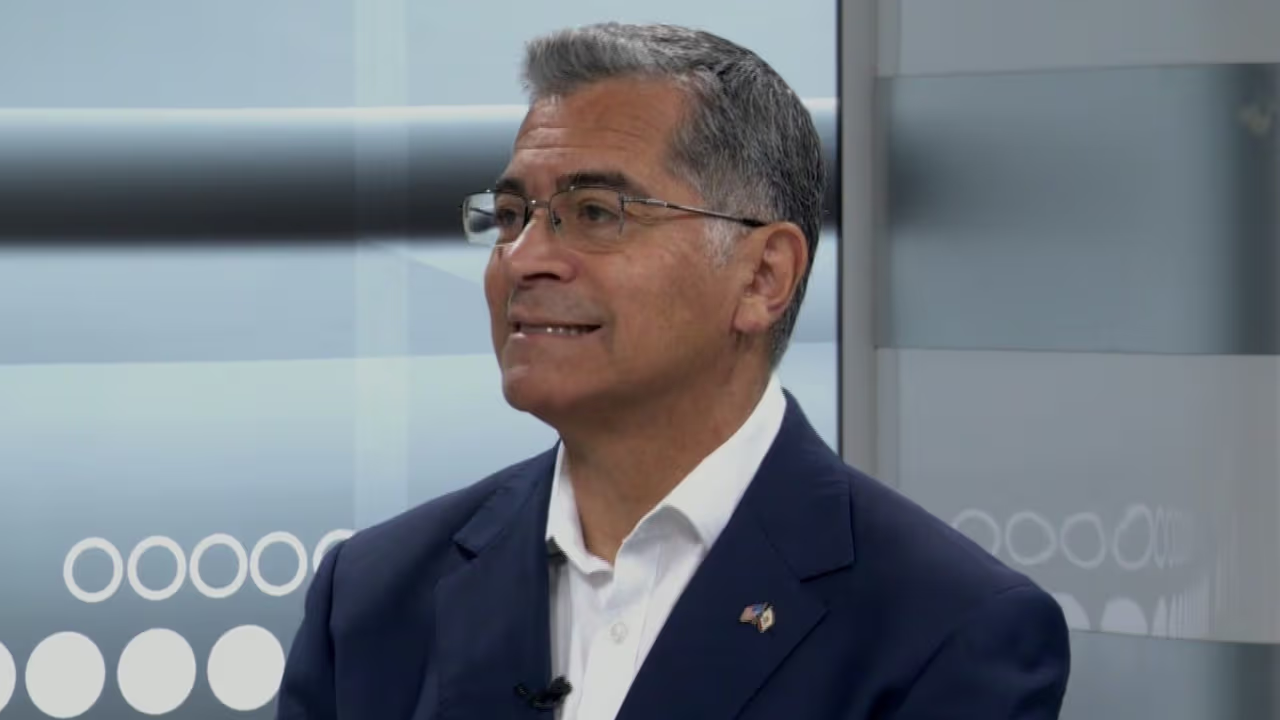
Xavier Becerra, the current U.S. Secretary of Health and Human Services, has centered his campaign for the governorship of California on reducing the high cost of living, specifically targeting the state’s elevated gasoline prices. Becerra intends to implement a plan to lower fuel costs to provide economic relief to California residents facing some of the highest pump prices in the United States.
The proposal comes as California continues to struggle with fuel volatility and a complex regulatory environment. According to data from the AAA Gas Prices tracker, California consistently maintains gasoline averages significantly higher than the national average, driven by state-specific taxes and the requirement for a specialized “summer blend” of fuel to reduce smog.
Becerra’s platform connects the cost of transportation to broader inflationary pressures affecting housing and groceries. He argues that high fuel costs act as a regressive tax on lower- and middle-income families, who spend a larger percentage of their earnings on commuting to work.
How Becerra plans to lower California gas prices
Becerra’s strategy focuses on increasing fuel supply and addressing market inefficiencies. While specific legislative text for his plan has not yet been filed, his campaign messaging emphasizes a multi-pronged approach to combat price spikes. He suggests that the state must better manage its strategic reserves and coordinate with federal partners to ensure a steady flow of petroleum products into the state’s refineries.
The challenge for any California governor is the state’s unique “island” energy market. Because California imports a vast majority of its gasoline and has limited pipeline connections to other states, it is highly susceptible to regional refinery outages. Becerra has indicated that his administration would prioritize diversifying these supply chains to prevent the sudden price jumps often seen during refinery maintenance windows.
Why California gas prices remain higher than other states
The cost of gasoline in California is not solely dependent on global crude oil prices. Several structural factors contribute to the disparity. First, California imposes some of the highest state excise taxes on gasoline in the country. According to the Tax Foundation, these taxes are designed to fund road repairs and environmental initiatives but add a significant flat cost per gallon.
Second, the California Air Resources Board (CARB) mandates a specific chemical composition for gasoline to meet strict air quality standards. This requirement prevents the state from using the same fuel blends as neighboring states, forcing refineries to produce a more expensive, specialized product. This “regulatory moat” often prevents cheaper gasoline from other states from entering the California market.
Third, the state’s transition toward electric vehicles (EVs) has created a paradoxical effect. As the state aggressively pushes for EV adoption, some refineries have reduced their capacity or closed entirely, which can lead to tighter supply and higher prices for those who still rely on internal combustion engines.
The impact of fuel costs on California voters
High gasoline prices have become a central political liability in California. For many voters, the “cost of living crisis” is most visible at the gas pump. Becerra is positioning himself as a pragmatic solution to this issue, attempting to balance the state’s ambitious climate goals with the immediate financial needs of the electorate.
Opponents of the plan often argue that lowering prices through subsidies or deregulation could undermine California’s leadership in fighting climate change. However, Becerra’s campaign suggests that the transition to green energy must be economically sustainable for the working class, or it will face significant public backlash.
What happens next for the campaign
Becerra is expected to release a more detailed policy white paper outlining the specific mechanisms of his fuel-reduction plan as the gubernatorial race intensifies. This document will likely detail whether he intends to seek tax credits, pursue emergency imports during shortages, or challenge existing refinery pricing structures.
The next major checkpoint for the campaign will be the upcoming series of primary debates and public forums, where Becerra will be required to provide concrete timelines and funding sources for his cost-of-living initiatives.
Do you believe a state-level plan can effectively lower gas prices in a global market? Share your thoughts in the comments below and share this article with other California residents.