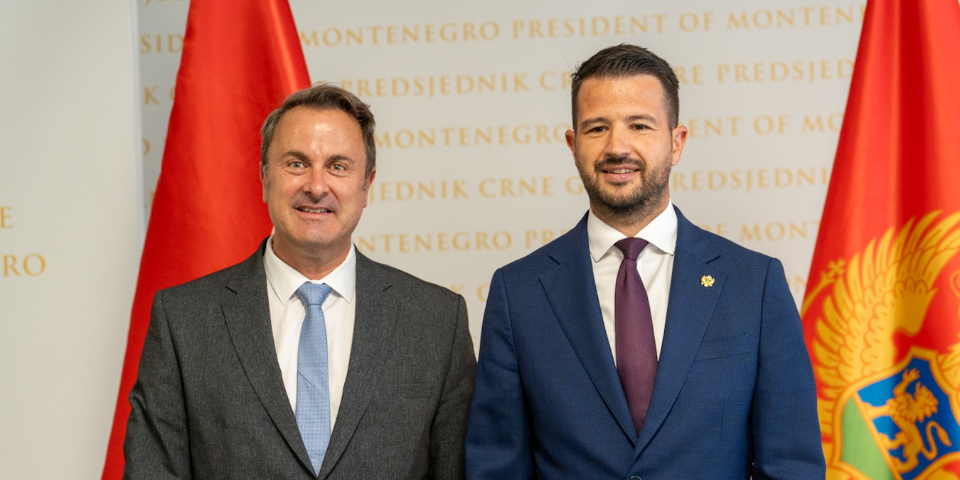
Luxembourg’s Deputy Prime Minister, Minister of Foreign Affairs, and Foreign Trade, Xavier Bettel, undertook an official working visit to Montenegro to strengthen bilateral ties and discuss regional European integration. The diplomatic engagement highlights ongoing political dialogues between the Grand Duchy and the Western Balkan nation as Podgorica pursues its strategic goal of accession to the European Union.
Diplomatic exchanges at this level focus heavily on structural reforms, economic partnership, and shared security priorities within the European framework. Luxembourg has consistently maintained an active stance regarding enlargement policy, emphasizing that candidate countries must meet strict rule-of-law standards while receiving robust political and technical backing from member states.
Bilateral Relations and European Integration Priorities
During the working visit, discussions between Luxembourgish and Montenegrin officials centered on the pace of accession negotiations and specific reform benchmarks required for EU membership. Montenegro, which opened accession talks in 2012, remains one of the frontrunners among candidate countries in the Western Balkans region.
According to diplomatic summaries of such bilateral missions, representatives evaluate institutional updates, judicial improvements, and economic alignment. Luxembourg’s foreign ministry frequently utilizes these diplomatic channels to offer expert insight into administrative harmonization, drawing on its long-standing role at the heart of European governance.
Economic Cooperation and Regional Stability
Beyond institutional alignment, the working visit provided a platform to review bilateral economic ties and trade opportunities between Luxembourg and Montenegro. Both nations assess avenues for encouraging direct investment, technological exchange, and cooperative ventures in sectors ranging from financial services to sustainable infrastructure.
Regional stability in the Western Balkans forms a critical pillar of Luxembourg’s foreign policy posture. Ministerial visits serve to reinforce European solidarity and signal continued engagement with leaders in Podgorica, ensuring that reform momentum does not stall amid broader geopolitical shifts on the continent.
Next Steps in Diplomatic Engagement
Following this working visit, Montenegrin authorities will continue implementing required legislative and structural reforms ahead of upcoming European Commission progress evaluations. Luxembourg is expected to maintain its supportive stance within Council of the European Union discussions concerning enlargement milestones.
Readers interested in following further updates on diplomatic agendas and official European affairs can consult public announcements issued by the Government of Luxembourg and the Ministry of Foreign and European Affairs.