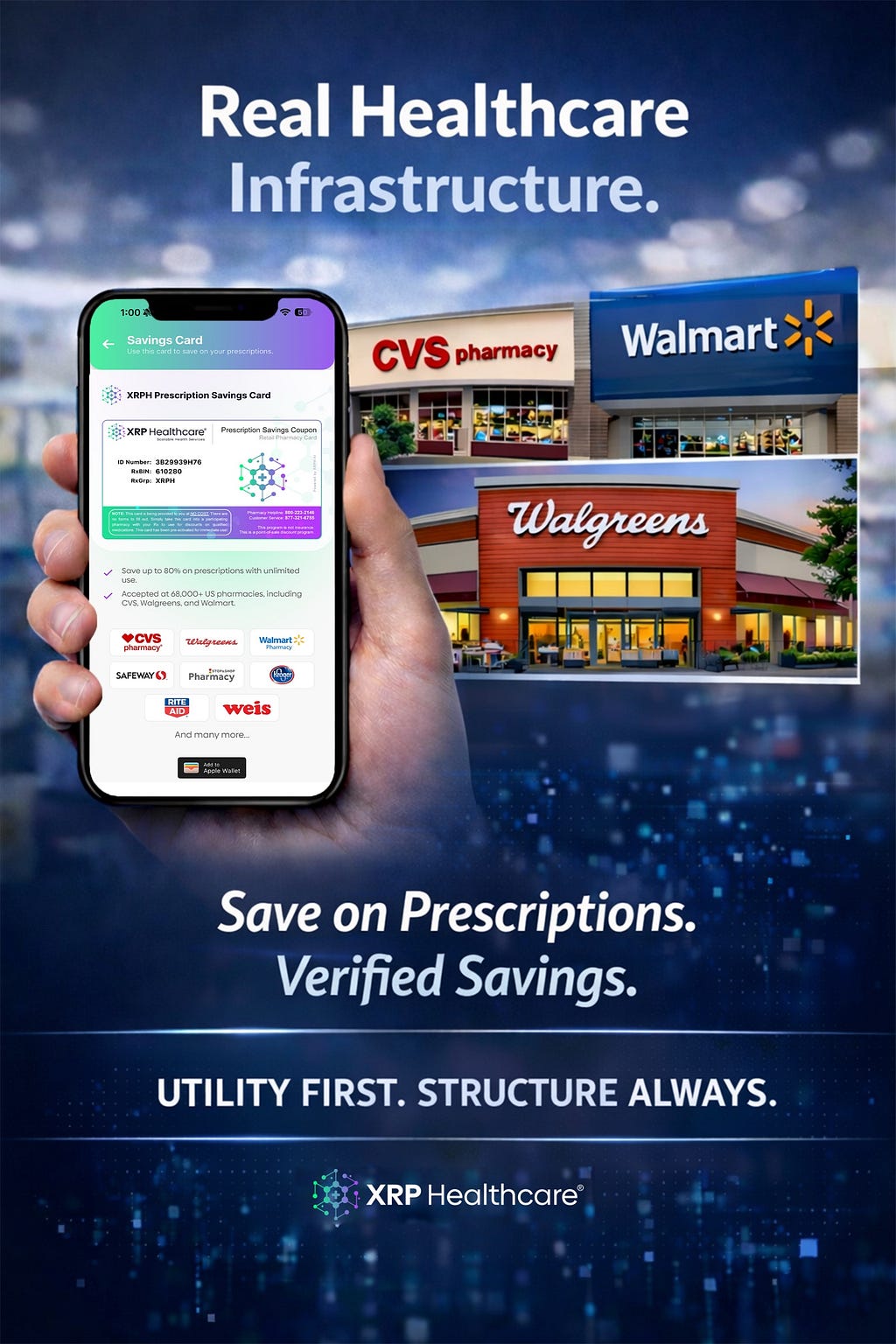
The promise of artificial intelligence to revolutionize healthcare is often met with cautious optimism, given the sector’s inherent complexities and fragmentation. While technological advancements offer potential solutions to rising costs and access barriers, successful implementation hinges on establishing robust infrastructure *before* layering on digital incentives. A Dubai-based company, XRP Healthcare M&A Holding Inc., is taking a phased approach, focusing first on building a practical network for prescription savings and verified transactions and then considering how digital incentives might further enhance adoption. This strategy highlights a growing recognition within the industry that technology alone isn’t a panacea; it requires a solid foundation of operational functionality to deliver meaningful impact.
The current healthcare landscape is characterized by a lack of seamless integration between systems, regional disparities in access, and significant variability in prescription pricing. According to a 2023 report by the Kaiser Family Foundation, nearly three in ten Americans say they have difficulty affording their prescription medications. KFF Report on Prescription Drug Prices This affordability crisis is compounded by inconsistent access to digital health tools and a disconnect between user behavior and existing digital infrastructure. AI and distributed ledger technology (DLT) hold promise for addressing these challenges, but their effectiveness is contingent upon integration within well-functioning systems.
Building a Foundation: The XRP Healthcare Approach
XRP Healthcare M&A Holding Inc. Distinguishes itself from purely digital-focused ventures by prioritizing the establishment of tangible healthcare infrastructure. Over the past three years, the company has concentrated on creating a real-world application centered around prescription savings. The XRPH AI App, currently available, provides users with access to savings on prescriptions at over 68,000 pharmacies across the United States, including major national chains like CVS, Walgreens, and Walmart. PR Newswire This network is facilitated through agreements with United Networks of America (UNA).
Crucially, each prescription processed through the XRP Healthcare Prescription Savings Card represents a verified transaction with documented savings delivered to the end user. This operational activity forms the core of the XRPH AI ecosystem, providing a verifiable data stream and a foundation for future development. The company emphasizes that XRP Healthcare M&A Holding Inc. Is legally and operationally separate from XRP Healthcare LLC, which manages all XRPH token and digital asset activities, and does not issue, control, or benefit from the XRPH token. Information regarding the XRPH token can be found at www.xrphtoken.com.
XRPH AI App Capabilities: Beyond Savings
The XRPH AI App isn’t solely focused on prescription savings; it’s designed as a multi-functional platform with a range of capabilities. These include AI-assisted health guidance, prescription scanning and secure storage, multilingual interface support, voice-enabled interaction, and symptom image submission for AI-based analysis. The app aims to provide users with reliable healthcare information and personalized insights, bridging a critical gap in access to affordable and trustworthy advice. The focus, but, remains on measurable usage and incremental adoption, a pragmatic approach to building a sustainable ecosystem.
Addressing Healthcare Fragmentation with AI and DLT
Healthcare delivery’s fragmented nature presents a significant hurdle to widespread digital adoption. Prescription pricing variability, as highlighted by the KFF report, demonstrates the lack of transparency and consistency within the system. Artificial intelligence can play a role in improving information accessibility and providing user guidance, while distributed ledger infrastructure offers the potential to enhance transparency and settlement efficiency. However, as XRP Healthcare emphasizes, the effectiveness of these technologies is directly tied to their integration within functioning systems. Simply introducing AI or DLT without addressing underlying structural challenges is unlikely to yield significant results.
The Role of AI in Personalized Healthcare
AI’s potential in healthcare extends beyond cost savings. Machine learning algorithms can analyze vast datasets to identify patterns and predict health risks, enabling more personalized and proactive care. AI-powered diagnostic tools can assist clinicians in making more accurate diagnoses, while virtual assistants can provide patients with 24/7 support and guidance. However, the ethical implications of AI in healthcare, including data privacy and algorithmic bias, must be carefully considered and addressed. The World Health Organization (WHO) published guidelines on ethics and governance of AI for health in 2021, emphasizing the need for transparency, accountability, and human oversight. WHO AI for Health Guidelines
Structured Incentives: A Future Consideration
As the XRPH AI platform activity grows, XRP Healthcare is evaluating structured mechanisms to align verified usage within the ecosystem with digital incentive frameworks. However, the company is proceeding cautiously, prioritizing defined supply parameters, governance oversight, transparency in allocation, and long-term ecosystem stability. Any future implementation will be carefully considered to avoid unintended consequences and ensure the sustainability of the platform. The company has stated that further information will be provided once these frameworks are formally structured.
This deliberate approach reflects a broader trend in the healthcare industry, where stakeholders are increasingly recognizing the need for a phased and pragmatic approach to digital transformation. Rather than rushing to implement complex technologies, the focus is shifting towards building foundational infrastructure and demonstrating tangible value before layering on more advanced features. This strategy minimizes risk and maximizes the potential for long-term success.
The Importance of Governance and Transparency
The success of any digital incentive framework in healthcare hinges on robust governance and transparency. Participants must have confidence that the system is fair, equitable, and secure. Clear rules and regulations are essential to prevent fraud and abuse, and mechanisms for accountability must be in place to address any issues that arise. Transparency in allocation is also crucial, ensuring that incentives are distributed fairly and that the benefits are shared equitably among all stakeholders.
The company’s emphasis on these principles underscores its commitment to building a sustainable and trustworthy healthcare ecosystem. By prioritizing operational functionality and a phased approach to digital integration, XRP Healthcare is positioning itself as a leader in the evolving landscape of healthcare technology.
The next step for XRP Healthcare involves continued expansion of its pharmacy network and further development of the XRPH AI App’s capabilities. The company is also focused on mergers and acquisitions in underserved markets, such as Uganda, to further its mission of improving healthcare access globally. Investors and stakeholders will be closely watching the company’s progress as it navigates the complex challenges of the healthcare industry.
Key Takeaways:
- Establishing practical healthcare infrastructure is crucial before implementing digital incentives.
- The XRPH AI App provides access to prescription savings at over 68,000 pharmacies in the U.S.
- AI and DLT hold promise for improving healthcare, but their effectiveness depends on integration within functioning systems.
- Governance, transparency, and long-term stability are essential for successful digital incentive frameworks.
What are your thoughts on the role of technology in addressing healthcare affordability? Share your comments below, and let’s continue the conversation.
Keep reading