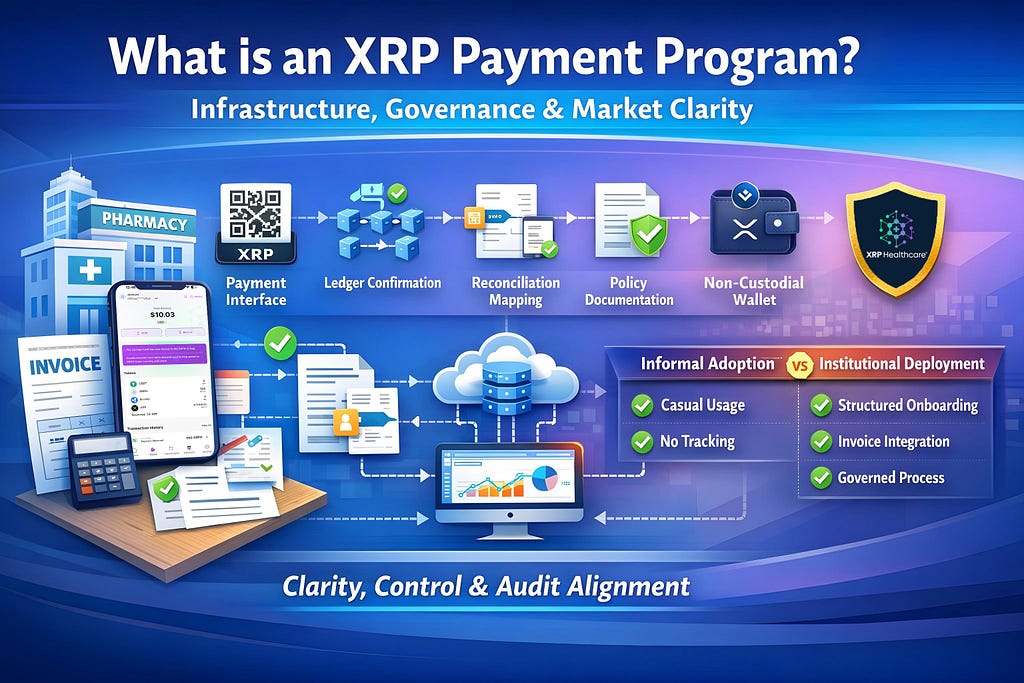
Global commerce relies on the seamless and efficient transfer of value, yet for decades, international payments have been hampered by outdated infrastructure. Slow processing times, high fees, and a lack of transparency are persistent challenges for businesses operating across borders. Now, a fresh approach is gaining traction: the XRP Payment Program. This system leverages the XRP Ledger (XRPL) to offer a potentially faster, cheaper, and more reliable alternative to traditional methods, promising to unlock capital flow and streamline international transactions. But what exactly is an XRP Payment Program, and why is it attracting attention in the world of global finance?
The current system of cross-border payments is often described as a complex web of correspondent banking relationships. These networks require pre-funded accounts in multiple currencies, involve numerous intermediary institutions, and rely heavily on manual reconciliation processes. Settlements can take days, tying up significant capital and increasing operational costs. According to a report by the Bank for International Settlements, the average time for a cross-border payment to settle is over four days, with costs averaging around 5% of the transaction value. BIS Report on Payments This inefficiency is particularly burdensome for small and medium-sized enterprises (SMEs) seeking to expand into international markets.
What is an XRP Payment Program?
An XRP Payment Program is a structured approach to cross-border settlement that utilizes the XRP Ledger (XRPL), a decentralized cryptographic ledger designed for fast and low-cost transactions. The XRPL, created by Ripple, operates on a unique consensus mechanism that allows for quick and reliable validation of transactions. XRP Ledger Official Website At its core, the program aims to facilitate efficient value transfer by leveraging the XRPL’s capabilities. Instead of relying on traditional correspondent banking networks, it offers a pathway for businesses to move funds globally with greater speed and predictability.
Several key features define an XRP Payment Program. On-Demand Liquidity is a crucial component, allowing for currency conversion only when needed, eliminating the need for pre-funded accounts in multiple markets. The XRP cryptocurrency itself can act as a bridge asset, facilitating conversions between different currencies. Near-Instant Settlement is another hallmark, with transactions finalizing on the XRPL within seconds, a stark contrast to the days-long settlement times common in traditional systems. The program promises Reduced Costs due to fewer intermediaries and lower transaction fees, and Transparent Records, as all transactions are recorded on the blockchain, creating an auditable trail.
Benefits for Businesses
The potential benefits of adopting an XRP Payment Program are significant for businesses engaged in international trade. Improved liquidity efficiency is a primary advantage, as capital is no longer tied up in pre-funded accounts. This allows businesses to deploy funds more strategically and optimize their working capital. Faster settlement cycles translate to quicker access to funds, enabling businesses to fulfill orders and manage cash flow more effectively. The program also offers Lower transaction costs, reducing operational overhead and increasing profitability.
Beyond these core benefits, XRP Payment Programs offer Enhanced transparency through the immutable record-keeping of the blockchain, and Scalable infrastructure capable of handling increasing transaction volumes. For multinational companies and payment providers, these advantages can translate into a significant competitive edge. The XRP Ledger Payments Suite, for example, supports stablecoin payments, including RLUSD and USDC, enabling businesses to easily receive, store, convert, issue, and send stablecoins. XRP Ledger Payments Suite This suite also boasts 99.99% uptime since 2012 and has processed over $1.7 trillion in value transferred.
How the XRP Ledger Facilitates Cross-Border Payments
The XRP Ledger’s ability to facilitate cross-currency payments is central to the functionality of an XRP Payment Program. According to Ripple, cross-currency payments within the XRPL are fully atomic, meaning the payment either fully executes or no part of it does, ensuring a secure and reliable transfer of value. XRP Ledger Cross-Currency Payments This is achieved through the decentralized exchange (DEX) built into the XRPL, which allows users to convert between different currencies by consuming Offers placed on the ledger.
A key feature of the XRPL is its ability to utilize XRP as a bridge asset. For example, a payment sending from USD to MXN can automatically convert USD to XRP and then XRP to MXN if this route is cheaper than a direct USD-MXN conversion. This “auto-bridging” functionality optimizes payment costs and increases efficiency. Larger trades can even utilize a combination of direct and auto-bridged conversions to achieve the best possible exchange rate. The inherent immutability of the XRP Ledger also provides the ability to audit transactions, enhancing trust and accountability. Gemini highlights this feature, noting that users can leverage XRP to send fast, reliable, and cost-effective cross-border payments. Gemini on XRP and Cross-Border Payments
Governance and Legal Considerations
The separation of blockchain infrastructure and other business initiatives is a key aspect of the XRP ecosystem. XRP Healthcare LLC operates all XRPH token, wallet, and blockchain activities as a standalone legal entity, ensuring operational clarity and regulatory discipline. XRP Healthcare M&A Holding Inc. Has no involvement in the XRPH token, digital assets, or wallet operations. This structure is designed to address potential regulatory concerns and maintain a clear separation between the technological infrastructure and other business ventures. For regulated healthcare M&A and AI activities, information can be found at www.xrphealthcare.ai.
The regulatory landscape surrounding cryptocurrencies and blockchain technology is constantly evolving. While the XRPL offers a promising solution for improving cross-border payments, businesses considering adopting an XRP Payment Program must carefully navigate the legal and compliance requirements in their respective jurisdictions. The increasing adoption of stablecoins on the XRPL, such as USDC and RLUSD, may also be subject to specific regulatory oversight.
The Future of Payments: Infrastructure, Not Hype
The development of the XRP Payment Program represents a shift in focus from speculative cryptocurrency trading to the practical application of blockchain technology in solving real-world problems. It’s not about market speculation; it’s about improving how value moves across borders – reducing friction, increasing speed, and unlocking capital efficiency. As global commerce continues to evolve, settlement infrastructure must adapt to meet the demands of a faster, more interconnected world.
The future of payments will likely be defined not by hype, but by utility. The XRP Ledger, with its fast settlement times, low transaction fees, and transparent record-keeping, is positioning itself as a key component of this evolving landscape. The ability to seamlessly integrate with existing financial systems and offer a viable alternative to traditional methods could drive wider adoption and reshape the future of global commerce.
The XRPL is currently capable of processing transactions in just 3-5 seconds, a significant improvement over the days-long settlement times associated with traditional banking systems. This speed, combined with the low transaction costs, makes it an attractive option for businesses looking to streamline their international payments. The ongoing development of the XRPL ecosystem, including the addition of new features and partnerships, suggests that the platform is poised for continued growth and innovation.
As the demand for faster, cheaper, and more transparent cross-border payments continues to grow, the XRP Payment Program offers a compelling solution. By leveraging the power of blockchain technology, it has the potential to unlock significant efficiencies and drive economic growth on a global scale.
Key Takeaways:
- XRP Payment Programs utilize the XRP Ledger (XRPL) to streamline cross-border payments.
- The program offers faster settlement times, lower costs, and increased transparency compared to traditional methods.
- XRP can act as a bridge asset, facilitating currency conversions and optimizing payment costs.
- Regulatory compliance is a crucial consideration for businesses adopting an XRP Payment Program.
The evolution of the XRP Ledger and its potential impact on global finance will continue to be a topic of interest. Stay informed about the latest developments and regulatory changes to understand how this technology may shape the future of payments. Share your thoughts and experiences with XRP Payment Programs in the comments below.
Related reading