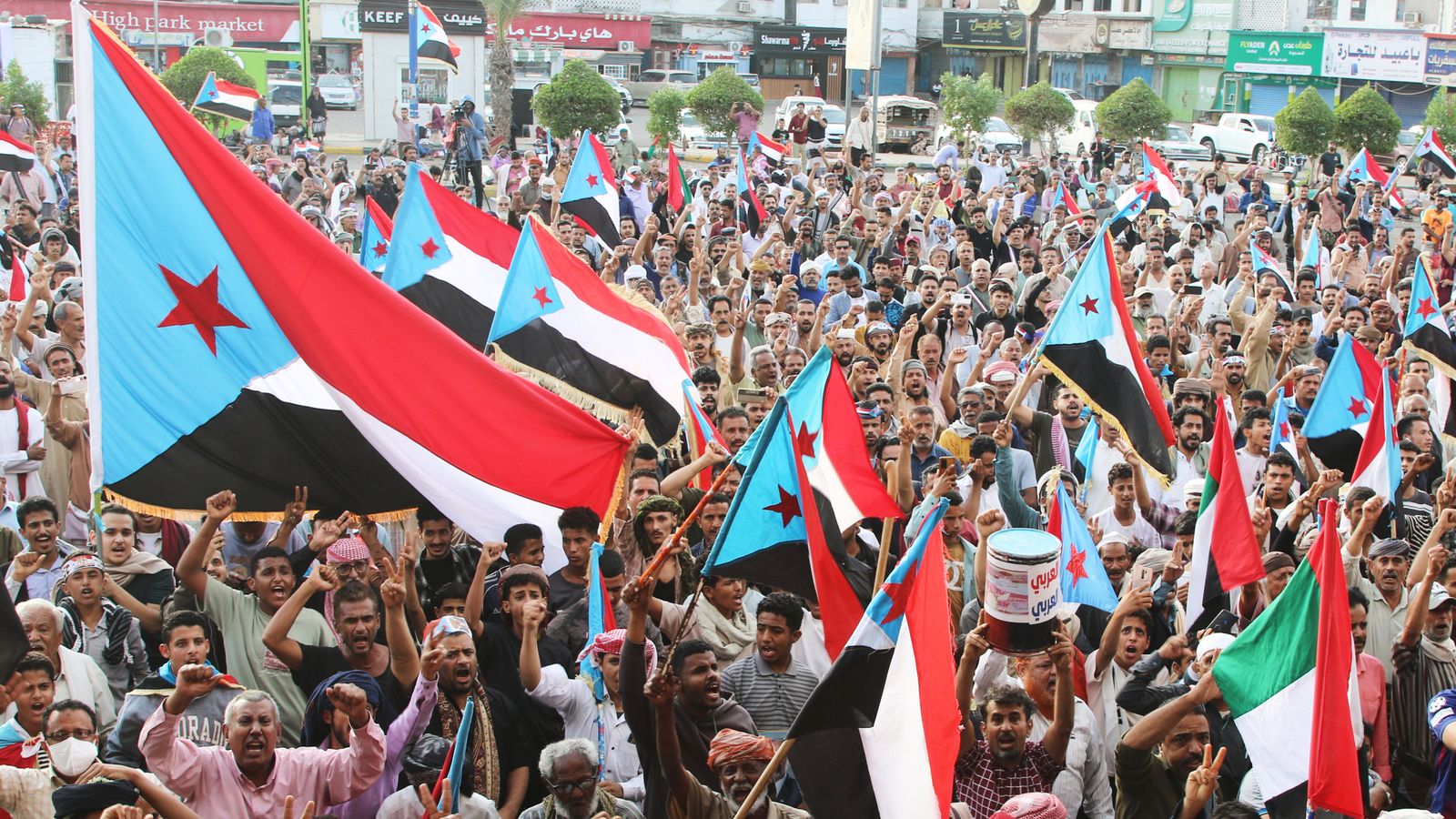
Yemen’s Separatists Declare Self-Governance, raising regional tensions
Recent developments in Yemen signal a meaningful escalation of tensions as the Southern transitional Council (STC) has formally declared self-governance in the south of the country. This move threatens too further complicate the already fragile peace process and could ignite a new phase of conflict within the nation.
the STC’s proclamation, outlining the creation of a “State of South Arabia,” encompasses the territory of the former independent South yemen, which unified with the north in 1990. This declaration comes after years of simmering discontent and a growing push for autonomy among southern Yemenis.
A History of Division
you might recall that Yemen has long been divided along political and regional lines. The north and south have experienced periods of both unity and separation, marked by conflict and instability. Following a civil war in the 1990s, the two regions were unified, but grievances persisted, fueling separatist sentiments in the south.
The current situation is rooted in the ongoing conflict between the internationally recognized government, backed by a Saudi-led coalition, and the Houthi rebels. The STC, while nominally allied with the coalition, has frequently clashed with government forces, vying for control of key territories.
The STC’s Declaration and Regional Response
The STC’s 30-article constitution lays the groundwork for an independent southern state.This bold step, however, has drawn criticism and concern from regional powers.
Saudi Arabia,a key player in the Yemeni conflict,has expressed its disapproval. The Saudi ambassador to Yemen stated that the kingdom had weary efforts to persuade the STC to de-escalate the situation and withdraw from areas like Hadramout and Mahra, but these attempts were met with resistance.
The United Arab Emirates (UAE),a significant supporter of the STC,has adopted a more cautious approach. Their foreign ministry indicated a commitment to de-escalation and regional stability, emphasizing restraint in dealing with the situation.
Potential Implications and Challenges Ahead
This declaration could significantly hinder efforts to achieve a lasting peace in Yemen.It risks fracturing the anti-Houthi alliance and potentially triggering a full-blown conflict between the STC and the government forces.
Here’s what you need to consider:
* Increased Instability: The move could exacerbate the existing humanitarian crisis and further destabilize the region.
* Fractured Alliances: It threatens to unravel the fragile coalition fighting against the Houthis.
* Complex Negotiations: Any future peace talks will need to address the demands for southern autonomy and self-determination.
The path forward remains uncertain. Dialog between the relevant parties in both northern and southern Yemen is crucial to finding a solution that respects the rights and aspirations of all Yemenis. However, achieving this will require a willingness to compromise and a commitment to prioritizing the long-term stability of the country.
Recent events, including a Houthi drone attack on an Israeli airport, highlight the broader regional security implications of the conflict in yemen. A stable and unified Yemen is essential for maintaining peace and security in the Arabian Peninsula and beyond.
Keep reading