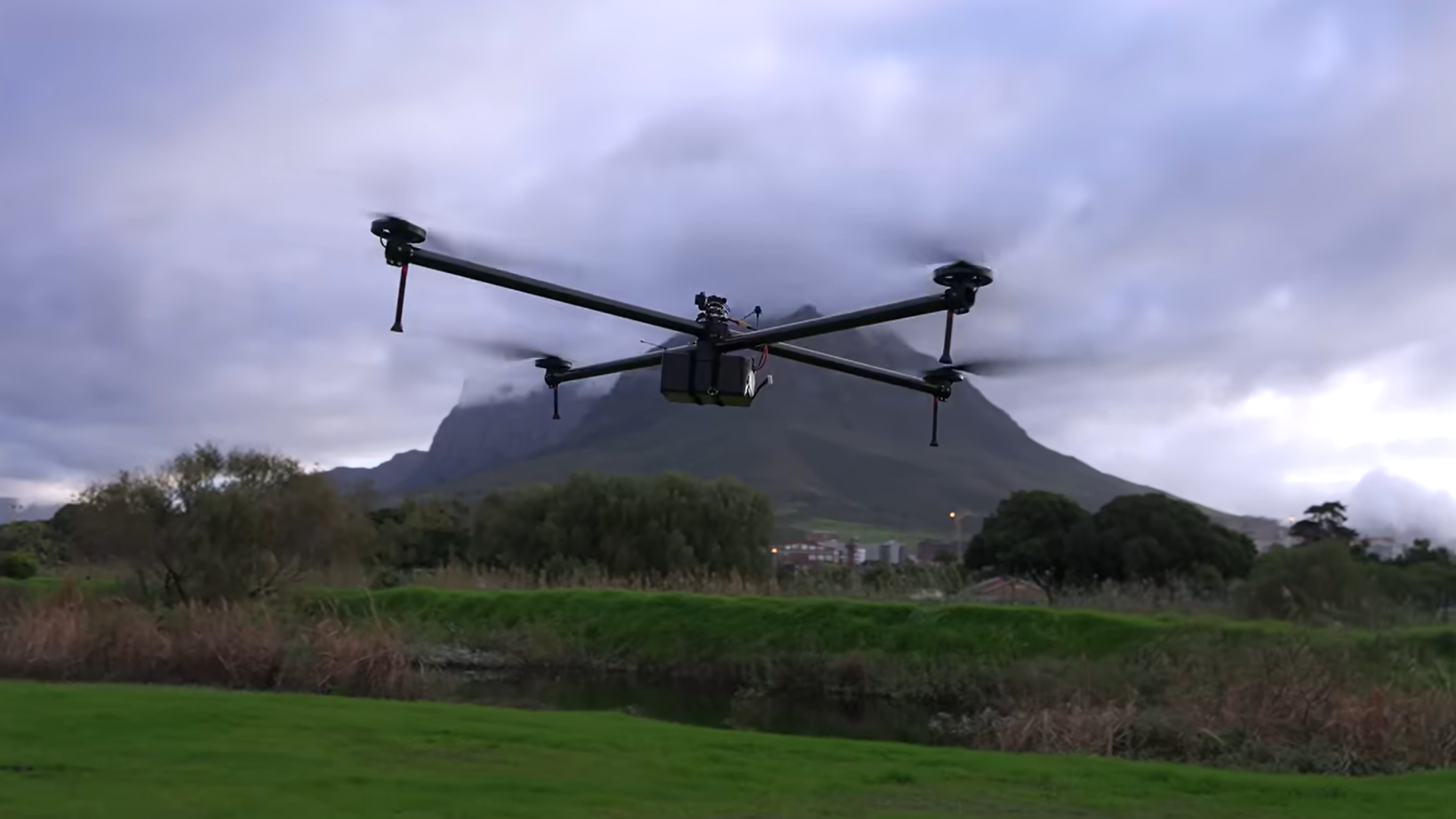
A Cape Town-based drone pilot and content creator, Luke Maximo Bell, has officially set a new Guinness World Record for the longest flight duration by a multirotor drone. The unmanned aerial vehicle (UAV) remained airborne for exactly 4 hours, 21 minutes, and 39 seconds, a feat achieved through a rigorous process of iterative engineering and software optimization.
The record-breaking flight represents a significant advancement in multirotor endurance, surpassing previous benchmarks through a combination of weight reduction, structural reinforcement, and precise autopilot tuning. Bell, who documented the development process on his YouTube channel, transitioned from a previous unofficial attempt of 3 hours, 31 minutes, and 6 seconds to the current verified duration by focusing on system efficiency rather than relying solely on battery capacity.
Engineering for Extended Flight Duration
Achieving a flight time exceeding four hours required a holistic redesign of the drone’s airframe and power management systems. According to technical documentation provided by the pilot, a primary efficiency gain was realized by replacing two-piece clamp mounts with single-piece C-style clamps, a modification suggested by viewers that reduced the aircraft’s total weight by approximately 26 grams. Further structural integrity was achieved by utilizing continuous 1.88-meter carbon fiber tubes for the rotor arms, which eliminated the weak connection points inherent in the earlier prototype.
The drone was powered by a custom-mounted, high-density solid-state battery pack weighing approximately 5 kilograms, with an energy density of 380 Wh/kg. To manage the physical stresses of such a heavy payload, Bell integrated custom 3D-printed landing gear featuring thermoplastic polyurethane joints, which provided superior shock absorption compared to rigid alternatives. These mechanical refinements were essential to maintaining stability during the extended mission.
Software Optimization and Real-Time Tuning
Hardware improvements were insufficient on their own to overcome the vibrations that plagued early test flights. Excessive oscillation interfered with the drone’s inertial measurement units (IMUs), prompting Bell to upgrade the flight controller to a Cube Orange Plus system, which features isolated internal IMUs to dampen mechanical noise. To ensure precise positioning, the craft was equipped with an external antenna linked to a Here4 base station, providing real-time kinematic (RTK) positioning accuracy within a 1-centimeter margin.
The software configuration played a critical role in power management. By employing notch filter tuning, the pilot successfully removed resonant frequencies that were causing unnecessary energy expenditure. Bell monitored the drone’s power consumption in real-time via a Wi-Fi link to his RadioMaster transmitter. Data analysis revealed that the drone consumed approximately 500 watts during straight flight, but only 450 watts during turns. Consequently, he adjusted the flight path mid-air to incorporate more frequent turns, effectively optimizing the battery discharge rate to sustain the record-breaking hover time.
Understanding Multirotor Endurance
This achievement highlights the shift toward efficiency-focused engineering in the consumer drone sector. While larger batteries are often viewed as the primary solution for increasing flight time, the results of this 261-minute flight suggest that airframe aerodynamics, component weight, and software-level power management are equally vital. By flying at a consistent speed of approximately 5.5 meters per second—roughly 20 km/h—the aircraft maintained a steady flight profile until the power reserves were nearly exhausted.
The success of this project demonstrates the influence of community-driven development, as many of the modifications were implemented following feedback from the audience following earlier, shorter flight tests. As drone technology continues to evolve, these insights into power efficiency and vibration damping are likely to inform future designs for both hobbyist and commercial long-endurance platforms.
For those interested in the technical specifications or the ongoing development of this custom airframe, additional performance logs and flight data are available through the pilot’s official YouTube channel. Future updates regarding potential endurance upgrades or new flight tests will be documented as they occur.