Zelenski Concludes Madrid Visit, Securing Spanish Support Ahead of Crucial EU Funding Debate
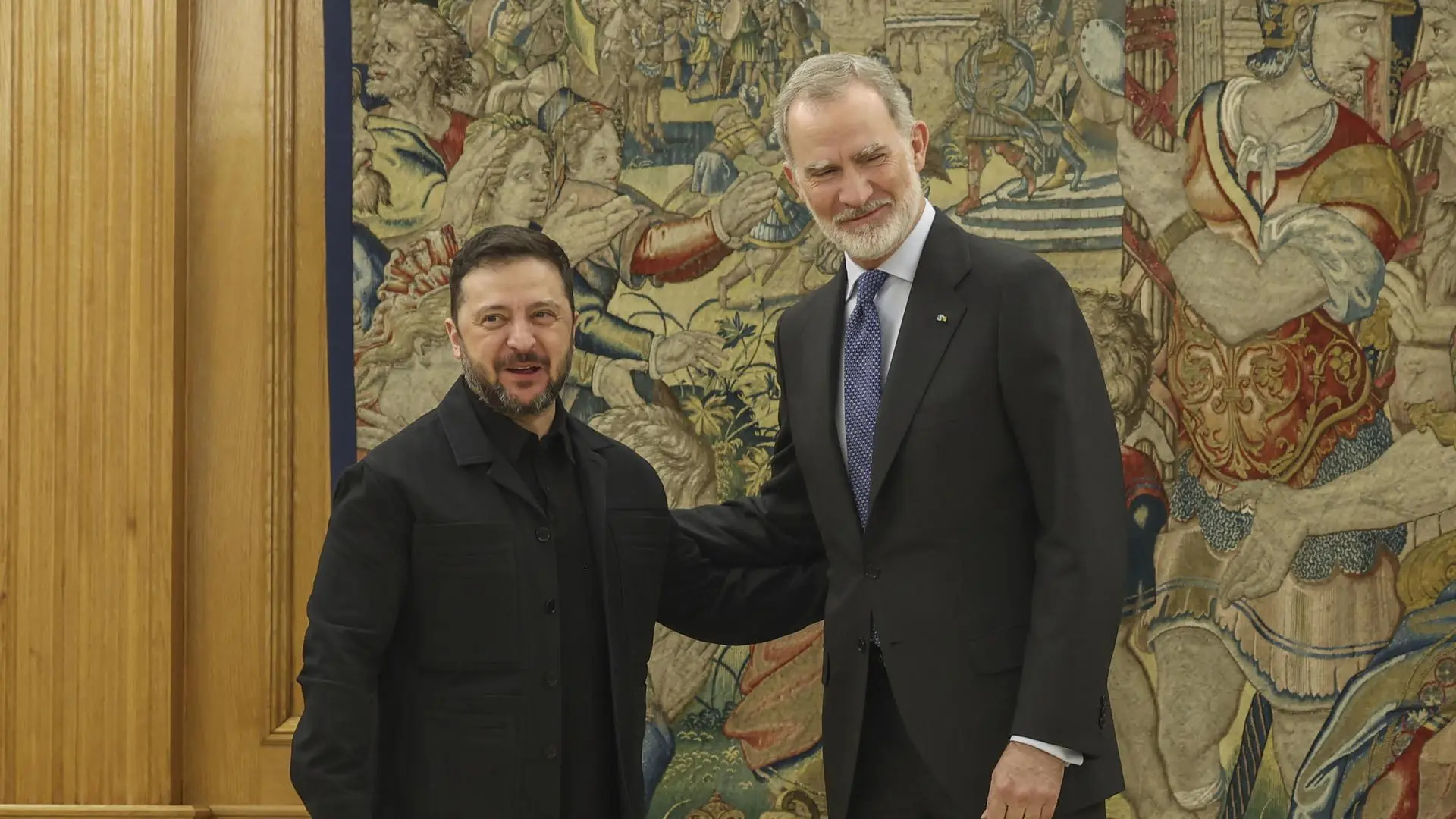
Madrid – Ukrainian President Volodymyr Zelenski concluded a significant visit to Spain on Wednesday, March 18, 2026, meeting with King Felipe VI and Prime Minister Pedro Sánchez as he continues to rally international support for his country amidst the ongoing conflict with Russia. This marks Zelenski’s fourth visit to Spain since the full-scale invasion began in February 2022, underscoring the importance of the relationship between Kyiv and Madrid. The visit comes at a critical juncture, preceding a key European Council meeting in Brussels where the allocation of a €90 billion aid package for Ukraine is expected to be a central topic of discussion, facing opposition from Hungary. The Spanish government has consistently affirmed its commitment to Ukraine’s sovereignty and territorial integrity and this visit served to reaffirm that stance.
The day began with a meeting between Zelenski and Spanish Prime Minister Pedro Sánchez, focusing on the evolving geopolitical landscape and the continued need for military, economic, and humanitarian assistance. Following the bilateral talks, Zelenski was received by King Felipe VI at the Royal Palace of Zarzuela, a symbolic gesture of Spain’s solidarity with Ukraine. The meetings in Madrid are part of a broader diplomatic push by Zelenski, who recently visited Romania, France, and the United Kingdom, seeking to maintain momentum in international support as the war enters its fifth year. The situation is further complicated by escalating tensions in the Middle East, particularly the conflict in Iran, which is impacting global energy markets and potentially influencing the dynamics of the war in Ukraine.
Strengthening Bilateral Ties: Agreements and Cooperation
Beyond the high-level political meetings, Zelenski’s visit saw the signing of several agreements designed to deepen cooperation between Spain and Ukraine. Notably, Spanish engineering and technology group Sener signed collaboration agreements with three Ukrainian defense and armament companies: Fire Point, Luch, and Radioni. These agreements signal a strengthening of defense industry ties between the two nations. According to Spanish public broadcaster RTVE, these collaborations are intended to foster technological exchange and potentially contribute to Ukraine’s defense capabilities.
two agreements were finalized with the Spanish Ministry of Foreign Affairs: one focused on technical and financial cooperation, and another aimed at fostering collaboration between diplomatic schools. These agreements demonstrate a commitment to long-term partnership and capacity building. The Spanish government emphasized that the visit served to reaffirm its sustained support for Ukraine across political, financial, humanitarian, and military domains.
Meetings with Spanish Parliament Leaders
Zelenski’s itinerary also included meetings with the presidents of both houses of the Spanish Parliament. He met with Francina Armengol, President of the Congress of Deputies, and Pedro Rollán, President of the Senate. These meetings provided an opportunity to engage with Spanish lawmakers and garner support for continued assistance to Ukraine. The visits to the Congress and Senate underscore the importance of maintaining broad political consensus within Spain regarding its policy towards Ukraine.
EU Funding Debate and the Road to Brussels
The timing of Zelenski’s visit is particularly significant given the upcoming European Council meeting in Brussels on Thursday, March 19, 2026. The Council is expected to address the stalled €90 billion aid package for Ukraine, which was approved in December 2023 but has yet to be implemented due to opposition from Hungary. As reported by El Plural, the debate surrounding the funding is complicated by the recent lifting of sanctions on Russian oil due to disruptions in the Strait of Ormuz, a situation that has raised concerns among some EU member states. Zelenski’s meetings in Madrid likely aimed to secure Spain’s continued advocacy for the aid package and to emphasize the urgency of the situation.
The €90 billion package is intended to provide Ukraine with crucial financial support to maintain its economy, rebuild infrastructure, and continue its defense efforts. The delay in its implementation has raised concerns in Kyiv and among Ukraine’s allies, as it could hinder the country’s ability to withstand the ongoing Russian aggression. Spain has been a vocal supporter of providing financial assistance to Ukraine and is expected to continue to advocate for the swift disbursement of the EU funds.
Geopolitical Context and Escalating Tensions
Zelenski’s visit to Spain takes place against a backdrop of escalating geopolitical tensions, not only in Ukraine but also in the Middle East. The ongoing conflict in Iran and its potential impact on global energy supplies are adding another layer of complexity to the situation. The disruption of oil flows through the Strait of Ormuz, a vital shipping lane, has prompted concerns about energy security and has led to calls for a reassessment of sanctions policies. These developments are likely to be discussed during the European Council meeting in Brussels, and Zelenski’s visit to Madrid may have been intended to garner support for a coordinated response to these challenges.
The war in Ukraine has had far-reaching consequences for global security and stability. It has led to a humanitarian crisis, disrupted supply chains, and fueled inflation. The conflict has also highlighted the importance of international cooperation and the need for a united front against aggression. Spain, as a member of the European Union and NATO, has played a key role in supporting Ukraine and has demonstrated its commitment to upholding international law.
The Spanish government, under Prime Minister Sánchez, has consistently condemned Russia’s invasion of Ukraine and has provided significant assistance to Kyiv, including military aid, humanitarian assistance, and financial support. Spain has also welcomed Ukrainian refugees and has pledged to help rebuild Ukraine once the conflict is over. The visit by President Zelenski is a testament to the strong relationship between Spain and Ukraine and a reaffirmation of Spain’s unwavering support for Ukraine’s sovereignty and territorial integrity.
Following his meetings in Madrid, President Zelenski departed for Brussels to participate in the European Council meeting, where he is expected to make a strong case for the urgent disbursement of the €90 billion aid package. The outcome of the Council meeting will be crucial for Ukraine’s future and will have significant implications for the broader geopolitical landscape. The international community will be closely watching the proceedings in Brussels, hoping for a positive outcome that will provide Ukraine with the resources it needs to defend itself and rebuild its future.
Key Takeaways:
- President Zelenski completed his fourth visit to Spain, meeting with King Felipe VI and Prime Minister Pedro Sánchez.
- Several agreements were signed to enhance cooperation between Spain and Ukraine, including in the areas of defense, technology, and diplomacy.
- The visit occurred ahead of a crucial European Council meeting where a €90 billion aid package for Ukraine will be debated.
- Escalating geopolitical tensions, particularly in Iran, are adding complexity to the situation and influencing the discussions surrounding aid to Ukraine.
The situation in Ukraine remains fluid and requires continued international attention and support. Stay tuned to World Today Journal for further updates on this developing story. Share your thoughts and perspectives in the comments below.
Related reading
- Morena Denies Ties to ‘El R1’ Brother Linked to Carlos Manzo Murder
- Kenya Coast Guard Rescues 39 After Boat Capsizes Off Kwale Coast
- Andy Burnham sees modest polling bounce but inherits record-low support (time.news)
- University of Iowa International Writing Program Secures Funding After Losing Federal Support (news-usa.today)