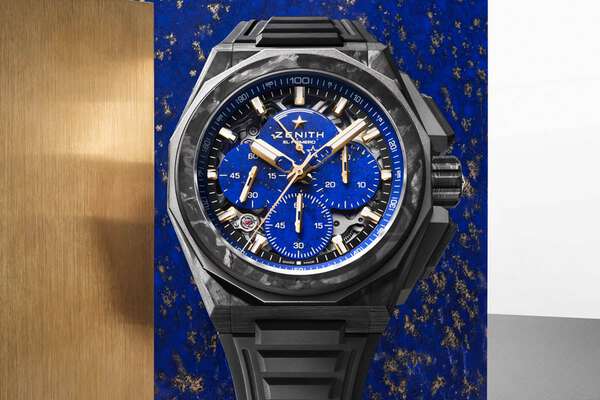
Zenith has expanded its Defy collection with a new limited-edition timepiece featuring a deep blue lapis lazuli dial contrasted against a black carbon fiber case. The watch combines traditional gemstone artistry with modern composite materials to create a high-contrast aesthetic, according to official product specifications from Zenith.
The Defy collection is known for its integration of futuristic materials and architectural design. This specific model leverages the natural, opaque intensity of lapis lazuli—a semi-precious stone prized since antiquity—and pairs it with the lightweight, industrial properties of carbon fiber to target collectors seeking both avant-garde styling and horological prestige.
By utilizing a carbon fiber chassis, Zenith reduces the overall weight of the timepiece while increasing its scratch resistance and structural rigidity. The lapis lazuli dial serves as the visual centerpiece, offering a distinct, non-uniform blue hue that varies slightly between individual pieces due to the organic nature of the stone.
Technical Specifications of the Defy Lapis Lazuli
The timepiece is housed in a case constructed from carbon fiber, a material characterized by its high strength-to-weight ratio. According to Zenith’s technical documentation, the use of carbon composites allows for a more aggressive, angular case geometry that remains comfortable for daily wear. The case is paired with a matching carbon fiber or high-grade rubber strap to maintain the monochromatic black theme that frames the dial.
At the heart of the watch is a high-frequency movement designed for precision. While the Defy line often features the El Primero chronograph movement, this specific lapis lazuli iteration focuses on the visual impact of the dial and the technicality of the case. The movement ensures a stable amplitude and high accuracy, adhering to the brand’s standards for luxury Swiss watchmaking.
The dial is crafted from a thin slice of genuine lapis lazuli. This stone is historically sourced from regions such as Afghanistan and is characterized by its deep blue color and gold-colored inclusions of pyrite. Zenith uses a precision-cutting process to ensure the stone is thin enough to fit within the watch case without adding excessive thickness to the profile.
The Role of Carbon Fiber in Modern Horology
The transition toward carbon fiber in the Defy series reflects a broader industry trend where luxury brands move away from traditional precious metals toward “tech-materials.” Carbon fiber is not merely an aesthetic choice; it provides a level of durability and lightness that stainless steel or gold cannot match. This makes the Defy series particularly appealing to a demographic that values “stealth luxury”—items that are technically superior and expensive but do not rely on traditional shimmer.
When compared to the standard steel versions of the Defy line, the carbon fiber model offers a distinct tactile experience. The matte finish of the carbon weave absorbs light, which serves to amplify the saturation of the blue lapis lazuli dial. This contrast is a deliberate design choice to create a “visual pop” that emphasizes the rarity of the gemstone.
The integration of these materials requires specialized manufacturing. Carbon fiber must be molded and cured under high pressure, a process that differs significantly from the milling and polishing of metal. Zenith’s application of this process in the Defy series demonstrates the brand’s capability to merge aerospace-grade materials with traditional Swiss craftsmanship.
Lapis Lazuli and the Tradition of Rare Dials
The use of lapis lazuli connects the modern Defy series to a long history of “stone dials” in luxury watchmaking. For centuries, lapis lazuli has been used in jewelry and art due to its vivid color. In a timepiece, a stone dial is considered a “rare” or “special edition” feature because no two stones are identical. This ensures that every watch in this limited series possesses a unique pattern of pyrite flecks and blue saturation.
From a technical standpoint, stone dials are more challenging to produce than painted or lacquered dials. The material is brittle and prone to cracking if not handled with extreme precision during the cutting and polishing phases. By successfully implementing a lapis lazuli face within the carbon fiber frame, Zenith positions this model as a bridge between the natural world and industrial innovation.
Collectors typically value these models for their “one-of-one” quality. Because the lapis lazuli is a natural mineral, the depth of the blue can vary from a bright ultramarine to a deep midnight blue, making the specific selection of the stone a critical part of the quality control process at Zenith’s manufacture.
Market Positioning and Availability
This model is released as a limited-edition piece, meaning production numbers are strictly capped. Zenith typically distributes such rare models through a select number of boutiques and authorized retailers globally to maintain exclusivity. The pricing reflects both the cost of the carbon fiber fabrication and the rarity of the high-grade lapis lazuli used in the dial.
The Defy series competes in the “luxury sport” category, where it faces competition from other high-material watches such as those using ceramic or titanium. However, the specific combination of carbon fiber and a semi-precious stone dial distinguishes this model from more common industrial luxury watches, targeting a niche of buyers who collect “material-driven” horology.
Potential buyers and collectors can find the most current availability and official pricing through the Zenith official service and boutique locator. Due to the limited nature of the production run, these pieces often move quickly through the primary market into the secondary collector market.
The next expected update regarding the Defy series will likely occur during the upcoming industry watch fairs, where Zenith traditionally unveils its annual technical advancements and new material iterations. Interested collectors are encouraged to contact their local authorized dealer for allocation details.
Do you prefer the industrial look of carbon fiber or the classic appeal of precious metals? Share your thoughts in the comments below.
Related reading