
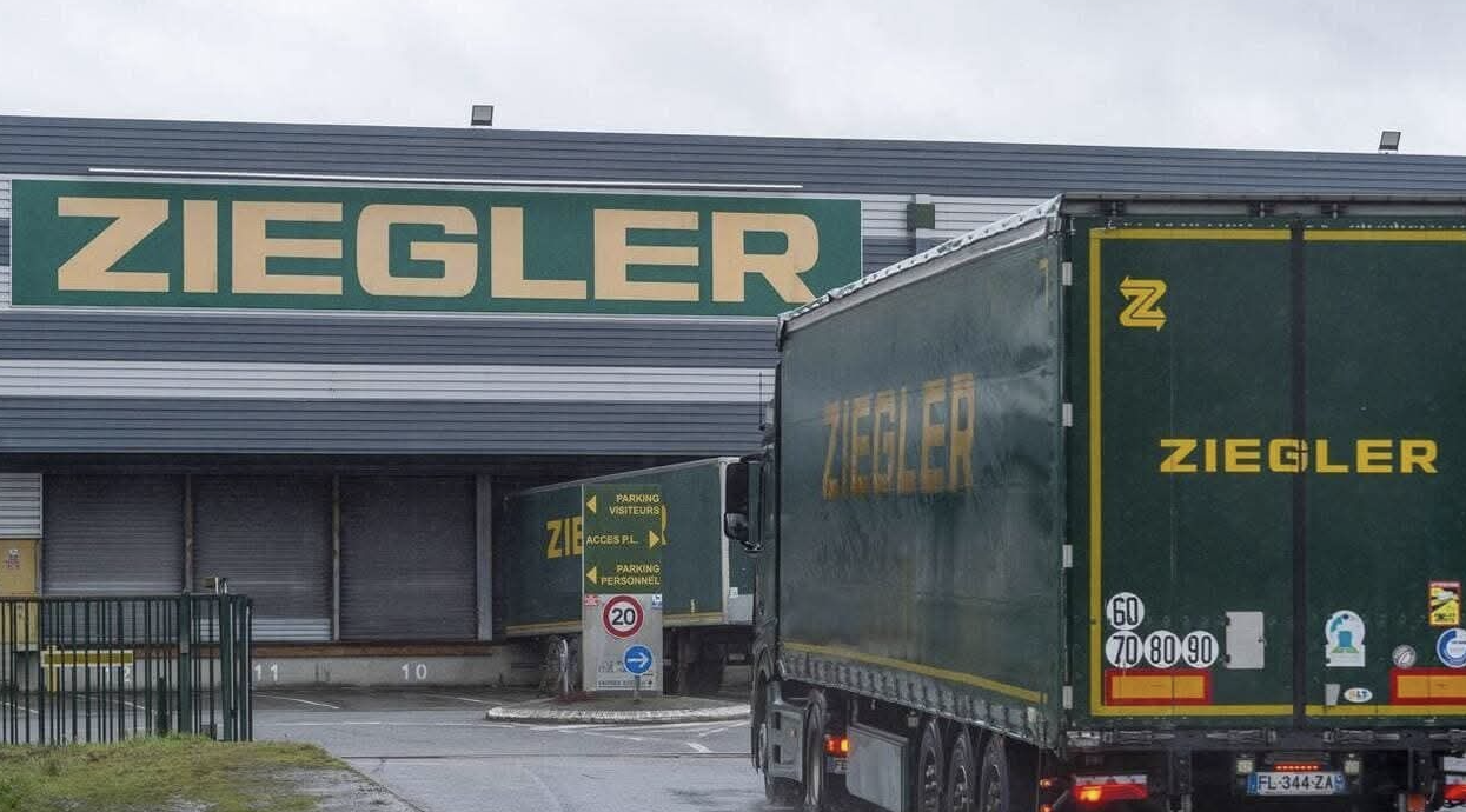
The European logistics sector is facing another significant contraction as Ziegler, a long-standing player in the international transport and freight forwarding industry, has officially filed for bankruptcy. The move, confirmed by legal filings in Belgium, marks a turbulent turning point for a company that has operated for over a century, tracing its roots back to 1908. As the logistics landscape continues to grapple with shifting global trade patterns, rising operational costs, and the lingering effects of post-pandemic supply chain adjustments, this development highlights the fragility of traditional heavy-asset transport models.
For stakeholders, employees, and business partners, the news of the Ziegler bankruptcy filing represents a period of profound uncertainty. The company, headquartered in Brussels, has long been a fixture in European road, air, and sea freight operations. According to official records from the Commercial Court of Brussels, the group has entered insolvency proceedings, a move that typically triggers a formal assessment of assets and liabilities to determine the viability of restructuring or the necessity of a total liquidation of operations. This process is governed by the Belgian Code of Economic Law, which outlines the strict requirements for companies seeking judicial protection while insolvent.
As an economist observing these trends, the logistics industry is currently undergoing a painful “right-sizing.” While global trade volumes have shown resilience in certain sectors, the high capital intensity of freight forwarding means that even established firms are highly susceptible to liquidity crunches when margins are squeezed by inflation and high interest rates. The Ziegler case is not an isolated incident; it serves as a bellwether for the pressures currently facing mid-to-large-sized European transport entities that have struggled to transition their business models to meet the demands of modern, digital-first supply chain management.
Understanding the Financial Pressures on European Freight
The decision by Ziegler to seek court protection follows a period of mounting financial pressure. In the current economic climate, transport companies are facing a “perfect storm” of rising fuel costs, labor shortages across the European Union, and a cooling demand for consumer goods—the primary driver of freight volume. Data from the European Commission’s recent economic outlook indicates that transport and logistics sectors are particularly sensitive to the fluctuations in the Eurozone’s industrial production index, which has remained stagnant through much of the current fiscal year.
When a company of this scale—with operations spanning multiple international borders—files for bankruptcy, the ripple effects are significant. The insolvency process is designed to protect creditors while attempting to preserve as much value as possible, often through the sale of business units or the consolidation of logistics hubs. However, the complexity of Ziegler’s international footprint means that the legal proceedings will likely be protracted, involving multiple jurisdictions across Europe. For those interested in the technicalities of the process, the Belgian Code of Economic Law provides the framework under which these proceedings are conducted, ensuring that all claims are processed according to statutory priority.
the shift toward “just-in-time” delivery models has increased the pressure on firms to maintain high levels of technological investment. Companies that failed to digitize their tracking, warehousing, and fleet management systems early in the decade have found themselves at a competitive disadvantage against leaner, tech-native competitors. Ziegler’s situation underscores the reality that scale alone is no longer a sufficient defense against the volatility of the global market.
Impact on Employees and Global Supply Chains
The most immediate concern following the Ziegler bankruptcy filing is the welfare of the workforce. With thousands of employees across its various international branches, the uncertainty regarding job security is palpable. In cases of insolvency, the appointment of a court-appointed administrator is the next logical step. These administrators are tasked with reviewing the company’s books and determining if any part of the business can be saved. Under European labor laws, specifically those aligned with the EU Directive on the protection of employees in the event of the insolvency of their employer, staff are entitled to certain protections regarding unpaid wages and severance, though the process is often lengthy.
For global supply chains, the disruption may be localized but significant. Ziegler has historically functioned as a key partner for many SMEs (Small and Medium Enterprises) that rely on specialized freight forwarding services. The sudden loss of such a partner forces these companies to scramble for new logistics providers, likely at higher costs, which further contributes to inflationary pressures in the finished goods market. This highlights the interdependency of our modern economy, where the failure of one mid-tier player can cause a cascading effect for hundreds of smaller businesses.
Key Takeaways for the Logistics Sector
- Market Volatility: The transport industry remains highly vulnerable to interest rate hikes and rising overheads.
- Regulatory Oversight: Insolvency proceedings are being managed under the strict oversight of the Commercial Court of Brussels to ensure transparency.
- Operational Risk: Companies failing to modernize their digital infrastructure are increasingly at risk of insolvency in a competitive, tech-driven market.
- Workforce Protection: Employees are subject to specific legal protections under EU insolvency directives, though the transition period remains hard.
What Happens Next?
As the situation develops, the focus will shift to the court-appointed administrators and their report to the judiciary. The next confirmed checkpoint involves the submission of the administrator’s assessment to the Commercial Court, which will determine whether a restructuring plan (such as a judicial reorganization) is feasible or if the company must move toward a full liquidation of its assets. This report will be a critical indicator of whether any portion of the Ziegler business can be salvaged or if the brand will be broken up and sold in parts.
For those tracking the company’s status, official updates are typically published through the Belgian Official Gazette (Moniteur belge), which serves as the primary repository for corporate insolvency filings and judicial announcements. Investors and industry analysts should monitor these filings closely for information regarding the timeline of the liquidation or potential acquisition of assets by competitors. In the coming weeks, we expect to see more clarity regarding the future of the company’s remaining logistics contracts and the potential for a managed wind-down of operations.
The collapse of a legacy firm like Ziegler serves as a sobering reminder of the challenges inherent in the global freight sector. As we continue to cover this story, I invite our readers to share their insights on how this bankruptcy might reshape regional logistics corridors. Your perspective is vital as we analyze the broader implications for the European economy. Stay tuned to World Today Journal for further updates as legal proceedings unfold.