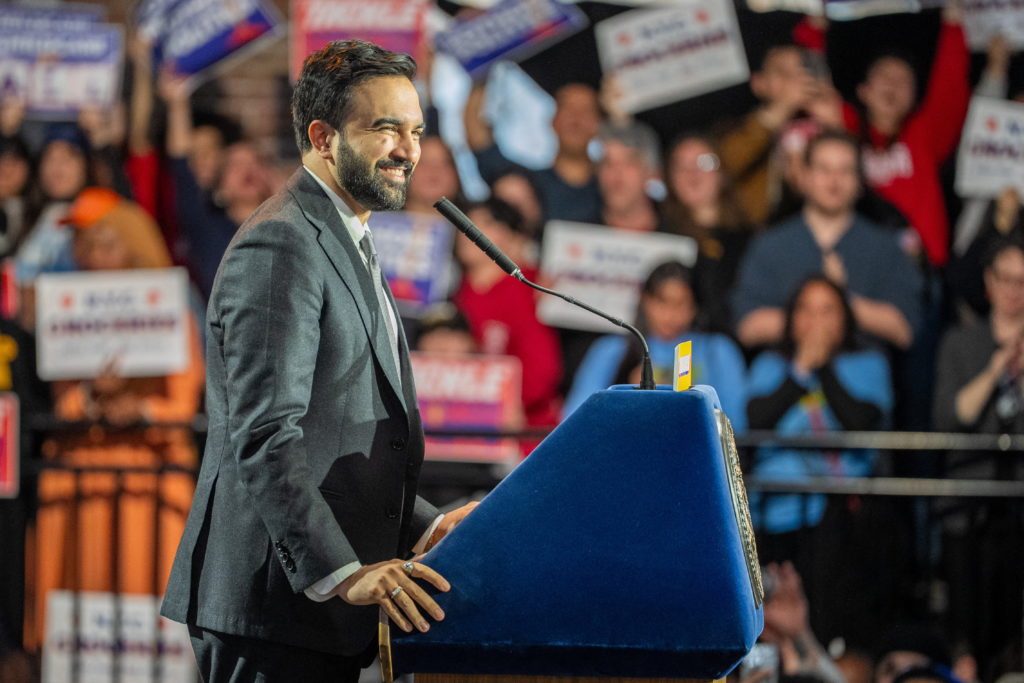
Zohran Mamdani, a New York State Assemblymember, is organizing a slate of progressive candidates to compete against established Democratic incumbents in upcoming New York primary elections. This effort aims to shift the Democratic Party’s ideological direction toward more left-leaning policies, according to reporting from Politico and CNN.
The movement led by Mamdani represents a concentrated attempt to test the political influence of the progressive wing within the state’s dominant political party. By backing a specific group of challengers, Mamdani is positioning himself as a key figure in a broader effort to reshape the Democratic platform from the ground up. This strategy focuses on targeting seats held by long-term incumbents whom progressives argue have drifted too far from the needs of working-class constituents.
This surge in primary activity comes at a time of heightened tension between the Democratic Party’s moderate establishment and its growing progressive faction. While the Democratic Party maintains a significant majority in New York, the internal struggle over policy priorities—ranging from housing affordability to criminal justice reform—has become increasingly public. The upcoming primaries serve as a critical battleground for determining which wing of the party will hold the most leverage in Albany and Washington.
Why is Zohran Mamdani targeting Democratic incumbents?
Mamdani’s strategy centers on the belief that the current Democratic leadership has failed to deliver on core progressive promises. In his recent political mobilizations, Mamdani has sharply criticized the mainstream Democratic Party, arguing that it has become too closely aligned with corporate interests and has lost touch with its grassroots base, according to CNN. His critiques often focus on the party’s handling of economic inequality and its reluctance to adopt more radical reforms.

By rallying around a specific slate of challengers, Mamdani is attempting to move beyond individual campaigns to create a unified progressive front. This “slate” approach allows for shared resources, coordinated messaging, and a collective political identity. This method is designed to maximize the impact of progressive voters who might otherwise be fragmented across different local and congressional races. The goal is not just to win individual seats, but to fundamentally alter the composition of the Democratic caucus.
The political clout Mamdani is testing is rooted in his ability to mobilize highly organized, ideologically driven voter blocs. As a prominent member of the movement that includes the Democratic Socialists of America (DSA), Mamdani leverages a network of activists who are deeply engaged in local organizing. This grassroots power is being used to challenge the traditional reliance on party-endorsed candidates and large-scale donor support.
How are progressive challengers reshaping the New York political landscape?
The rise of these challengers is part of a documented trend where the political left is actively targeting Democratic incumbents to force a shift in party priorities. Analysis from The Economist suggests that this movement is not isolated to New York but reflects a broader national tension within the Democratic Party. In New York, however, the concentration of progressive organizing makes the primary elections particularly consequential.
The challengers supported by this movement typically advocate for a specific set of policy shifts that contrast with the establishment’s more incremental approach. These include:
- Housing Reform: Aggressive measures to expand rent control and increase social housing.
- Economic Policy: Higher taxes on the wealthy to fund public services and expanded social safety nets.
- Criminal Justice: Significant reforms to policing and investments in community-based alternatives.
- Climate Action: Rapid transitions to renewable energy and increased accountability for fossil fuel companies.
These policy differences create a clear divide in the upcoming primary contests. While incumbents often emphasize stability and their ability to work within existing systems to achieve incremental gains, progressive challengers argue that the current system is incapable of addressing urgent crises like the housing shortage or climate change. This ideological friction is expected to define the rhetoric of the primary season.
What are the key stakes for the upcoming New York primaries?
The outcome of these primary elections will have immediate implications for both the New York State Legislature and the federal delegation. If the progressive slate achieves significant victories, it could lead to a more polarized but more ideologically cohesive Democratic caucus. This would likely result in more frequent clashes between progressive lawmakers and moderate leadership during budget negotiations and policy debates.
For the Democratic Party establishment, these challenges represent a threat to the traditional hierarchy and the party’s ability to present a unified front to general election voters. There is a growing concern among moderates that high-profile primary battles could alienate centrist voters and weaken the party’s hold on competitive districts. However, proponents of the progressive movement argue that a more robust and ideologically clear party is better equipped to win in a changing political environment.
The effectiveness of Mamdani’s slate will also depend on voter turnout and the ability to translate grassroots enthusiasm into actual votes. In many New York districts, primary elections see significantly lower turnout than general elections, making the highly organized progressive base a potentially decisive factor. The ability to reach non-traditional voters and maintain momentum through the election cycle remains a central challenge for the movement.
Comparison of Political Approaches in New York Primaries
The following table outlines the core differences in strategy and policy between the two primary factions competing in the upcoming elections, based on current political reporting.
| Feature | Democratic Establishment | Progressive Challengers |
|---|---|---|
| Primary Goal | Incremental reform and party unity | Systemic change and ideological shift |
| Funding Base | Traditional donors and PACs | Small-dollar grassroots donations |
| Housing Policy | Market-based incentives and moderate regulation | Expanded rent control and public housing |
| Legislative Style | Negotiation within existing structures | Pressure from outside the establishment |
Why does this matter for the broader Democratic Party?
The battles occurring in New York serve as a laboratory for the national Democratic Party. The success or failure of Mamdani’s efforts will likely influence how progressive movements organize in other urban centers and states. If a unified slate can successfully unseat established incumbents, it may embolden similar movements in other parts of the country, potentially shifting the national Democratic platform toward the left.
Furthermore, the New York primaries highlight the ongoing struggle over the definition of “progressivism.” As the party attempts to balance the demands of its more radical wings with the need to appeal to a broader, more moderate electorate, the results in New York will provide clear data on which approach is more electorally viable. This tension is not merely academic; it has real-world consequences for how the party approaches everything from healthcare to foreign policy.
Observers are also watching to see how the Democratic National Committee and state party leadership respond to these challenges. Whether the party responds with increased support for incumbents or attempts to co-opt progressive messaging will be a key indicator of how the establishment intends to manage internal dissent in the coming years.
The next major milestone in this political cycle will be the official filing of candidate declarations and the release of formal campaign finance reports for the primary candidates. These filings will provide clearer insight into the actual scale of the funding and organization behind Mamdani’s slate.
What do you think about the shift toward progressive candidates in New York? Share your thoughts in the comments below and share this article with your network.
Keep reading
- Prabowo Proposes Ad Hoc Court for SOE Losses; Minister Clarifies It Was Only an Example
- Partial Building Collapse in Marseille: Illegal Neighboring Works Suspected
- Cadillac F1 Appoints Marcin Budkowski as Team Principal After Shaking Up Leadership (newsdirectory3.com)
- Tennessee Progressive Justin Pearson Wins Democratic Congressional Primary (news-usa.today)