
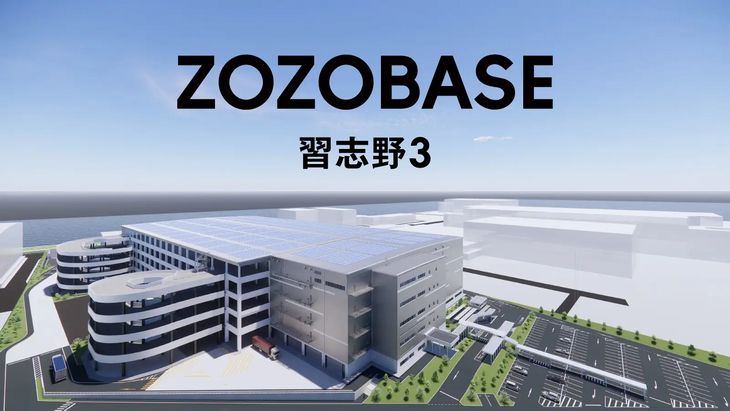
The Japanese e-commerce giant ZOZO, the operator of the fashion platform ZOZOTOWN, is scaling up its logistics automation with the announcement of a novel high-tech distribution center. The company is establishing ZOZOBASE Narashino 3
in Narashino City, Chiba Prefecture, with a bold operational goal to achieve approximately 50% labor reduction through advanced automation according to a press release dated April 30, 2026.
This strategic expansion represents a significant leap in the company’s effort to combat labor shortages and optimize the “last mile” of delivery. By integrating cutting-edge robotics and AI-driven sorting systems, ZOZO aims to streamline the flow of fashion apparel from warehouse to customer, reducing the reliance on manual handling in one of Japan’s most competitive retail sectors.
The move follows the successful implementation of similar technologies at previous sites. The company is leveraging data and operational experience from its earlier automation projects to push the boundaries of efficiency at the Narashino facility, signaling a shift toward a more autonomous logistics infrastructure.
Scaling Automation: From Tsukuba to Narashino
The ambition for 50% labor reduction at ZOZOBASE Narashino 3 is a direct evolution of the company’s previous efforts in Tsukuba. In November 2023, ZOZO launched ZOZOBASE Tsukuba 3
, which was designed to be the company’s largest logistics hub at the time as reported by the company. That facility successfully achieved a 30% reduction in labor requirements through the introduction of domestic-first robotics and automated sorting systems.
The transition from a 30% reduction in Tsukuba to a targeted 50% in Narashino indicates a rapid acceleration in the adoption of autonomous mobile robots (AMRs) and automated storage and retrieval systems (AS/RS). These technologies allow the company to handle higher volumes of inventory with fewer human operators, addressing the critical challenge of the “2024 problem” in Japan—a regulatory change in trucking and logistics hours that has intensified the need for operational efficiency across the supply chain.
Industry analysts note that for a fashion e-commerce company, automation is particularly challenging due to the variety of garment shapes, sizes, and fabrics, which are harder for robots to handle than standardized boxes. ZOZO’s ability to scale this automation suggests a breakthrough in how apparel is processed and sorted at scale.
Strategic Impact and Operational Timeline
The new facility is not merely about cost-cutting but about scalability. As ZOZOTOWN continues to expand its product offerings and user base, the volume of returns and exchanges—common in fashion e-commerce—requires a highly flexible and swift logistics network. The Narashino hub is positioned to act as a critical node in this network, reducing the time between a customer’s click and the delivery of the garment.
According to the company’s recent announcement, ZOZOBASE Narashino 3 is expected to reach full-scale operational capacity by October 2028 per the April 2026 release. This timeline allows for a phased rollout of the automation software and hardware, ensuring that the 50% labor-saving target is met through iterative testing and optimization.
Key Logistics Evolution Timeline
| Facility | Key Milestone | Labor Reduction Goal/Result |
|---|---|---|
| ZOZOBASE Tsukuba 3 | Full operation started Nov 1, 2023 | 30% reduction achieved |
| ZOZOBASE Narashino 3 | Announced April 30, 2026 | Approximately 50% reduction targeted |
| ZOZOBASE Narashino 3 | Full operation expected Oct 2028 | Targeted full-scale automation |
What This Means for the E-commerce Landscape
The drive toward a 50% reduction in manual labor has broader implications for the Japanese retail sector. As the workforce shrinks, companies that can successfully integrate robotics into their core operations will gain a significant competitive advantage in speed and cost. ZOZO’s approach serves as a blueprint for other fashion retailers who have traditionally relied on manual picking and packing.

the focus on “labor saving” (省人化, *shojinka*) in Japan is often viewed not as a replacement of workers, but as a necessary adaptation to a shrinking labor pool. By automating repetitive and physically demanding tasks, ZOZO can reallocate its human workforce to more complex roles, such as quality control and customer experience management, which are harder to automate.
The integration of these systems is expected to lower the per-item processing cost, potentially allowing the company to maintain competitive pricing or offer faster shipping options to its global and domestic customer base.
The next major milestone for the project will be the gradual ramp-up of equipment installation and staff training leading up to the October 2028 full-operation date. Updates on the facility’s progress are typically shared via the company’s official corporate news portal.
Do you suppose extreme automation in fashion logistics will improve the customer experience, or is the human touch still necessary for quality control? Share your thoughts in the comments below.