
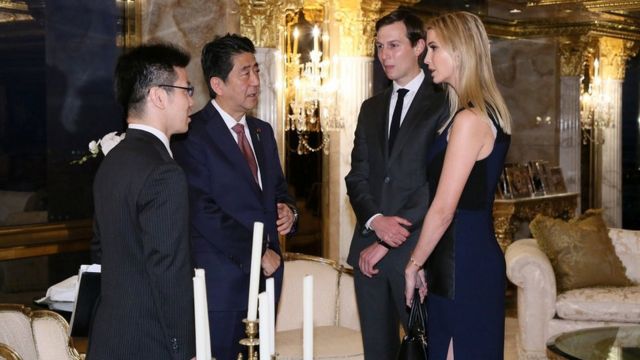
On April 25, 2026, the White House confirmed that Jared Kushner, President Donald Trump’s son-in-law, and Steve Witkoff, the administration’s special envoy for Middle East affairs, would travel to Islamabad, Pakistan, to engage in discussions with Iranian Foreign Minister Abbas Araghchi regarding ongoing U.S.-Iran negotiations.
The announcement came amid heightened diplomatic activity surrounding efforts to revive stalled talks between Washington and Tehran, with both sides signaling cautious optimism about potential progress. According to White House press secretary Karoline Leavitt, Kushner and Witkoff departed for Pakistan on the morning of April 25 to meet with Araghchi, who had arrived in Islamabad the previous day.
Leavitt emphasized that while Kushner and Witkoff would lead the initial engagement, Vice President J.D. Vance and other senior officials remained on standby, ready to travel to Pakistan if negotiations showed meaningful advancement. “The team is prepared to move quickly if conditions warrant,” Leavitt stated during a press briefing on April 24.
The planned talks in Islamabad followed a marathon 21-hour negotiation session held the prior week, during which Vance, Witkoff, and Kushner had maintained contact with Iranian intermediaries. A U.S. Official familiar with the discussions noted that while future meetings were under consideration, no formal schedule had been set as of mid-April.
Iran’s Foreign Minister Araghchi confirmed his itinerary on April 24, stating he would visit Pakistan, Oman, and Russia as part of a regional diplomatic tour. Pakistani officials reported that Araghchi had arrived at Nur Khan Air Base near Islamabad on the evening of April 24, where he was expected to discuss preconditions for direct U.S.-Iran talks with Pakistani authorities.
Despite initial expectations that Vance might join the delegation, subsequent reports indicated a shift in plans. On April 19, President Trump told U.S. Media that Vance would not participate in the renewed negotiations due to security concerns, a decision later reiterated by administration officials. Instead, Vance would remain in the United States, monitoring developments and ready to deploy if needed.
The April 25 meeting between Kushner, Witkoff, and Araghchi represented a continuation of backchannel diplomacy aimed at de-escalating tensions over Iran’s nuclear program and regional influence. While no breakthrough was immediately announced, officials described the talks as constructive, with both sides exploring frameworks for future direct engagement.
As of the latest verified updates, no formal agreement had emerged from the Islamabad discussions, but the White House maintained that diplomatic channels remained open. Officials urged continued patience, emphasizing that any progress would depend on sustained coordination and mutual concessions.
For ongoing coverage of U.S.-Iran diplomatic developments, readers are encouraged to consult official statements from the U.S. Department of State and the Ministry of Foreign Affairs of the Islamic Republic of Iran.
Share your thoughts on this evolving diplomatic situation in the comments below, and help spread awareness by sharing this article with others interested in global affairs.