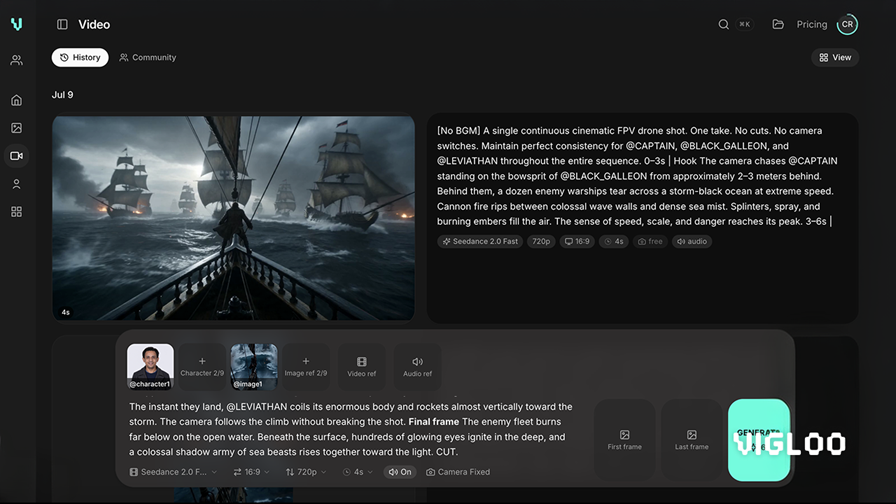
Vigloo, a prominent platform specializing in short-form drama content, launched its AI-driven production suite, “Vigloo Studio,” in beta on September 10. The new tool aims to streamline the fragmented video production process by consolidating various generative AI functions into a single interface, according to company announcements regarding the platform’s technological expansion.
The introduction of Vigloo Studio addresses a common bottleneck in the digital content industry: the reliance on multiple, disparate software tools to complete a single project. By integrating AI-powered image and video generation capabilities directly into the creation workflow, the platform seeks to reduce the technical barriers for creators developing serialized, short-form narrative content. The move aligns with a broader trend in the entertainment sector where platforms are increasingly providing proprietary tools to encourage user-generated content and professional-grade production within a single ecosystem.
Consolidating the Digital Production Workflow
Before the launch of Vigloo Studio, creators producing short-form dramas typically managed a complex stack of software, often juggling as many as 15 different applications to handle tasks such as scriptwriting, storyboard visualization, character consistency, and video rendering. By centralizing these functions, Vigloo intends to provide a more cohesive environment for creators who operate under the tight production schedules common in the vertical video market.
The beta version of the studio incorporates generative AI models that allow users to produce visual assets and motion sequences without leaving the platform’s interface. According to industry reports, this integration is designed to minimize the time-consuming “context switching” that occurs when moving files between distinct editing, animation, and AI-generation platforms. This shift toward “all-in-one” production environments is increasingly viewed as a standard development for platforms looking to retain creators by lowering the barrier to entry for high-quality production.
The Rise of AI in Short-Form Drama
The short-form drama market, characterized by rapid-fire pacing and mobile-first consumption, has seen significant growth in recent years. The integration of AI into this space is not merely a convenience but a strategic necessity, as the demand for high-frequency content updates continues to rise. By utilizing AI to assist in character design and scene generation, studios can theoretically produce more episodes in less time while maintaining consistent visual aesthetics.
Vigloo’s entry into the AI production space follows a period of rapid industry investment in generative media. While the technology is still in its beta phase, the platform’s decision to move toward a unified studio model highlights the competitive pressure to offer more than just a distribution outlet. Platforms are now competing to become “creative hubs” that manage the entire lifecycle of a production, from the initial concept phase through to final delivery for mobile audiences.
What Comes Next for Vigloo Studio
The beta release serves as a critical testing ground for the platform to gather user feedback and refine its AI model performance. For independent creators and production houses, the success of this tool will likely be measured by the quality of the final output and the ease with which these AI-generated assets can be edited into professional-grade dramas. As the company continues to iterate on the software, the industry will be watching to see if the reduction in tools leads to a measurable increase in content output volume.
Users interested in the latest features and potential updates to the beta version can monitor official announcements from the platform’s news portal. As Vigloo transitions from a distribution-only model to an end-to-end production provider, further updates on tool capabilities and integration features are expected in the coming months. Readers are encouraged to share their thoughts on the evolution of AI-driven production in the comments section below.