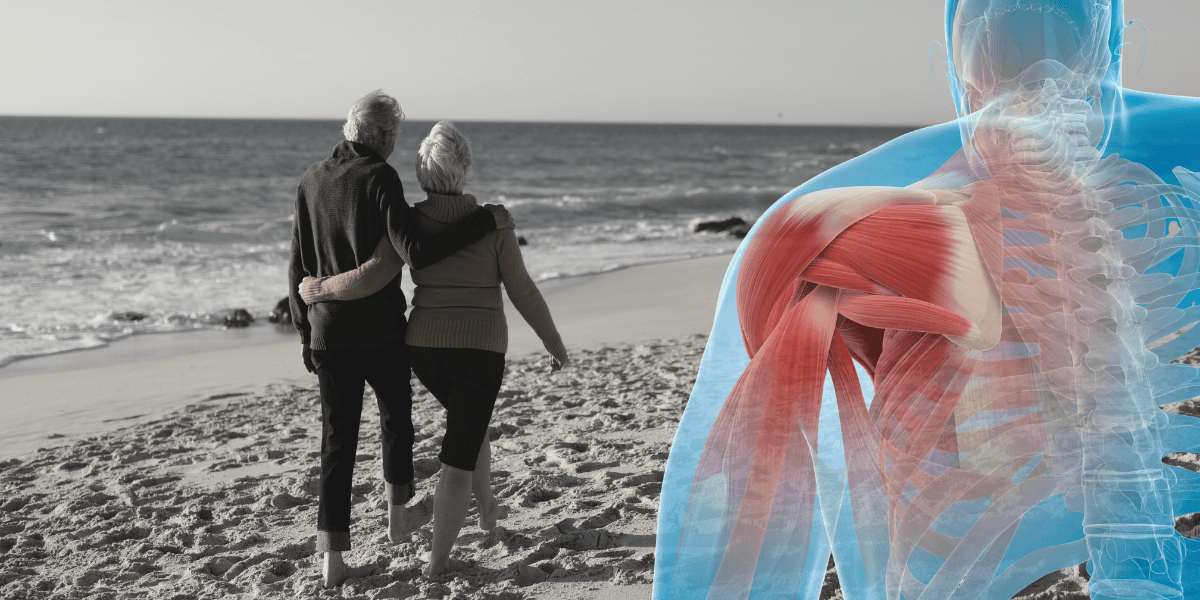
The conventional wisdom around preventing age-related decline often centers on rigorous exercise regimens. But what if a surprisingly accessible activity – a brisk walk – could significantly reduce the risk of a debilitating condition affecting millions of older adults? Fresh research from Örebro University in Sweden suggests that even moderate physical activity, well below currently recommended levels, can have a profound impact on health, and longevity. This is particularly relevant in addressing sarcopenic obesity, a dangerous combination of muscle loss and excess body fat.
The study, led by Docent Andreas Nilsson and Professor Fawzi Kadi at Örebro University, reveals that as little as 75 minutes of brisk walking per week can halve the risk of developing sarcopenic obesity compared to being completely inactive. This finding challenges the notion that substantial, strenuous exercise is the only path to maintaining health in later life. Professor Kadi, a specialist in sports physiology, has dedicated his research to understanding the mechanisms behind chronic diseases and developing preventative models, particularly focusing on the role of lifestyle changes. His function at the School of Health Sciences emphasizes the importance of both physical activity and healthy eating habits.
Understanding Sarcopenic Obesity: A Growing Health Concern
Sarcopenic obesity is more than just having both fat and muscle loss; it’s a dangerous synergy. As individuals age, they naturally tend to lose muscle mass – a process called sarcopenia. Simultaneously, many experience an increase in body fat. When these two occur together, the consequences can be severe. The combination dramatically increases the risk of falls, fractures, chronic diseases, and a loss of independence, significantly impacting quality of life. It’s a condition increasingly recognized as a major public health challenge, particularly as global populations age.
The Örebro University study, which involved over 860 participants aged 65-79 across four European countries, utilized accelerometer data – wearable devices that objectively measure physical activity – to provide a more accurate assessment of participants’ movement than self-reported exercise habits. This is a crucial methodological strength, as self-reporting is often subject to recall bias and overestimation. Researchers found that even low-intensity activity, such as simply standing up and moving slowly, offered some protective benefits for those who didn’t meet recommended activity levels. “For those who cannot manage more strenuous physical activity, it can still be very valuable to reduce sedentary time. All movement counts,” explains Andreas Nilsson.
The Power of 75 Minutes: How Much Activity is Enough?
The study’s findings are particularly encouraging because they demonstrate that substantial health benefits can be achieved with a relatively modest time commitment. While current guidelines often recommend 150 minutes of moderate-intensity exercise per week, the Örebro University research suggests that even 75 minutes can yield significant reductions in the risk of sarcopenic obesity – a 50% reduction, to be precise. Interestingly, the most active participants in the study experienced an even greater benefit, with up to an 80% lower risk. This suggests a dose-response relationship, where more activity leads to greater protection, but even small increases in activity can make a difference.
This research builds upon Professor Kadi’s broader work on preventative models in primary care settings. His research focuses on mitigating the onset of chronic diseases and promoting healthy aging through lifestyle interventions. The emphasis on physical activity, combined with dietary changes, is central to his approach. The study’s findings underscore the importance of integrating these lifestyle interventions into routine healthcare practices, particularly for older adults.
Beyond Walking: The Importance of All Movement
While the study specifically highlighted the benefits of brisk walking, the researchers emphasize that all forms of movement are valuable. The accelerometer data revealed that even low-intensity activities, such as light housework or walking around the house, contributed to a reduction in risk. This is particularly important for individuals with mobility limitations or chronic health conditions who may uncover it difficult to engage in more strenuous exercise. The key message is to break up prolonged periods of sitting and incorporate movement into daily routines whenever possible.
The findings align with a growing body of evidence demonstrating the detrimental effects of sedentary behavior. Prolonged sitting has been linked to a wide range of health problems, including cardiovascular disease, type 2 diabetes, and certain types of cancer. By reducing sedentary time and increasing overall physical activity, individuals can significantly improve their health and well-being, regardless of age.
Implications for Public Health and Future Research
The implications of this research are significant for public health initiatives aimed at promoting healthy aging. The findings suggest that interventions focused on increasing physical activity levels, even at modest levels, could have a substantial impact on reducing the burden of sarcopenic obesity and improving the quality of life for older adults. Public health campaigns could emphasize the accessibility of walking as a simple and effective way to maintain health. Healthcare providers could play a role in counseling patients about the benefits of physical activity and helping them develop personalized exercise plans.
Future research should focus on identifying the specific mechanisms by which physical activity protects against sarcopenic obesity. Understanding these mechanisms could lead to the development of more targeted interventions. Research is needed to explore the optimal type, intensity, and duration of exercise for different populations. It’s similarly important to investigate the role of other lifestyle factors, such as diet and sleep, in preventing sarcopenic obesity.
Key Takeaways
- Modest Activity Matters: Just 75 minutes of brisk walking per week can halve the risk of sarcopenic obesity.
- All Movement Counts: Even low-intensity activities can provide health benefits.
- Objective Measurement is Key: Using accelerometers provides a more accurate assessment of physical activity than self-reporting.
- Public Health Implications: Promoting walking and reducing sedentary time are important public health strategies.
The research from Örebro University provides a compelling reminder that it’s never too late to start moving. A simple, accessible activity like walking can have a profound impact on health and well-being, particularly as we age. As Professor Kadi’s work continues to illuminate the pathways to healthy aging, we can expect further insights into the power of lifestyle interventions to prevent chronic diseases and promote a longer, healthier life. Further studies are planned to investigate the long-term effects of these interventions and to explore the potential for personalized exercise prescriptions.
The next step in this research will be a larger-scale, multi-center trial to confirm these findings and to investigate the impact of different types of physical activity on sarcopenic obesity. We encourage readers to share their own experiences with physical activity and healthy aging in the comments below.
Related reading