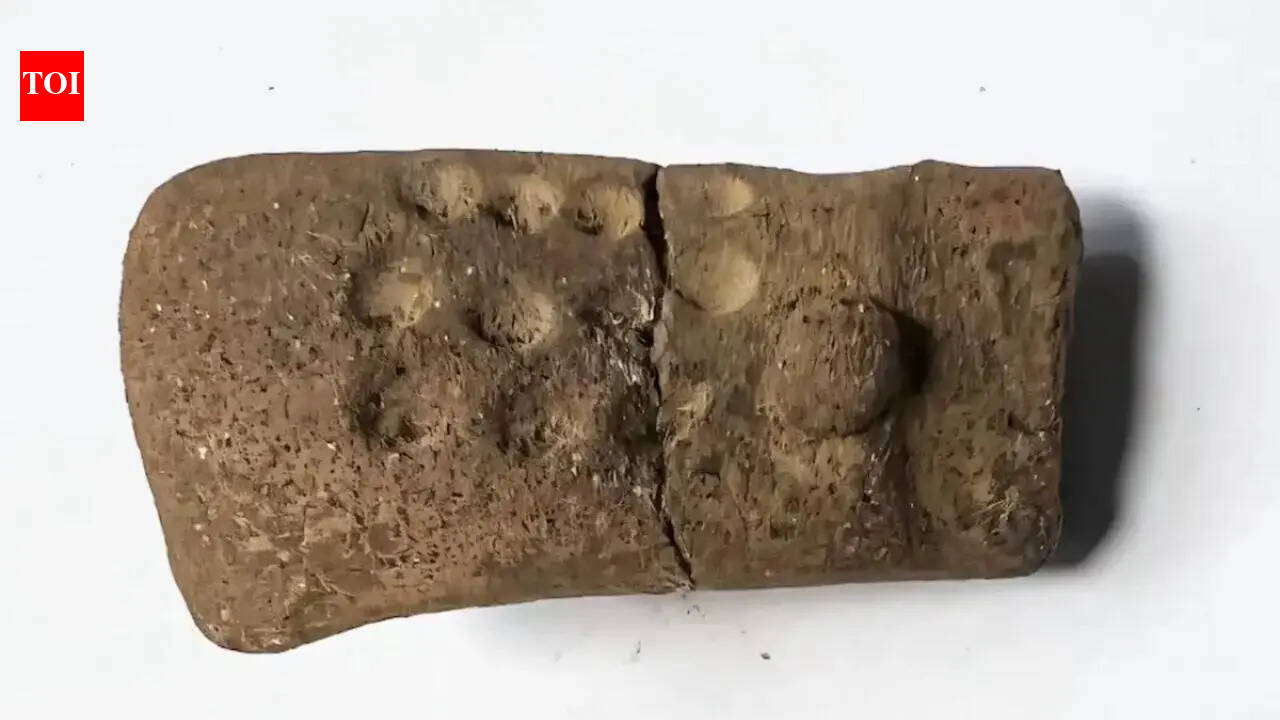
Archaeologists in Guatemala have discovered a 2,700-year-old ceramic figurine featuring a series of 11 mysterious dots that may represent an early form of numerical or calendrical notation. Found at the site of Ceibal, the artifact dates to the Middle Preclassic period, a time when complex social structures were beginning to emerge in the Maya lowlands. Researchers suggest the markings could indicate a sophisticated level of record-keeping previously thought to have developed much later in the region.
The discovery, detailed in research published in the journal Science, provides new evidence regarding the development of writing and counting systems in Mesoamerica. According to the study led by Takeshi Inomata of the University of Arizona, the figurine—a small, stylized human figure—features an arrangement of circular indentations that do not appear to be merely decorative. The researchers argue that these dots could reflect the early stages of the Long Count calendar or other mathematical systems that became central to later Maya civilization.
As an editor with over 14 years of experience covering global archaeological findings, I find this discovery particularly compelling because it challenges the timeline of intellectual development in the Americas. The transition from simple symbolism to structured record-keeping is often the bedrock of complex societal organization. By examining these artifacts, we gain a clearer view of how early inhabitants of the Petén region managed time and trade.
The Context of the Ceibal Discovery
The Ceibal site, located in the department of Petén, Guatemala, has long been a focal point for understanding the origins of the Maya. Excavations conducted by the University of Arizona and international partners have revealed that the site was a major center for ceremonial activity as early as 950 B.C. The discovery of the figurine occurred within a stratified layer that allows archaeologists to date the object to approximately 700 B.C., based on radiocarbon dating of associated organic materials, as reported by the American Association for the Advancement of Science.
The 11 dots are arranged in a specific pattern on the object, which led the team to consider their functional purpose. In Mesoamerican archaeology, numerical systems were often represented by dots and bars. While the standard Maya system used a dot for one and a bar for five, the dots on the Ceibal figurine do not follow the later, standardized format. Instead, they represent a potential precursor or a localized variant of counting that predates the formal hieroglyphic scripts found at sites like San Bartolo or Tikal.
Rethinking Early Writing Systems
For decades, the dominant academic consensus held that writing and complex calendrical notation emerged in Mesoamerica toward the end of the Preclassic period, around 300 B.C. to 200 B.C. However, the findings at Ceibal suggest that these practices may have roots extending several centuries deeper. This shift in the timeline forces a reassessment of how early Maya societies interacted and shared information.

According to the research team, these markings suggest that the necessity to track time—perhaps for agricultural cycles or ceremonial events—was a driving force behind the invention of written symbols. If these dots are indeed an early form of numerical record, it indicates that the cognitive shift toward formalizing abstract concepts occurred much earlier than previously confirmed. This finding aligns with broader archaeological shifts that see the Middle Preclassic as a period of intense innovation rather than a slow, gradual development.
Why This Matters for Mesoamerican History
The implications of this discovery extend beyond the figurine itself. It highlights the role of Ceibal as a “cradle” of civilization, where disparate groups may have exchanged ideas that eventually coalesced into the Maya cultural identity. By documenting these early symbols, researchers are piecing together a map of cultural transmission that spanned the Gulf Coast and the Maya lowlands.
Furthermore, the discovery underscores the importance of continued excavation in Guatemala. As noted by the Smithsonian Magazine, the interplay between the Olmec culture and early Maya groups remains a subject of intense academic debate. The dots on the figurine serve as a tangible link in this historical chain, providing a rare glimpse into the intellectual life of a society that left few written records behind.
Next Steps in Archaeological Research
The research team continues to analyze the stratigraphic data from the Ceibal excavations to determine if similar markings appear on other artifacts from the same period. Future investigations will likely focus on comparing these dots with other early symbolic representations found across Mesoamerica to determine if they constitute a widespread system or a localized anomaly.
Archaeologists are expected to release further analysis on the cultural significance of the figurine as part of ongoing reports from the Ceibal project. For those interested in the latest updates on Maya archaeology, the Instituto Nacional de Antropología e Historia (INAH) provides periodic updates on excavations and findings across the region. We encourage readers to share their thoughts on these findings in the comments section below.
Related reading