
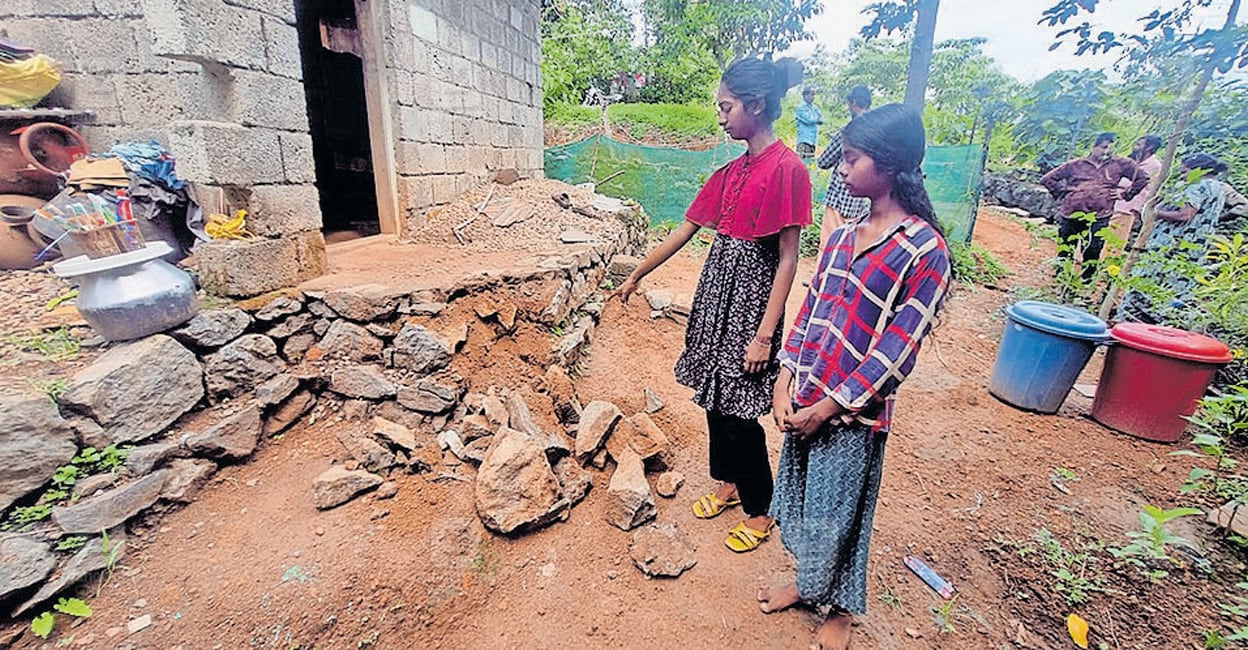
For most, a bedroom is the ultimate sanctuary, the one place where the world is shut out and safety is assumed. But for one family in Kerala, India, that sanctuary became a scene of absolute terror when a routine night of sleep turned into a life-threatening emergency. The incident, which has sent shockwaves through the local community, highlights a harrowing reality of living in biodiversity-rich regions where the line between wilderness and domestic space is dangerously thin.
The nightmare began when a 15-year-old girl, asleep in her bed, was suddenly attacked by a venomous snake that had fallen from the ceiling. In a bizarre and frightening sequence of events, reports indicate that both a snake and a rat fell from the roof simultaneously, with the snake striking the teenager immediately. The girl was rushed to the hospital, where she remains in critical condition in the Intensive Care Unit (ICU), fighting for her life after the potent venom entered her system.
While the medical emergency was the immediate crisis, the subsequent investigation into the home revealed a situation far more systemic and terrifying than a single stray reptile. As family members and rescuers searched the premises, they discovered that the house had essentially become a hub for a snake infestation in Kerala homes. Venomous snakes were found hiding in the most intimate of spaces—under bedsheets, beneath mattresses, and tucked away in the corners of the bedrooms.
The most alarming discovery, however, lay beneath the structure itself. Upon inspecting the foundation, it was revealed that the ground under the house was riddled with an extensive network of burrows. The residence was not merely being visited by snakes; it was built atop a colony. The level of infestation was so severe that the family, traumatized and unable to ensure their own safety, was forced to abandon their home and seek refuge in a neighbor’s house while professional rescuers worked to clear the property.
The Anatomy of a Residential Infestation
The discovery of snakes under blankets and beds suggests a prolonged period of coexistence that went unnoticed by the inhabitants. In tropical regions like Kerala, the architecture of older homes—often featuring crawl spaces, wooden ceilings, and proximity to lush vegetation—can provide ideal conduits for wildlife. When snakes enter a home, they are typically following a food source. The presence of a rat falling from the ceiling alongside the snake confirms that a rodent infestation had likely paved the way for the predators.
Snakes are opportunistic hunters. A home with a rodent problem becomes a high-value hunting ground. Once a snake finds a secure entry point—such as a gap in the roof, a broken vent, or a crack in the foundation—it will establish a territory. The discovery of multiple burrows beneath the house indicates that the property had become a breeding or hibernation site, likely due to the soil composition and the availability of prey.
For the victims, the psychological impact of discovering that their private sanctuary was shared with venomous reptiles is profound. The transition from a secure home to a place where one must fear the very blankets they sleep under is a trauma that extends far beyond the physical injury of the snakebite.
The Ecology of Fear: Why Kerala is Prone to Snake Encounters
Kerala’s unique geography makes it a hotspot for reptile-human conflict. With its heavy monsoon rains, dense forests, and sprawling wetlands, the state supports a diverse population of snakes, including the “Big Four” venomous species of India: the Spectacled Cobra, the Common Krait, the Russell’s Viper, and the Saw-scaled Viper. During the monsoon season, which often sees extreme rainfall, snake burrows are frequently flooded, forcing the reptiles to seek higher, drier ground—which often leads them directly into human dwellings.
According to data on snakebite management, India reports some of the highest rates of snakebite morbidity globally. The World Health Organization (WHO) classifies snakebite envenoming as a neglected tropical disease, emphasizing that it primarily affects poor, rural populations who lack immediate access to anti-venom.
The incident in Kerala underscores a growing trend of urban and semi-urban encroachment into natural habitats. As forests are cleared for residential development, animals are displaced. When homes are built without proper “snake-proofing”—such as sealed foundations and cleared perimeters—the risk of these encounters increases exponentially. The fact that this family found a colony under their floor suggests a failure in the structural integrity of the home’s base, allowing wildlife to tunnel upward into the living quarters.
Medical Emergency: The Critical Window of Treatment
The 15-year-old girl’s current status in the ICU highlights the severity of venomous bites. Depending on the species of snake, the venom can cause neurotoxicity (affecting the nervous system and breathing) or hemotoxicity (destroying red blood cells and causing internal bleeding). In cases where a snake falls from a height, the surprise element often leads to a “defensive strike,” which can result in a significant injection of venom.
The critical window for snakebite treatment is the first few hours following the strike. Rapid transport to a facility equipped with Anti-Snake Venom (ASV) is the only definitive treatment. ASV is produced from the antibodies of horses or sheep that have been immunized against specific snake venoms. For a teenager, the dosage and monitoring must be precise to avoid anaphylactic shock, which is why the ICU setting is mandatory for severe cases.
Medical professionals emphasize that the “golden hour” after a bite is crucial. While the girl was rushed to the hospital, the severity of her condition suggests that the venom may have been highly potent or that the bite occurred in a sensitive area, necessitating intensive life-support measures to maintain respiratory function while the ASV works to neutralize the toxins.
Practical Guide: How to Snake-Proof Your Home
This incident serves as a stark warning for homeowners in tropical and biodiversity-rich regions. Preventing a snake infestation requires a multi-pronged approach focusing on habitat modification and structural sealing.
Eliminating the Food Source
The primary reason snakes enter a home is the presence of prey. A rodent-free home is a snake-free home. Homeowners should:
- Seal all gaps in walls and floors where mice or rats could enter.
- Store all food in airtight containers to avoid attracting rodents.
- Regularly clear out cluttered areas (old newspapers, cardboard boxes) where rodents like to nest.
Structural Fortification
To prevent reptiles from entering the living space, focus on the “envelope” of the house:
- The Roof: Inspect ceilings and roof eaves for holes. Use mesh or sealant to close gaps where snakes can slip through.
- The Foundation: Ensure there are no cracks in the concrete slab or gaps around plumbing pipes. If the house is built on stilts or has a crawl space, ensure the perimeter is blocked with heavy-duty hardware cloth.
- Doors and Windows: Install weather-stripping or door sweeps to eliminate the gap between the door and the floor.
Environmental Management
The area surrounding the house should be managed to discourage snakes from approaching:
- Keep grass trimmed short; snakes prefer tall grass for cover.
- Remove piles of wood, stones, or debris from the immediate perimeter of the house.
- Avoid planting thick, low-lying shrubs directly against the walls of the home.
First Aid: What to Do (and Not Do) During a Snakebite
In the panic of a snake encounter, many people resort to outdated and dangerous “folk remedies.” Based on international medical guidelines, here is the correct protocol for handling a snakebite:

The “Do’s”:
- Stay Calm: Keeping the heart rate low slows the spread of venom through the lymphatic system.
- Immobilize the Limb: Keep the bitten area still and at or slightly below the level of the heart. Use a splint if available.
- Remove Constrictions: Quickly take off rings, watches, or tight clothing, as the area will likely swell.
- Seek Immediate Medical Help: Transport the victim to the nearest hospital with anti-venom capabilities immediately.
The “Don’ts”:
- Do NOT cut the wound: Making incisions in the skin can cause infection and increase bleeding.
- Do NOT try to suck out the venom: Here’s a myth and is completely ineffective; it may also poison the person attempting it.
- Do NOT apply a tourniquet: Cutting off blood flow completely can lead to tissue necrosis and may cause a massive release of venom into the system once the tourniquet is removed.
- Do NOT apply ice: Extreme cold does not neutralize venom and can damage the skin.
The Path Forward for the Affected Family
The family in Kerala now faces a dual challenge: the medical recovery of their daughter and the reclamation of their home. Clearing a property of a snake colony is a complex process that requires professional wildlife handlers. Simply killing a few snakes is insufficient; the burrows must be collapsed, and the entry points permanently sealed to prevent a recurrence.
This incident highlights the need for better public awareness regarding the signs of a snake infestation. While a single snake in a garden is common, the presence of rodents in the ceiling or unexplained gaps in the floor should be treated as a high-priority warning sign. The trauma of finding venomous reptiles under a bed is a reminder that the boundaries between the natural world and the human world are porous, and vigilance is the only true defense.
As the community awaits updates on the 15-year-old girl’s recovery, the event serves as a catalyst for local authorities to potentially launch awareness campaigns on residential safety and the importance of maintaining rodent-free environments to prevent such tragedies.
The next confirmed checkpoint for this story will be the medical update regarding the girl’s condition and the official report from the wildlife rescue team on the total number of reptiles removed from the premises. We will continue to monitor the situation as it develops.
Do you live in an area prone to wildlife encounters? Share your safety tips or experiences in the comments below, and share this article to help others protect their homes.