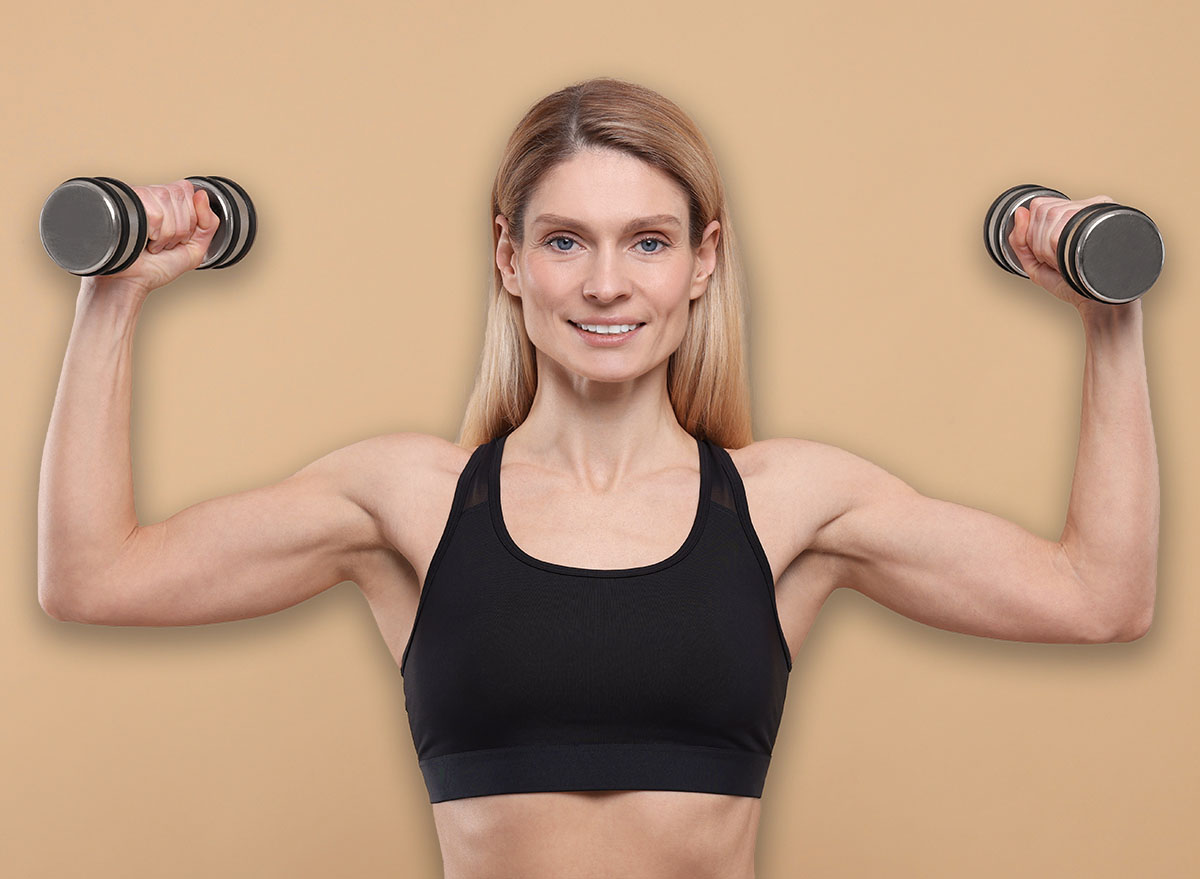
As we age, maintaining functional strength becomes increasingly important for daily independence and quality of life. For adults over 55, shoulder strength plays a crucial role in everything from reaching overhead shelves to carrying groceries and maintaining quality posture. While gym machines offer guided movement, they often isolate muscles in ways that don’t reflect how the body naturally functions. Dumbbell exercises, by contrast, engage multiple joints and muscle groups simultaneously, promoting better coordination, joint stability and real-world strength.
Research supports the effectiveness of free-weight training for older adults. A 2020 study published in the International Journal of Exercise Science found that multi-joint resistance exercises produced strength gains comparable to single-joint movements in trained individuals, suggesting that compound movements can be just as effective for building muscle while offering greater functional carryover. Another study in the Journal of Human Kinetics demonstrated that different shoulder exercises activate distinct portions of the deltoid muscle, highlighting the importance of varied training for balanced development. These findings underscore why a combination of pressing movements and targeted isolation work can be particularly beneficial for rebuilding shoulder strength after 55.
For those looking to build shoulder strength without relying on machines, dumbbells offer a versatile and accessible solution. They allow for natural movement patterns, accommodate individual joint limitations, and enable progressive overload — key factors in safe and effective strength training. The following five dumbbell exercises are specifically chosen for their ability to build functional shoulder strength, improve stability, and support everyday movement patterns in adults over 55.
Seated Shoulder Press
The seated shoulder press provides a stable foundation for building pressing strength without the balance demands of standing variations. By sitting on a bench with back support, you can focus entirely on driving the weight overhead while minimizing strain on the lower back. This makes it an ideal starting point for those rebuilding confidence in overhead movements or managing mild balance concerns.
To perform the seated shoulder press, sit on a bench with feet flat on the floor and a dumbbell in each hand at shoulder height, palms facing forward. Engage your core, maintain your spine neutral, and press the weights upward until your arms are fully extended but not locked. Lower the dumbbells slowly and with control back to shoulder height. This movement primarily targets the anterior and lateral deltoids, with significant involvement from the triceps and upper chest muscles.
For optimal results, perform 3 sets of 8 to 12 repetitions, resting 60 seconds between sets. Choose a weight that allows you to maintain proper form throughout — the last two reps should feel challenging but not compromise your technique. Variations include using a neutral grip (palms facing each other) to reduce shoulder strain, alternating arms to increase core engagement, or incorporating tempo training (e.g., 3 seconds up, 3 seconds down) to increase time under tension.
A key form cue is to avoid leaning back excessively during the press, which can shift stress to the lumbar spine. Instead, maintain contact between your lower back and the bench, and keep your head in a neutral position — neither craning forward nor tilting back. This ensures the shoulders remain the primary drivers of the movement.
Lateral Raise
Lateral raises target the middle portion of the deltoid muscle, which is essential for shoulder width, stability, and lateral arm movements like opening doors or reaching to the side. While often considered an isolation exercise, this movement plays a critical role in balancing shoulder development, especially since pressing movements tend to emphasize the front deltoids more heavily.
Stand with feet shoulder-width apart, holding a dumbbell in each hand at your sides with a slight bend in the elbows. Keeping your core engaged and shoulders relaxed, raise the weights out to the sides until your arms are parallel to the floor. Pause briefly at the top, then lower the dumbbells slowly and with control. Throughout the motion, focus on initiating the movement from your shoulders rather than lifting with your traps or using momentum.
Due to the lighter loads typically used, lateral raises respond better to higher repetitions and strict form. Aim for 3 sets of 10 to 15 repetitions, resting 45 seconds between sets. Effective variations include performing the exercise seated to reduce momentum, doing single-arm raises to address imbalances, or using a slow tempo (e.g., 2 seconds up, 3 seconds down) to increase muscular control. A common mistake is shrugging the shoulders upward during the lift — instead, keep your shoulders down and back, imagining you’re pouring water from a pitcher at the top of the movement.
Arnold Press
The Arnold press combines shoulder flexion with external rotation, creating a larger range of motion that engages more portions of the deltoid muscle compared to a standard press. Popularized by Arnold Schwarzenegger, this exercise promotes shoulder mobility and balanced development by involving the anterior, lateral, and posterior deltoids throughout the movement.

Start seated or standing with dumbbells held at shoulder height, palms facing your body. As you press the weights overhead, rotate your palms outward so they face forward at the top of the movement. Fully extend your arms without locking the elbows, then reverse the motion as you lower the weights — rotating your palms back toward your body as they return to shoulder height. This continuous rotation ensures the shoulders work through multiple planes of motion.
The Arnold press primarily targets the deltoids, with secondary involvement from the triceps and upper chest. Perform 3 sets of 8 to 10 repetitions, resting 60 seconds between sets. Since of the added rotational component, it’s important to employ a lighter weight than you would for a standard shoulder press to maintain control. Variations include performing the movement standing to increase core engagement, alternating arms for added coordination challenge, or slowing the tempo to emphasize time under tension. A key technique tip is to avoid rushing the rotation — the movement should feel smooth and deliberate, not jerky or rushed.
Single-Arm Push Press
The single-arm push press introduces lower-body drive into the pressing motion, transforming it into a full-body movement that builds power, coordination, and core stability. By using a slight knee dip and explosive leg drive, you can generate more force to press the weight overhead, making it possible to handle heavier loads than with strict pressing alone — while still maintaining strict control over the movement.
Stand with feet hip-width apart, holding one dumbbell at shoulder height. Dip slightly by bending your knees (about a quarter squat), then explosively drive through your legs to press the weight upward. As your legs extend, use that momentum to help push the dumbbell fully overhead. Lower the weight under control back to your shoulder, then repeat before switching sides. This exercise engages the deltoids, triceps, quadriceps, and core muscles, promoting integrated strength that translates to real-world actions like lifting objects from the ground to overhead.
Perform 3 sets of 6 to 10 repetitions per side, resting 60 seconds between sets. The lower body involvement allows for slightly heavier loads than strict pressing, but the focus should remain on controlled, explosive movement rather than maxing out. Variations include using both arms simultaneously (two-arm push press), performing the movement seated to reduce leg drive, or slowing the tempo to emphasize control. A crucial form cue is to brace your core before initiating the dip — this prevents excessive arching of the lower back and ensures stability throughout the lift.
Rear Flyes
Rear flyes target the posterior deltoids and upper back muscles, which are often undertrained despite their importance for posture, shoulder health, and balancing the effects of frequent pushing movements. Strengthening the rear delts helps counteract forward shoulder posture — a common issue from prolonged sitting or desk work — and contributes to a more stable, resilient shoulder joint.
To perform rear flyes, hold a dumbbell in each hand and hinge forward at the hips until your torso is nearly parallel to the floor, keeping a slight bend in the knees and your back flat. Let the arms hang straight down from the shoulders, palms facing each other. With a slight bend in the elbows, raise the weights out to the sides in an arc until they reach shoulder height, squeezing your shoulder blades together at the top. Lower the dumbbells slowly and with control, maintaining tension in the rear delts throughout the movement.
This exercise works the rear deltoids, rhomboids, and middle trapezius muscles. Aim for 3 sets of 10 to 15 repetitions, resting 45 seconds between sets. Effective variations include performing the movement seated on a bench to reduce momentum, doing single-arm flyes to address imbalances, or using a slow tempo (e.g., 2 seconds up, 3 seconds down) to increase muscular endurance. A key form tip is to avoid lifting with the traps or using momentum — instead, focus on initiating the movement from your shoulder blades and keeping your shoulders down away from your ears.
Tips for Building Shoulder Strength After 55
Success in building shoulder strength later in life depends less on lifting heavy weights and more on consistency, technique, and smart programming. The following evidence-informed strategies can help maximize results while minimizing injury risk:
- Prioritize compound movements when fresh: Exercises like the shoulder press and push press require coordination and energy. Performing them early in your workout ensures you can maintain proper form and maximize neural drive.
- Control the weight’s path: Avoid letting the dumbbells drift forward, backward, or sideways during presses or raises. A straight, vertical bar path (for presses) or lateral arc (for raises) ensures target muscles are engaged effectively.
- Pause at peak contraction: Taking a brief pause at the top of each rep — whether your arms are overhead or out to the sides — increases time under tension and improves mind-muscle connection.
- Use lighter loads for isolation work: Movements like lateral and rear flyes are most effective when performed with strict form and moderate weight. Heavier loads often lead to compensatory movements that reduce target muscle engagement.
- Monitor shoulder positioning: As fatigue sets in, there’s a tendency for the shoulders to creep forward or elevate. Regularly check that your shoulders remain down and back, especially during pressing movements.
- Rotate variations periodically: Small changes — such as switching from standing to seated presses, altering grip orientation, or adjusting tempo — can prevent plateaus and reduce repetitive stress on joints.
These principles support long-term joint health and functional strength, helping adults over 55 maintain independence and confidence in their physical abilities.
Before beginning any latest exercise routine, especially if you have pre-existing joint concerns, cardiovascular conditions, or balance issues, consult with a healthcare provider or certified fitness professional. They can help tailor a program to your individual needs and ensure safe progression.
Building shoulder strength after 55 isn’t about lifting the heaviest weights possible — it’s about developing resilient, functional strength that supports daily life. By focusing on controlled movements, balanced development, and consistent practice, you can improve shoulder stability, enhance overhead mobility, and feel more capable in everyday activities. Start with manageable weights, prioritize form over load, and progress gradually. Over time, these small, consistent efforts add up to meaningful gains in strength, posture, and overall well-being.