
How British rail’s Pioneering Computer system,TOPS,Revolutionized freight and Saved Steam Locomotives
For today’s businesses,real-time operational oversight is standard. but fifty years ago, British Rail (BR) achieved a revolution in logistics with its Total Operations Processing System (TOPS). This groundbreaking system wasn’t just about moving freight; it inadvertently played a crucial role in preserving a critically important piece of railway history. Let’s explore how TOPS transformed rail operations and its surprising legacy.
A Network Ahead of Its Time
In 2024, Aylen, in his paper The convergence of computing and telecommunications: Cold War to coal trains, highlighted the sophistication of BR’s network. It was state-of-the-art for the era, utilizing:
* Co-axial cables for long-distance trunk lines, capable of transmitting the equivalent of 960 telephone channels (4Mhz analogue transmission).
* Balanced copper cable pairs for local links, employing 12-channel frequency division multiplex systems. This provided high-quality 4Khz speech paths to every major station, office, and freight yard nationwide.
This network wasn’t confined to the UK. Ventek minicomputers were deployed in France (dunkirk), and a Telex link connected to Zeebruggee, Belgium. data from freight centers flowed into the central computer room at Marylebone via a 400km distributed data network.
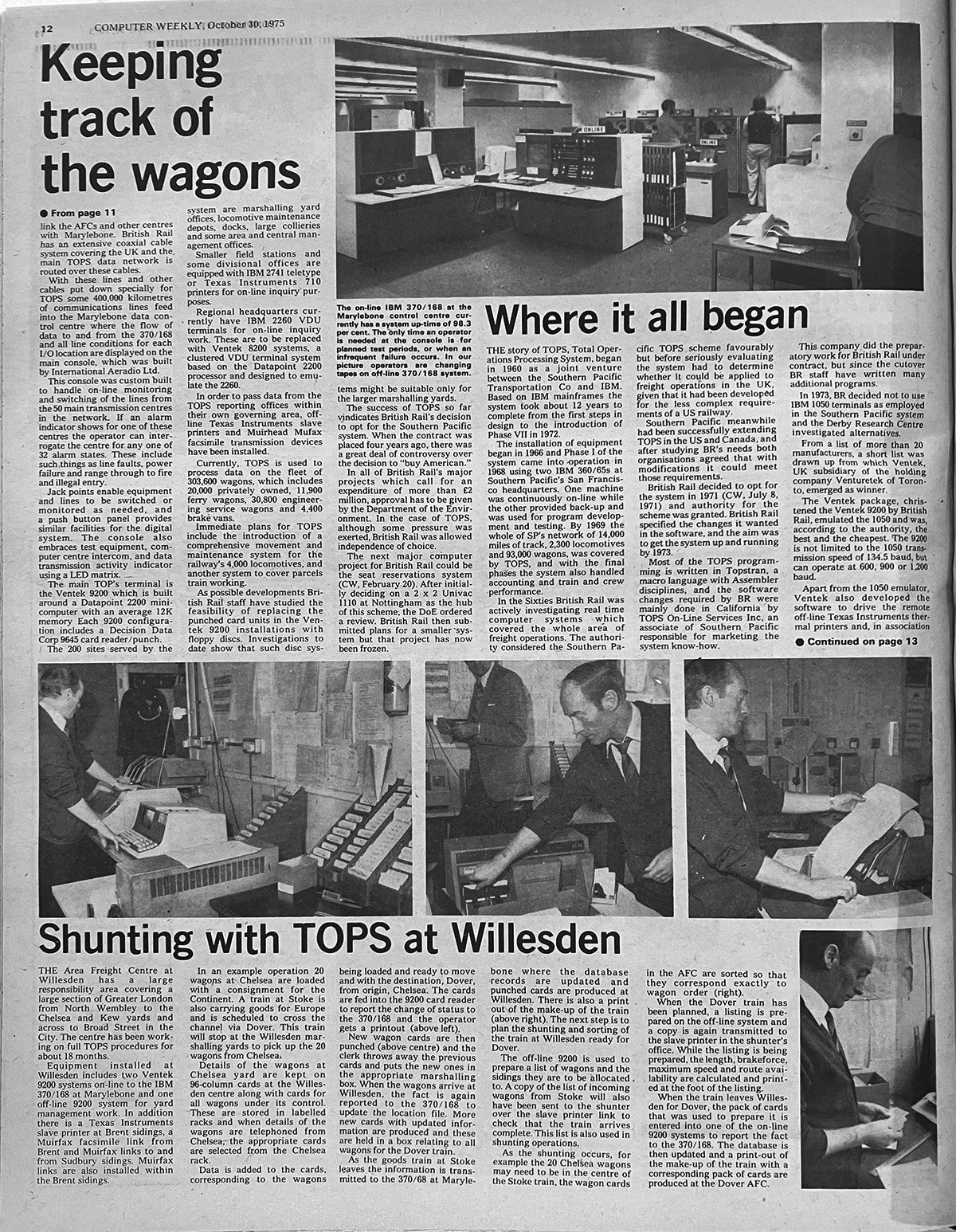
TOPS: Real-Time Visibility and Efficiency
Before TOPS, managing freight train movements was a complex, often opaque process. TOPS provided unprecedented real-time visibility, tracking up to 3,000 freight movements daily. This allowed BR to:
* Optimize wagon allocation: Identify actual demand, revealing a surplus of wagons.
* Reduce maintenance costs: Sell off unused wagons for scrap.
* Fund system improvements: Reinvest savings into the TOPS infrastructure.
Essentially,TOPS moved British Rail from reactive problem-solving to proactive management. You can see how this shift dramatically improved efficiency.
An unexpected Legacy: the Birth of Heritage Railways
The efficiency gains of TOPS had a fascinating, unintended consequence. Bob Gwynne, a rail expert, explains that a South wales scrapyard prioritized fast wagon disposal. This led to the temporary shelving of dismantling steam locomotives.
This ”breathing space” allowed for the acquisition of 213 steam locomotives for preservation – approximately two-thirds of all steam locomotives preserved today.
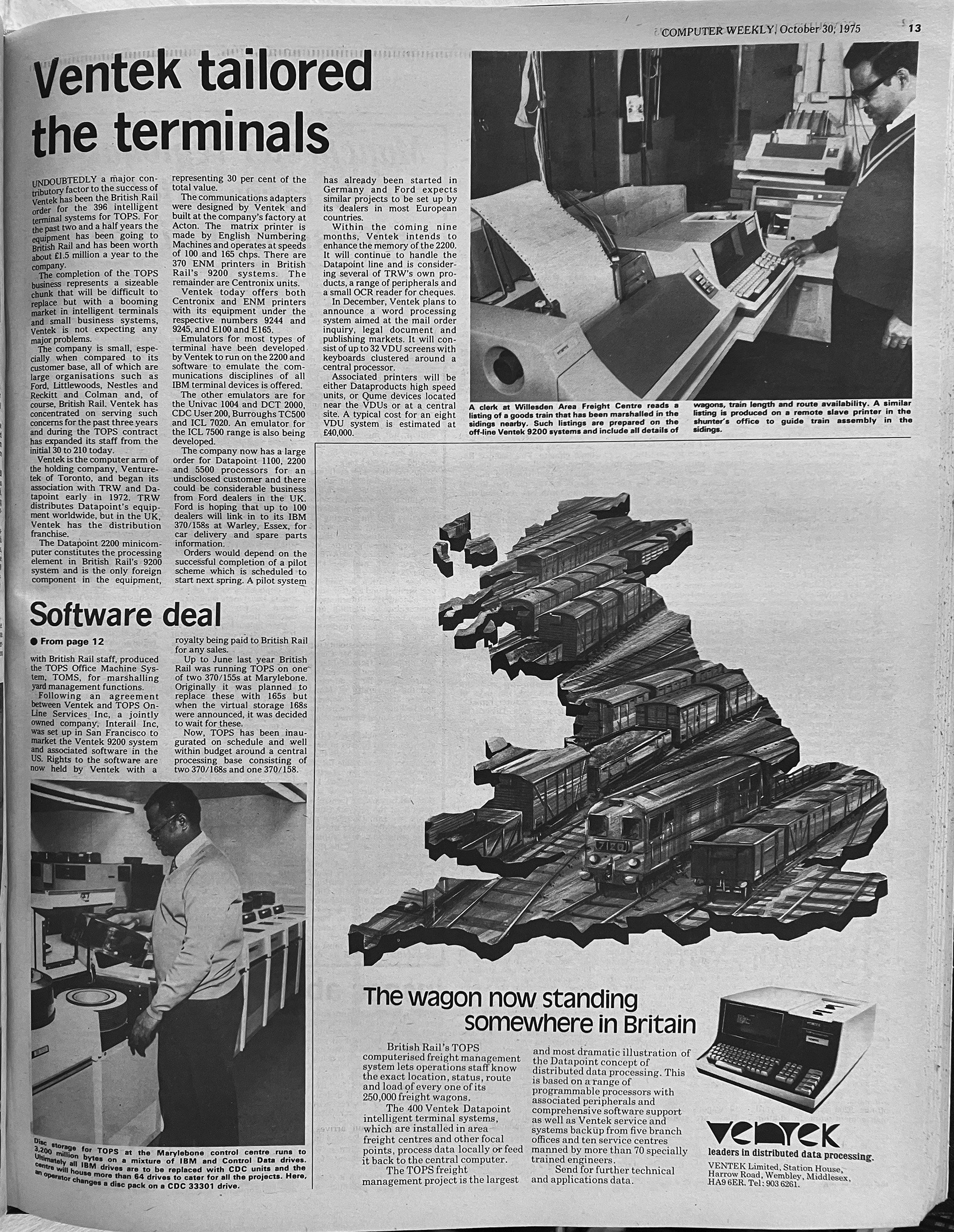
Consequently, TOPS indirectly fostered the growth of heritage railways as a nationwide tourism product, far beyond the limited number that existed before 1975. It’s a remarkable example of how technological advancements can have ripple effects far beyond their initial purpose.
A Pioneer in Distributed Computing
TOPS wasn’t just innovative in its application; it was also a pioneer in the field of distributed computing. The system’s architecture, connecting geographically dispersed locations, foreshadowed the networked systems we rely on today.
If you’re interested in learning more about distributed computing, resources like techtarget offer comprehensive definitions and explanations.
Preserving the Past, Informing the Future
The story of TOPS serves as a powerful reminder of the transformative potential of technology. It demonstrates how a system designed to improve freight logistics could also preserve a vital part of our industrial heritage.
A huge thank you to The National museum of Computing (TNMOC) for providing access to the original Computer Weekly article. Their archive, dating back to 1966, is a valuable resource for understanding the evolution of computing. You can explore their collection at https://www.tnmoc.org/.