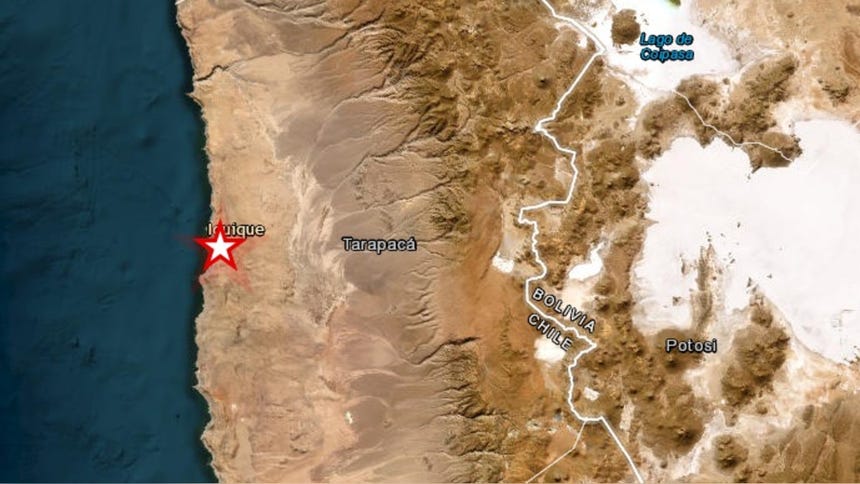
A powerful earthquake measuring 6.5 on the Richter scale struck near the border of Chile and Peru on Monday, May 25, 2026, sending tremors through southern Peru that rattled residents in Tacna, Arequipa, and Moquegua. The seismic event, which originated in northern Chile, occurred at approximately 15:42 local time, according to the Instituto Geofísico del Perú (IGP), prompting authorities to monitor for potential aftershocks and structural impacts in vulnerable regions.
While initial reports from the IGP and local officials indicate no confirmed casualties or significant structural damage, the quake underscores the persistent seismic risks along the Pacific Ring of Fire—a zone where tectonic plates collide, generating frequent earthquakes. Residents across the affected areas reported feeling strong shaking, with some describing the experience as comparable to previous moderate quakes in the region. The National Emergency Operations Center (COEN) of Peru has activated monitoring protocols and is coordinating with regional authorities to assess any potential consequences.
The earthquake’s epicenter was located approximately 50 kilometers west of the city of Ilo in Chile, near the border with Peru, at a depth of 35 kilometers, according to preliminary data from the U.S. Geological Survey (USGS). The shallow depth of the quake contributed to its intensity being felt over a wide area, including parts of southern Peru where seismic activity is less common but still possible. Authorities have not yet issued a tsunami alert, though marine agencies are continuing to monitor sea levels in the region.
Seismic Activity in a High-Risk Region
The May 25 quake follows a series of seismic events in the region over the past year, including a magnitude 6.2 earthquake in Chile’s Coquimbo region in February 2026 and a 6.0-magnitude tremor in the Philippines in May. Peru, situated on the Nazca and South American tectonic plates, experiences frequent seismic activity, with the IGP recording thousands of tremors annually. However, most are of low magnitude and cause little to no damage.
Hernando Tavera, director of the IGP, has repeatedly emphasized the importance of preparedness in earthquake-prone zones. “Peru’s seismic threat is real and constant,” Tavera stated in a 2026 interview. “While we cannot predict earthquakes, constructing with proper engineering standards and avoiding high-risk areas can save lives.” The IGP maintains a network of seismic stations across the country to provide early warnings and real-time data during such events.
In Tacna, one of the hardest-hit Peruvian regions, local officials reported minor disruptions, including temporary power outages in some areas and residents evacuating buildings as a precaution. The regional government of Tacna has advised citizens to avoid crowded public spaces and to check their homes for any structural weaknesses. Schools and businesses in the area have been asked to remain closed until further notice while assessments are underway.
International Coordination and Public Safety
Chile’s National Seismological Center (CSN) confirmed the quake’s magnitude and location, noting that it was part of the ongoing tectonic activity along the Peru-Chile Trench, where the Nazca Plate subducts beneath the South American Plate. The CSN also reported three minor aftershocks within hours of the main tremor, with magnitudes ranging from 2.8 to 4.1. These aftershocks, while less intense, can still pose risks, particularly to structures already weakened by the initial shock.

In response to the earthquake, the Peruvian government’s Civil Defense Institute (INDECI) has deployed teams to Tacna, Arequipa, and Moquegua to conduct damage assessments and provide assistance to affected communities. The organization has also activated its emergency communication channels to keep the public informed about safety measures and next steps. Residents are advised to:
- Stay indoors and away from windows, doors, and heavy furniture during shaking.
- Avoid using elevators and instead take the stairs.
- Have an emergency kit ready, including water, non-perishable food, a flashlight, and a first-aid kit.
- Follow official updates from INDECI and local authorities rather than unverified social media posts.
For those in coastal areas, INDECI has reminded residents to be cautious of potential tsunami risks, though no alert has been issued at this time. The Pacific Tsunami Warning Center (PTWC) is closely monitoring the situation and will provide updates if conditions change.
Historical Context: Peru’s Earthquake Preparedness
Peru’s experience with seismic events dates back decades, with some of the most devastating quakes occurring in 1970 (magnitude 7.9, killing over 66,000 people) and 2007 (magnitude 8.0, causing widespread destruction). In response, the government has implemented stricter building codes and public awareness campaigns to mitigate future risks. However, many older structures in cities like Tacna and Arequipa remain vulnerable to strong tremors.
International organizations, including the United Nations Office for Disaster Risk Reduction (UNDRR), have praised Peru’s progress in seismic resilience but emphasize the need for continued investment in infrastructure upgrades and community education. The UNDRR notes that while Peru has made significant strides in earthquake preparedness, gaps remain in rural and less-developed areas where resources are limited.
What Happens Next?
Authorities expect aftershocks to continue in the coming days, with the strongest likely to occur within the first 48 hours. The IGP and CSN will continue to monitor seismic activity and provide updates through their official channels. Residents in the affected regions are urged to:
- Stay informed through official sources such as the IGP (igp.gob.pe) and INDECI (indeci.gob.pe).
- Check on vulnerable neighbors, particularly the elderly and those with disabilities.
- Avoid spreading rumors and rely on verified information.
The next official update from INDECI is expected by Tuesday evening, May 26, 2026, or sooner if new developments arise. For real-time seismic data, the USGS provides live updates at earthquake.usgs.gov.
As seismic activity remains a constant threat in this region, this event serves as a reminder of the importance of preparedness. Whether you live in a high-risk zone or are traveling to the area, knowing how to respond during an earthquake can make all the difference. Share your experiences and safety tips in the comments below, and stay tuned for further updates from World Today Journal.