
Planning a multi-generational journey across Turkey requires a balance between the country’s profound historical density and the practical realities of its vast geography. For travelers looking to craft a 7-day or 8-day itinerary that bridges the cultural heartbeat of Istanbul with the sun-drenched coastlines of the south, the key lies in understanding the logistical infrastructure that connects these disparate regions. As an editor specializing in international affairs, I have observed that successful travel in this region is defined by efficient transit and prioritized site selection.
Turkey, a transcontinental nation bridging Southeast Europe and Western Asia, remains a primary hub for cultural and historical exploration. Travelers seeking to navigate this territory often find that internal aviation is the most effective way to traverse the distance between major metropolitan hubs and the Mediterranean coast. According to the United Kingdom Foreign, Commonwealth & Development Office, travelers should remain aware of local regulations and regional safety advisories, which are updated periodically to reflect current conditions on the ground. Ensuring that all travel documents, including the e-Visa or visa-exempt status, are verified against official government portals is the first step in any itinerary planning.
Strategic Itinerary Planning: Balancing Istanbul and the Coast
Istanbul serves as the natural gateway for most international arrivals. With a history spanning the Byzantine and Ottoman empires, the city offers an unparalleled concentration of heritage sites. A three-day allocation in Istanbul allows for a foundational exploration of the Sultanahmet district, home to the Hagia Sophia and the Blue Mosque. These sites are not merely tourist attractions but remain active centers of religious and cultural significance. For the most current information regarding visitor access, hours of operation, and preservation protocols, travelers should consult the Republic of Türkiye Ministry of Culture and Tourism.

When transitioning from the urban density of Istanbul to the coastal regions of the south, such as Antalya, the most efficient transit method is a domestic flight. Turkey’s domestic aviation network is extensive, connecting Istanbul’s primary airports—Istanbul Airport (IST) and Sabiha Gökçen (SAW)—to regional hubs like Antalya (AYT) in approximately 75 to 90 minutes of flight time. Reliance on road transport for such distances can consume significant portions of a limited 7-day or 8-day schedule, making air travel the preferred choice for those seeking to maximize their time at their destination.
Regional Context and Travel Logistics
The Mediterranean coast of Turkey, particularly the Antalya province, is characterized by its distinct geography and long-standing archaeological importance. Beyond the beaches, the region is home to numerous ancient sites that provide context to the broader history of the Anatolian peninsula. For those traveling with family members, including older adults, it is essential to consider the physical accessibility of these sites. Many archaeological ruins feature uneven terrain, and planning for moderate walking distances is advisable.
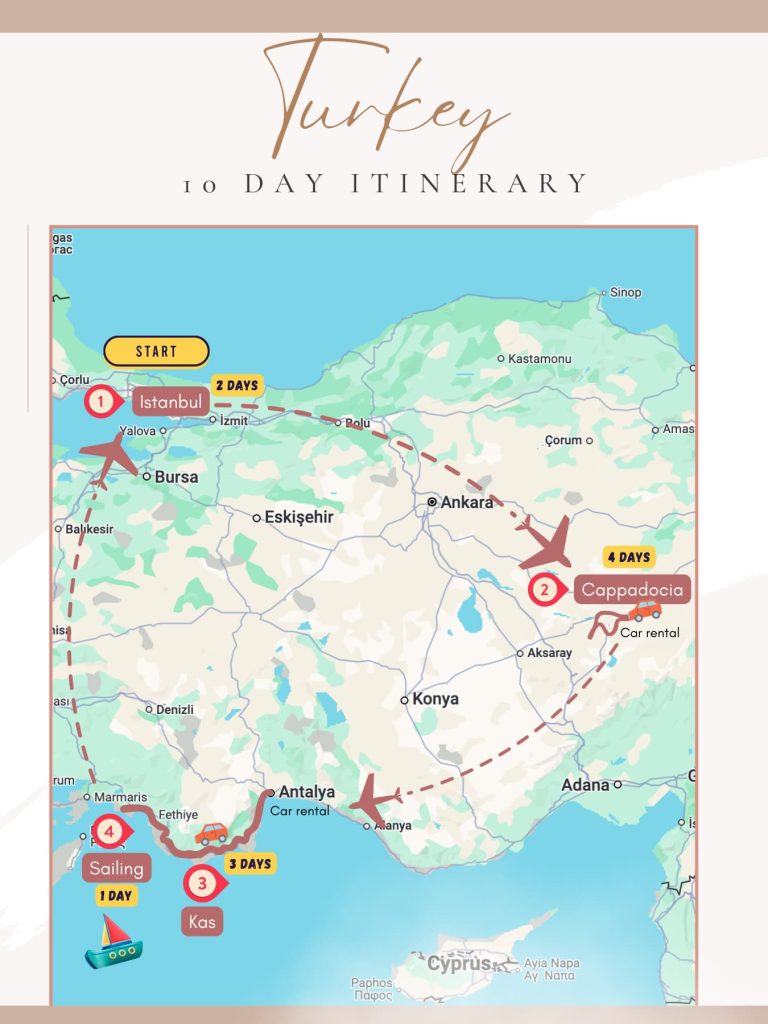
The World Health Organization (WHO) country profile for Turkey highlights the importance of maintaining up-to-date health preparations, including standard vaccinations and travel insurance that covers international medical assistance. While the tourism infrastructure in Antalya is robust, ensuring that your accommodation is centrally located near your primary points of interest will reduce daily transit times and enhance the overall experience for your party.
Key Considerations for International Visitors
- Entry Requirements: Always verify visa requirements through the official Republic of Türkiye Electronic Visa Application System before booking flights.
- Currency and Payments: While credit cards are widely accepted in urban centers and major hotels, carrying a modest amount of local currency is recommended for smaller vendors and rural markets.
- Seasonal Timing: The coastal climate varies significantly. summer months can reach high temperatures, making the shoulder seasons (spring and autumn) ideal for both city exploration and coastal activities.
Navigating Cultural and Historical Heritage
Turkey’s approach to heritage management involves significant ongoing restoration efforts at major sites. When visiting, it is critical to respect local customs, particularly when entering mosques or other sacred spaces. Modest dress is standard, and visitors should be prepared to remove footwear in accordance with local practice. These social protocols are deeply ingrained in the local culture and are essential for a respectful and smooth travel experience.
as you move between the diverse regions of the country, you will encounter varying levels of infrastructure development. While Istanbul is a global metropolis with comprehensive public transit, the coastal regions often favor private car rentals or organized shuttle services for reaching specific beaches or inland archaeological sites. Evaluating the transport needs for your specific group composition—in this case, three adults—will help in determining whether to rely on public transit or private transport services.
The next official update regarding travel advisories and tourism regulations for the upcoming season is expected to be released by the Ministry of Culture and Tourism in the coming months. We encourage readers to monitor official government channels for the latest developments regarding travel policies. Please feel free to share your experiences or questions in the comments section below, and stay tuned for our upcoming guide on navigating Turkey’s extensive rail and bus networks for those with more flexible itineraries.
Related reading