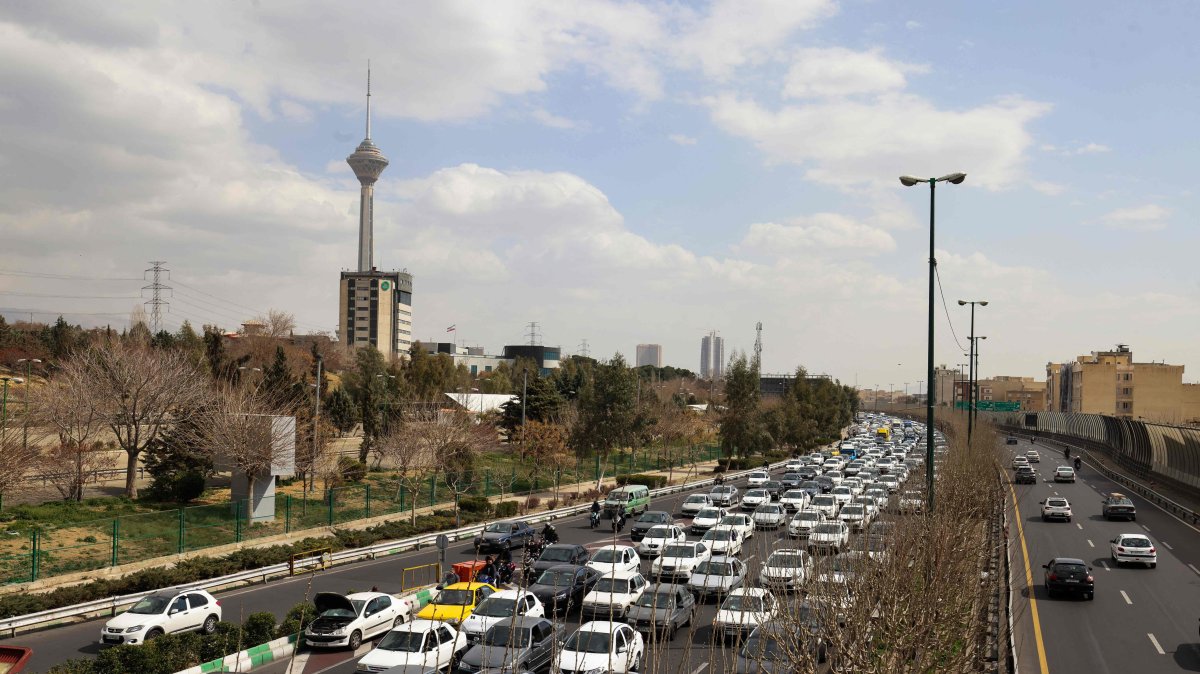
TEHRAN – Amidst escalating tensions in the Middle East, Türkiye is advising its citizens in Iran to prioritize their safety following coordinated strikes by the United States and Israel on Saturday. The Turkish Embassy in Tehran issued a comprehensive security advisory, urging nationals to remain indoors and avoid military installations as the region braces for further conflict. This comes as Iran retaliated against the attacks, launching missiles towards Israel and prompting intercepted missile fire in Gulf Arab states.
The situation unfolded rapidly on Saturday, with reports of explosions in Tehran and other Iranian cities. The strikes, described by U.S. President Donald Trump as “major combat operations,” targeted locations across Iran, while Tehran responded with missile launches aimed at northern Israel, and U.S. Military bases in the region. The immediate trigger for this escalation remains the ongoing negotiations between the U.S. And Iran regarding Iran’s nuclear and ballistic missile programs, a situation complicated by a previous 12-day conflict between the two nations eight months prior. The current events represent a significant intensification of a volatile geopolitical landscape.
Turkish Citizens Advised to Shelter in Place
The Turkish Embassy’s advisory, disseminated via its official X (formerly Twitter) account, underscores the heightened security risks facing Turkish nationals currently residing in or traveling to Iran. The embassy strongly recommends postponing all non-essential travel to Iran until the security situation stabilizes. Those already in the country are instructed to remain in secure locations, maintain a safe distance from military zones and buildings, and refrain from outdoor activities. Yeni Şafak reports that the advisory emphasizes the “sensitive” nature of the current security environment.
Recognizing the potential need for evacuation, the embassy confirmed that land border crossings between Türkiye and Iran – specifically Esendere, Kapıköy, and Gürbulak – remain open, allowing Turkish citizens to return to Türkiye by land. The embassy is urging citizens to monitor official websites and social media accounts for further updates and guidance. This proactive measure reflects Ankara’s commitment to safeguarding its citizens abroad during a period of heightened instability.
Escalation of Conflict: US-Israeli Strikes and Iranian Retaliation
The U.S. And Israel launched the initial strikes on Iran earlier Saturday, targeting what officials have described as key infrastructure and leadership figures. While details remain sparse, Al Jazeera reports that the attacks were carried out as part of a joint military operation. President Trump framed the operation as a means to address a security threat to the U.S. And potentially create an opportunity for regime change within Iran. The Pentagon has reportedly named the operation “OPERATION EPIC FURY,” though this has not been independently confirmed by all sources.
Iran’s response was swift and direct, with missile launches targeting northern Israel and U.S. Military bases in the Middle East. Explosions were similarly reported in several Gulf Arab countries, with officials stating they successfully intercepted incoming missiles from Iran. Tehran warned that it would retaliate against any attacks on its territory, raising concerns about a wider regional conflict. The exchange of fire underscores the escalating tensions and the potential for further escalation.
Widespread Internet Disruption in Iran
Compounding the crisis, Iran is experiencing a near-total internet blackout, significantly hindering communication and access to information. Türkiye Today reports that internet connectivity has dropped to just 4%, according to internet watchdog NetBlocks. This disruption likely aims to control the flow of information and limit the ability of citizens to organize or report on the unfolding events. The blackout also complicates efforts to assess the extent of damage and casualties resulting from the strikes.
Impact on Global Markets and Energy Supplies
The escalating conflict is already sending ripples through global markets, particularly in the energy sector. The Middle East is a critical region for oil production, and any disruption to supply could have significant consequences for global energy prices. While it is too early to fully assess the economic impact, analysts are closely monitoring the situation and bracing for potential volatility. The uncertainty surrounding the conflict is likely to weigh on investor sentiment and contribute to increased risk aversion.
the disruption to shipping lanes in the region could also impact global trade. The Strait of Hormuz, a vital waterway for oil tankers, is located near the conflict zone, and any disruption to traffic could lead to higher shipping costs and delays. The potential for a wider regional conflict raises concerns about the stability of global supply chains and the overall health of the global economy.
Türkiye’s Position and Regional Implications
Türkiye has historically maintained a complex relationship with both Iran and the United States and Israel. Ankara has consistently called for de-escalation and dialogue in the region, emphasizing the importance of diplomatic solutions to resolve conflicts. The current crisis presents a significant challenge for Turkish foreign policy, requiring a delicate balancing act to protect its interests and promote regional stability. Türkiye’s geographic proximity to both Iran and the conflict zone makes it a key player in any potential mediation efforts.
The broader regional implications of the conflict are far-reaching. The escalation of tensions could exacerbate existing sectarian divisions and fuel further instability in the Middle East. The involvement of multiple actors, including the U.S., Israel, Iran, and various regional proxies, raises the risk of a protracted and complex conflict. The international community is urging restraint and calling for a return to diplomatic negotiations to prevent a further escalation of violence.
The situation remains fluid and highly volatile. Further developments are expected in the coming hours and days as the U.S., Israel, and Iran assess their respective positions and consider their next steps. The Turkish Embassy in Tehran will continue to monitor the situation closely and provide updates to its citizens as needed. The international community is watching with growing concern as the Middle East teeters on the brink of a wider conflict.
Key Takeaways:
- Türkiye has issued a travel advisory for its citizens in Iran, urging them to shelter in place and avoid military zones.
- The U.S. And Israel launched coordinated strikes on Iran, prompting retaliatory missile launches by Tehran.
- Iran is experiencing a near-total internet blackout, hindering communication and access to information.
- The conflict is likely to have significant implications for global markets, particularly in the energy sector.
- Türkiye is calling for de-escalation and a return to diplomatic negotiations to resolve the crisis.
The situation is rapidly evolving. World Today Journal will continue to provide updates as they become available. We encourage readers to share their perspectives and engage in constructive dialogue in the comments section below.