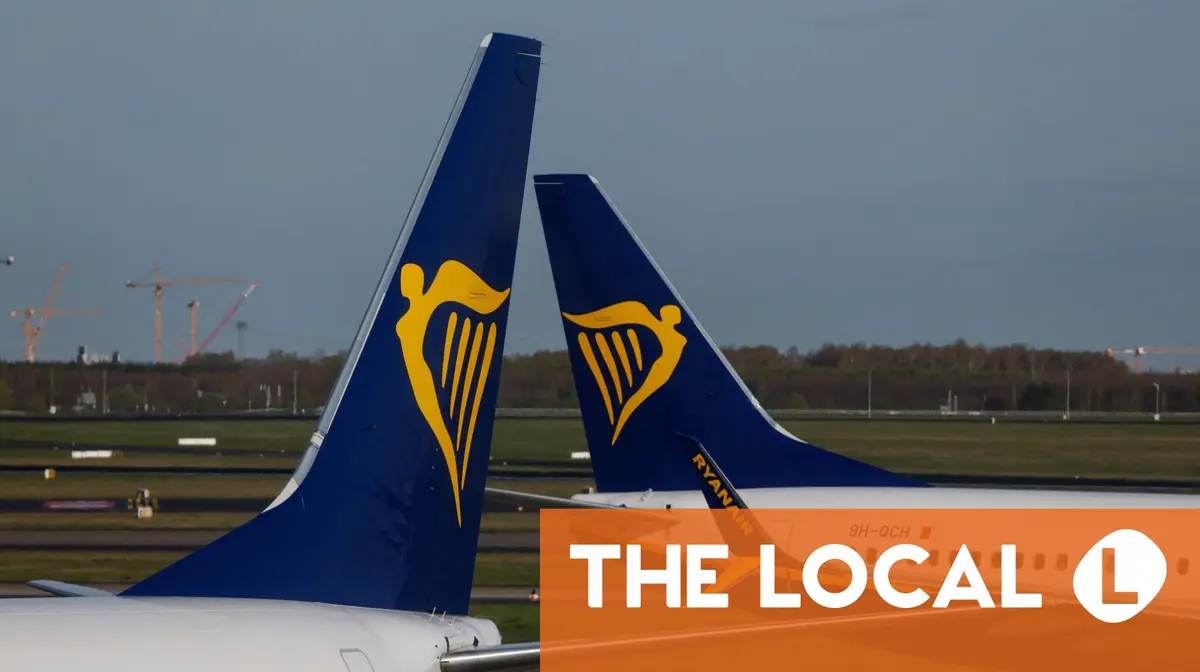
Ryanair Adjusts German Summer Schedule, Cutting Flights from Berlin and Hamburg
Budget airline Ryanair is reshaping its flight network in Germany for the summer of 2026, announcing significant cuts to services from both Berlin Brandenburg Airport (BER) and Hamburg Airport (HAM). While reducing capacity in these major hubs, the airline simultaneously plans to expand its presence at smaller regional airports, adding 14 new routes and reinstating 300,000 seats across the country. This strategic shift comes amid an ongoing dispute with German airports over fees and charges, a pattern the airline has repeated across Europe as it seeks to operate from lower-cost locations.
The changes, unveiled at a press conference in Berlin on Wednesday, reflect Ryanair’s continued pressure on airports to lower costs. The airline argues that high fees at major airports like Berlin and Hamburg hinder its ability to offer competitive fares. While the German government’s recent decision to reduce aviation tax from July 2026 and freeze air traffic control (ATC) charges was welcomed by Ryanair, the airline maintains that further reductions are needed to secure long-term growth in Germany. Despite the tax reductions, Ryanair’s overall capacity in Germany will still be approximately 220,000 seats lower than in the summer of 2025.
This isn’t an isolated incident. Ryanair has a history of adjusting its routes based on airport costs, employing what some observers describe as a “carrot and stick” approach. Airports willing to lower fees are rewarded with increased capacity and new routes, while those that don’t face cuts. This tactic has been observed across Europe, with Ryanair consistently advocating for lower taxes and charges to stimulate air travel. The airline’s strategy underscores the delicate balance between airport revenue and airline profitability in a highly competitive market.
Significant Cuts to Berlin and Hamburg Routes
The most substantial reductions will be felt in Berlin, where Ryanair will cut around 150,000 seats, representing a five percent decrease in its overall capacity at the airport. Several popular routes will experience significant frequency reductions. Flights between Berlin and Valencia will be reduced by 43 percent, while services to Bergamo and Ibiza will see a 41 percent decrease. Routes connecting Berlin to Manchester and Madrid will also be scaled back, by 34 percent and 25 percent respectively.
Hamburg Airport will also see a reduction in Ryanair’s services, with a planned cut of 70,000 seats, equating to a 20 percent decrease in capacity. The airline has also confirmed it has no plans to return to Leipzig/Halle or Dresden airports, citing persistently high costs and security charges as the primary reasons. This demonstrates Ryanair’s willingness to abandon routes rather than absorb what it considers excessive operational expenses.
Expansion at Regional Airports
While Berlin and Hamburg brace for reduced services, several regional airports are poised to benefit from Ryanair’s strategic shift. The airline is adding 300,000 seats and launching 14 new routes from Cologne/Bonn, Niederrhein (Weeze), Memmingen, and Bremen. Ryanair is expanding its German network to include Saarbrücken and Friedrichshafen airports.
New routes include services from Friedrichshafen to Alicante and Palma de Mallorca, and from Saarbrücken to Alicante, Lamezia Terme, and Trapani. Nuremberg will gain a new connection to Rabat, while Cologne will see a new route to Rimini. Karlsruhe/Baden-Baden will benefit from connections to Amman, Bucharest, Rabat, and Tirana. These additions demonstrate Ryanair’s commitment to serving a wider range of destinations from airports offering more favorable operating conditions.
A History of Negotiation and Cost Control
Ryanair’s actions are rooted in a long-standing strategy of negotiating favorable terms with airports and maintaining strict cost control. The airline has repeatedly argued that excessive airport charges inflate ticket prices and stifle demand. In a recent press release, Ryanair stated that the cuts were directly driven by “excessive and uncompetitive airport charges,” describing Berlin as “the highest-cost airport” within its German network.
Marcel Pouchain Meyer, Ryanair’s Head of Communications for Germany, acknowledged the government’s tax reductions and ATC charge freeze as “a welcome first step,” but emphasized that the airline’s overall capacity in Germany remains lower than the previous year due to the continued high costs at Berlin and Hamburg. This highlights the airline’s insistence on further concessions from airports to unlock its full growth potential.
German media outlets have characterized Ryanair’s approach as a clear “carrot and stick” strategy, rewarding airports that lower fees with new routes while penalizing those that do not. This tactic is not unique to Germany; Ryanair has repeatedly announced flight reductions at airports across Europe while simultaneously advocating for tax cuts and lower charges. Past instances have included marketing agreements with regional airports and, in one case, subsidies that were later required to be repaid following an EU ruling against illegal state aid at Frankfurt-Hahn Airport.
For travelers, this evolving landscape means that cheaper flights are increasingly likely to be found at smaller, regional airports. While major hubs like Berlin and Hamburg may offer greater convenience and connectivity, budget-conscious passengers may demand to consider alternative departure points to secure the most affordable fares.
Key Takeaways
- Ryanair is cutting flights from Berlin and Hamburg due to high airport charges.
- The airline is expanding services at regional airports like Cologne/Bonn, Saarbrücken, and Friedrichshafen.
- The cuts represent a 220,000-seat reduction in Ryanair’s overall German capacity for Summer 2026 compared to 2025.
- Ryanair’s strategy involves negotiating lower fees with airports and prioritizing cost-effective locations.
- Travelers seeking the lowest fares may need to consider flying from smaller regional airports.
Looking ahead, the situation remains fluid. The ongoing negotiations between Ryanair and German airports will likely determine the airline’s long-term presence in the country. The next key development will be the implementation of the reduced aviation tax in July 2026, and the subsequent response from airports regarding their fee structures. Passengers planning travel to or from Germany this summer should closely monitor flight schedules and consider all available airport options to find the best deals.
What are your thoughts on Ryanair’s strategy? Share your experiences and opinions in the comments below. Don’t forget to share this article with your fellow travelers!
Related reading
- Russia and Ukraine Target Fuel Infrastructure in Escalating Strikes
- US and Saudi Arabia Strike Iran-Backed Militias as Middle East Tensions Escalate
- Summer Traffic Restrictions at the Plaza: A Memory Check (news-usa.today)
- Greece’s Luxury Summer Getaways Under Pressure: Water Scarcity Hits Holiday Islands (archynewsy.com)