
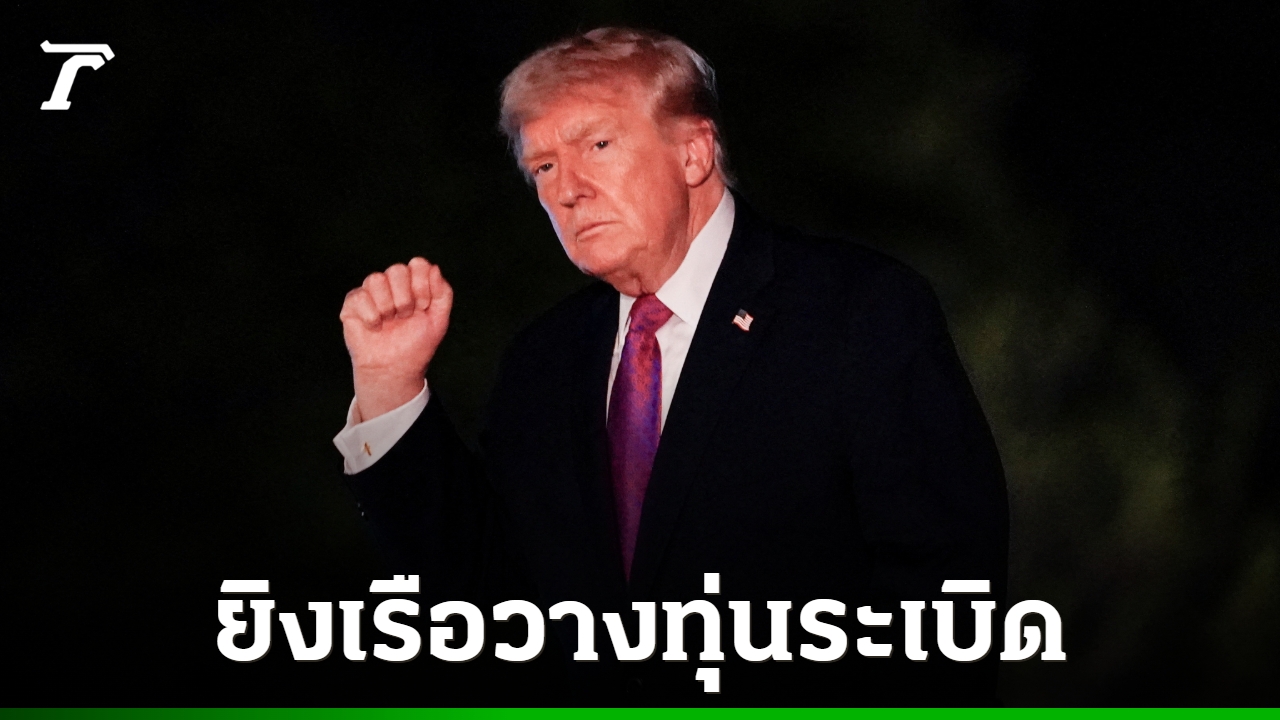
On April 23, 2026, U.S. President Donald Trump announced that he had ordered the U.S. Navy to attack any Iranian vessel laying mines in the Strait of Hormuz, a critical waterway for global oil shipments. The directive came amid heightened tensions between the United States and Iran, despite an existing ceasefire agreement between the two sides. Trump emphasized that the order applied to all ships, regardless of size, involved in mine-laying operations in the strait.
The announcement was made through Thai-language media outlet Thairath.co.th, which reported Trump’s statement that he had instructed the U.S. Navy to “shoot and destroy every boat” engaged in such activities. The report included a quoted remark from Trump in which he claimed that Iran’s naval forces had already been largely destroyed, stating, “their navy is completely ruined at the bottom of the sea” — a claim that could not be independently verified through authoritative sources at the time of publication.
Additional coverage from AFP via Line Today confirmed that Trump had posted the directive on social media, specifying that even modest vessels potentially used for mine-laying missions would be targeted. The report noted that the U.S. Government had recently responded to Iranian actions by imposing port closures on Iran and announcing maritime interdiction operations, including the boarding of the oil tanker M/T Majestic X in the Indian Ocean, which was suspected of transporting Iranian oil in violation of sanctions.
Amarin TV reported that, alongside the attack order, Trump had directed U.S. Mine-sweeping vessels to accelerate operations to clear the Strait of Hormuz of explosive devices. This dual approach — offensive action against mine-laying ships and defensive mine clearance — reflects a broader U.S. Strategy to maintain freedom of navigation in one of the world’s most strategically vital maritime chokepoints.
The Strait of Hormuz, located between Oman and Iran, serves as a vital passage for approximately one-fifth of the world’s petroleum trade. Any disruption to shipping in the area has the potential to significantly impact global energy markets. Analysts have long warned that mining or blockade attempts in the strait could trigger rapid escalation, given the concentration of oil tankers and liquefied natural gas carriers transiting the waters daily.
While the U.S. Has maintained a consistent policy of protecting maritime security in the region, the specific claim by Trump that Iran’s navy of 159 warships had been sunk and lay on the seabed remains unsubstantiated by official defense assessments or satellite imagery available through open-source monitoring groups. No credible international defense analyst or military publication has confirmed such a loss of Iranian naval capacity in recent months.
The U.S. Department of Defense has not issued a public statement confirming the execution of Trump’s order to engage Iranian mine-laying vessels. Similarly, Iran’s Islamic Revolutionary Guard Corps Navy, which typically oversees asymmetric maritime operations in the Gulf, has not publicly acknowledged any such engagements resulting in losses as described.
In the broader context, diplomatic efforts to de-escalate tensions between Washington and Tehran have faced repeated setbacks. Reports from late April 2026 indicated that peace talks had stalled, with the Trump administration opting instead to expand sanctions and naval interdiction measures. The U.S. Treasury Department had recently added several entities to its sanctions list for allegedly supporting Iran’s missile and drone programs, though no direct link to mine-laying activities was specified in those designations.
Maritime security firms operating in the Gulf have reported increased surveillance activity by both U.S. And Iranian forces in the Strait of Hormuz over the preceding weeks. Commercial shipping companies have been advised to remain vigilant and follow guidance from international maritime organizations, including the United Kingdom Maritime Trade Operations (UKMTO) and the Combined Maritime Forces (CMF), which coordinate multinational efforts to ensure safe passage through the region.
As of the date of the announcement, no international body — including the United Nations Security Council or the International Maritime Organization — had issued a formal resolution or statement specifically addressing the mine-laying allegations or the U.S. Response. Any future developments would likely depend on verifiable incidents, such as confirmed mine discoveries or vessel engagements, which could trigger further diplomatic or military reactions.
For ongoing updates on military movements, sanctions enforcement, or diplomatic initiatives related to the Strait of Hormuz, readers are encouraged to consult official sources such as the U.S. Central Command (CENTCOM) website, the Iranian Ministry of Foreign Affairs’ English-language portal, and reports from the International Atomic Energy Agency (IAEA) regarding regional security implications.
This story underscores the fragility of ceasefire arrangements in volatile regions and the persistent risk of miscalculation when military orders are issued amid diplomatic stalemates. The situation remains fluid, with the potential for rapid change based on on-the-ground developments in the Gulf.
We invite our readers to share their perspectives in the comments section below and to help spread awareness of this developing story by sharing it across social platforms. Informed public discourse plays a vital role in holding power to account and promoting transparency in international affairs.