
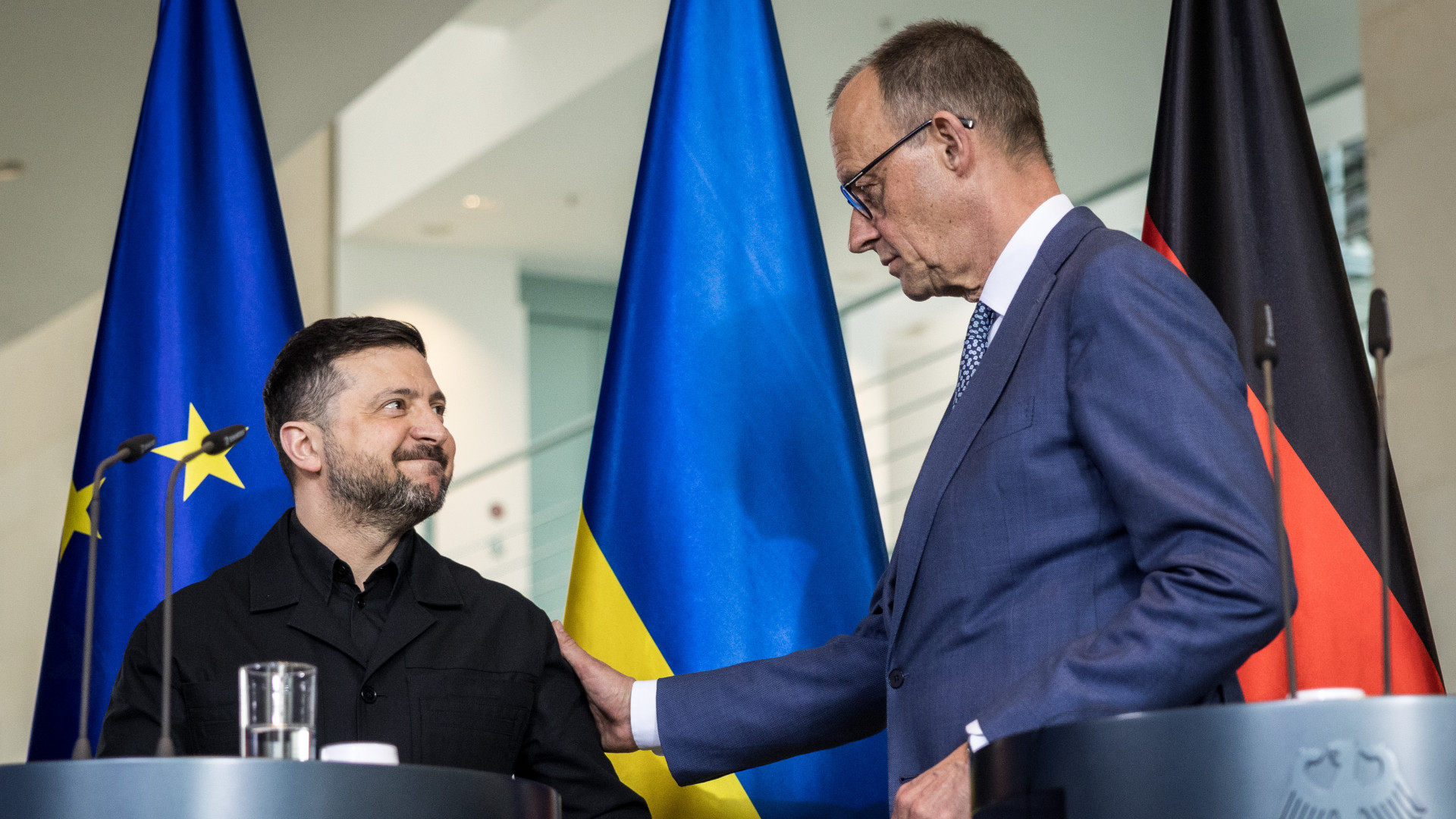
The dream of a rapid return to the European fold has long been the cornerstone of Kyiv’s strategy for survival and reconstruction. However, as the geopolitical landscape shifts in 2026, the gap between Ukraine’s aspirations and the European Union’s institutional reality is widening. For President Volodymyr Zelenskyy, the push for membership is not merely a political goal but a vital security guarantee; for many in Brussels and Berlin, it remains a rigorous process that cannot be bypassed.
The tension reached a novel peak recently with candid assessments from Germany’s political leadership. Friedrich Merz, a pivotal figure in German politics and leader of the CDU, has reinforced a narrative that serves as a “cold shower” for Kyiv: the “bitter truth” that EU membership is governed by strict, non-negotiable criteria, and no amount of political will can replace the structural reforms required for accession. This stance highlights a growing divide between those who view membership as a reward for wartime resilience and those who view it as a technical achievement of governance.
The friction centers on the “Copenhagen criteria,” the essential set of rules that any candidate country must meet to join the bloc. These include requirements for stable democratic institutions, a functioning market economy, and the ability to take on the obligations of EU membership. While Ukraine has made strides in anti-corruption efforts, the sheer scale of the required judicial and economic overhaul remains a daunting hurdle that leaders like Merz insist must be cleared without shortcuts.
The Friction Between Urgency and Orthodoxy
President Volodymyr Zelenskyy has consistently advocated for an accelerated timeline, suggesting that Ukraine could be ready for full membership by 2027. From Kyiv’s perspective, the war has fundamentally altered the urgency of the situation. The argument is that EU membership would provide the legal and economic framework necessary to stabilize the country and offer a definitive security architecture that complements bilateral agreements with the United States and other allies.
However, the “orthodoxy” of the EU enlargement process is proving difficult to bend. German leadership, particularly within the CDU, has cautioned against “symbolic membership.” The concern is that admitting a country with a massive economy and significant agricultural output without full alignment with EU law could destabilize the internal market. According to reports from Reuters, the debate in Berlin often centers on the risk of importing instability or corruption into the EU’s core decision-making processes.
This insistence on the rule of law is not just bureaucratic; it is a political signal. By emphasizing the “bitter truth” of the process, Friedrich Merz and his allies are reminding Kyiv that the path to Brussels is paved with legislation, not just diplomacy. This approach suggests that the EU will not grant a “fast track” that ignores the fundamental requirements of the accession treaty, regardless of the geopolitical pressure.
The Agricultural Stumbling Block
Beyond the legal and political hurdles, a pragmatic economic conflict looms: agriculture. Ukraine is an agricultural superpower, and its entry into the EU would trigger a seismic shift in the Common Agricultural Policy (CAP). The potential for Ukrainian grain and produce to flood the European market has already caused significant friction with member states like Poland and Hungary.

To mitigate this, there have been discussions regarding Ukraine potentially opting out of certain agricultural subsidies for a transitional period. Such a move would be a significant concession, designed to soothe the fears of European farmers who cannot compete with Ukraine’s scale and lower production costs. However, such an arrangement would require complex negotiations and a willingness from Kyiv to accept a “second-tier” economic status in the short term—a prospect that contradicts Zelenskyy’s demand for “full-fledged” membership.
The agricultural dispute illustrates why the “bitter truth” spoken by German leaders is so resonant. The EU is not just a political club; it is a highly integrated economic union. Admitting Ukraine requires more than a vote of support; it requires a total recalibration of the EU’s economic engine, a process that takes years of planning and legislative adjustment.
What So for Ukraine’s Security
The debate over EU membership is inextricably linked to the broader question of security guarantees. For Ukraine, the EU is the ultimate “anchor.” Membership would theoretically integrate Ukraine into the European legal and economic sphere so deeply that any future aggression would be an attack on the EU’s own internal stability.
Yet, the reality is that the EU lacks a unified military command comparable to NATO. While the EU offers economic and political security, it cannot replace the hard security guarantees provided by military alliances. The danger, as some analysts suggest, is that Kyiv may be over-relying on the promise of EU membership as a substitute for a concrete, binding security treaty with the West.
The current impasse suggests a shift toward a “tiered integration” model. Instead of full membership by 2027, Ukraine may identify itself in a prolonged state of “enhanced candidacy,” where it gains access to certain EU funds and market benefits without having full voting rights in the European Council. While this provides some stability, it falls short of the “full-fledged” status Zelenskyy has demanded.
Key Takeaways: The Path to Accession
- The “Merz Doctrine”: German leadership emphasizes that the Copenhagen criteria are non-negotiable and that political symbolism cannot replace structural reform.
- The Timeline Gap: While Kyiv pushes for a 2027 target, the EU’s institutional pace suggests a much longer horizon.
- Economic Hurdles: Agriculture remains the primary economic friction point, with potential “subsidy waivers” being discussed to protect EU farmers.
- Security vs. Bureaucracy: Ukraine views membership as a security necessity, while the EU views it as a legal and administrative process.
What Happens Next?
The coming months will be critical as the European Commission reviews Ukraine’s progress on the “cluster” of requirements necessary to open further negotiation chapters. The focus will remain on judicial reform, the fight against oligarchic influence, and the alignment of trade laws.
The next major checkpoint will be the upcoming European Council summit, where member states will evaluate whether Ukraine’s reforms are moving at a pace that justifies any acceleration of the timeline. Until there is a consensus among the “big three”—Germany, France, and Poland—any talk of a 2027 deadline remains aspirational rather than operational.
As the world watches, the struggle for Ukraine’s EU membership remains a litmus test for the European Union’s ability to expand without fracturing. For now, the “bitter truth” remains: the door to Europe is open, but the threshold is high.
Do you believe the EU should create a special “wartime track” for Ukraine’s membership, or should the standard rules apply to everyone? Share your thoughts in the comments below.