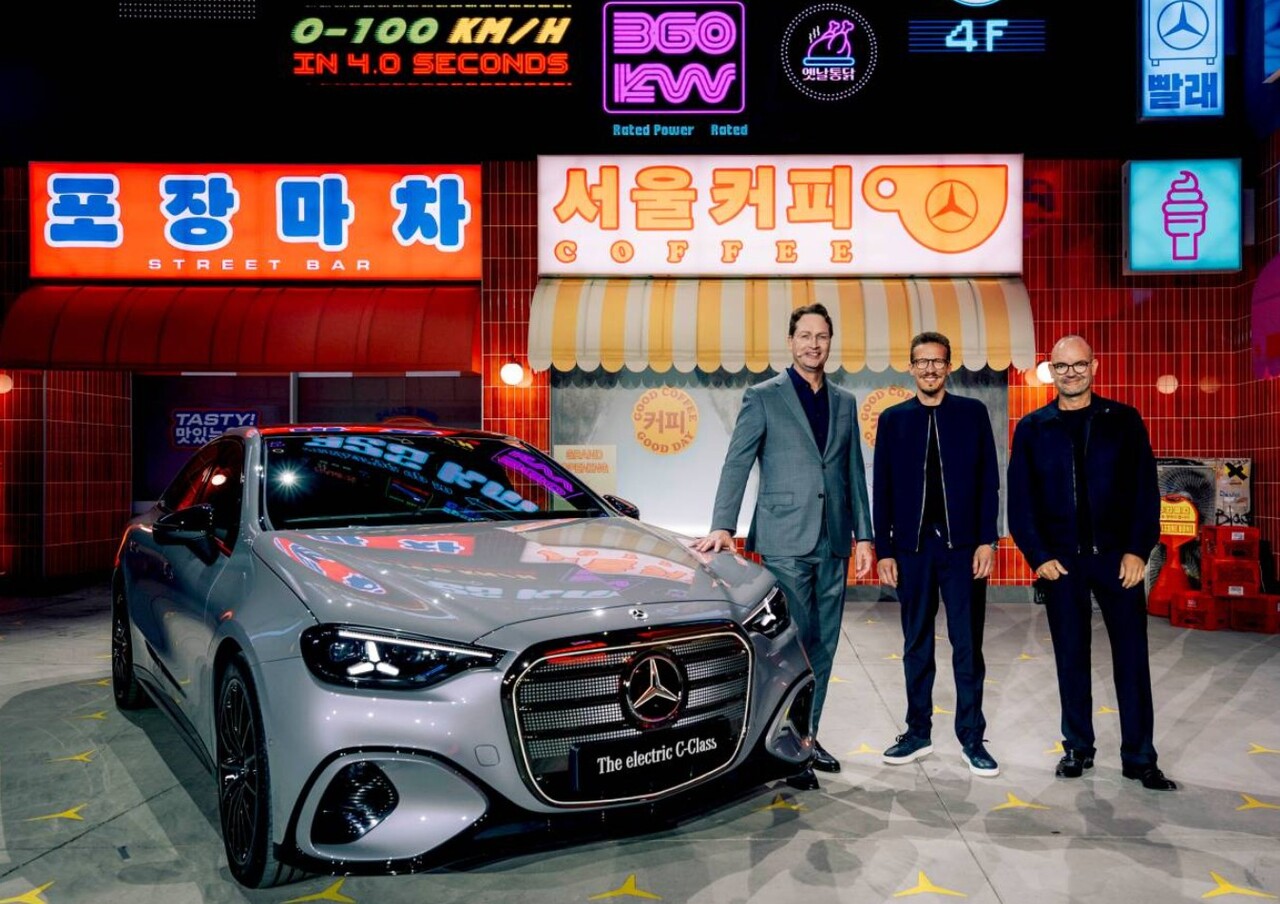
Mercedes-Benz is facing mounting challenges in China, its largest single market, as slowing economic growth and intensifying competition reshape the automotive landscape. The German luxury automaker, once a dominant force in the world’s biggest auto market, now confronts a prolonged period of subdued demand that analysts are calling a “durststrecke” — a German term meaning a dry spell or drought — signaling not just a temporary slowdown but a structural shift in consumer behavior and market dynamics.
This downturn comes amid broader headwinds affecting foreign luxury brands in China, including declining consumer confidence, a protracted property sector slump, and rising popularity of domestic electric vehicle (EV) makers like BYD and NIO. While Mercedes-Benz has long relied on China for a significant share of its global sales and profits, recent quarterly reports indicate a clear divergence between its performance in Europe and North America versus its results in the Asian market.
To understand the depth of this challenge, it is essential to look beyond surface-level sales figures and examine the underlying economic and competitive forces at play. China’s GDP growth slowed to 5.2% in 2023, its weakest pace in over three decades excluding pandemic years, according to official data from the National Bureau of Statistics of China. This economic cooling has directly impacted big-ticket purchases, with automotive retail sales growing by just 2.1% year-on-year in 2023, far below the double-digit expansion seen in previous years.
Meanwhile, new energy vehicles (NEVs) — which include battery electric, plug-in hybrid, and fuel-cell models — accounted for 31.6% of all new car sales in China in 2023, up from 25.6% in 2022, as reported by the China Passenger Car Association (CPCA). This rapid shift has put traditional internal combustion engine (ICE) luxury brands at a disadvantage, particularly as Chinese consumers increasingly favor locally produced EVs that offer advanced technology, lower operating costs, and strong government support through subsidies and preferential licensing.
Mercedes-Benz has responded by accelerating its EV offensive in China, launching locally produced models such as the EQE sedan and EQS SUV through its joint venture with BAIC Group, known as Mercedes-Benz BAIC. However, despite these efforts, the company’s EV sales in China have struggled to gain traction against formidable domestic rivals. In the first quarter of 2024, Mercedes-Benz sold approximately 14,000 electric vehicles in China, compared to over 100,000 units delivered by BYD during the same period, highlighting the scale of the competitive gap.
The situation has prompted Mercedes-Benz to reevaluate its long-term strategy in the region. In early 2024, the company announced plans to deepen its innovation network in China with a new building at its R&D Center in Shanghai, aiming to localize software development and accelerate adaptation to Chinese consumer preferences. This investment underscores a recognition that success in China requires more than importing European-designed vehicles — it demands deep integration into the local tech and manufacturing ecosystem.
Ola Källenius, Chairman of the Board of Management of Mercedes-Benz Group AG, acknowledged the complexity of the market during the company’s 2023 annual results presentation, stating that “China remains a priority, but we are adjusting our pace and focus to reflect the realities on the ground.” He emphasized flexibility in production planning and a stronger emphasis on profitability over volume growth in the region.
These adjustments come at a time when foreign automakers collectively are seeing their share of the Chinese market decline. According to data from the China Association of Automobile Manufacturers (CAAM), foreign brands accounted for just 38.5% of total passenger vehicle sales in China in 2023, down from over 50% a decade ago. This trend reflects not only the rise of Chinese EV champions but also shifting consumer preferences toward digital connectivity, over-the-air updates, and AI-driven features — areas where domestic firms have often moved faster than traditional global players.
For Mercedes-Benz, the path forward involves balancing short-term resilience with long-term transformation. The company has implemented cost-control measures, including temporary production adjustments at its Beijing and Foshan plants, while continuing to invest in charging infrastructure and battery technology partnerships. It has also expanded its online sales and digital retail initiatives to meet changing consumer behaviors, particularly among younger buyers who increasingly research and purchase vehicles through mobile platforms.
Industry analysts warn that the challenges in China are unlikely to resolve quickly. “This represents not a cyclical dip but a fundamental restructuring of the market,” said Tu Le, founder of Sino Auto Insights, in an interview with Reuters. “Foreign luxury brands must now compete on software, ecosystem integration, and price sensitivity — not just badge prestige.”
Despite the pressures, Mercedes-Benz maintains a long-term commitment to China. The company continues to view the country as critical to its global ambition of becoming an all-electric leader by 2030, a goal that hinges on success in key markets including China, Europe, and the United States. Achieving this will require not only product localization but also deeper collaboration with Chinese tech firms, battery suppliers, and urban mobility providers.
As of April 2024, Mercedes-Benz has not issued any formal guidance revision specifically tied to China performance, but investors are closely monitoring monthly sales reports and inventory levels for signs of stabilization. The next major checkpoint will be the company’s first-quarter 2024 earnings release, scheduled for late April 2024, which is expected to provide updated regional breakdowns and commentary on market conditions in Asia.
For readers seeking to follow developments, official updates from Mercedes-Benz Group AG are available through its investor relations portal, while monthly automotive sales data from China can be accessed via the China Passenger Car Association and the China Association of Automobile Manufacturers. These sources offer the most reliable, real-time insight into how one of the world’s most important automotive markets is evolving — and what it means for global brands navigating its transformation.
We invite our global audience to share perspectives on how luxury automakers can adapt to shifting markets in real time. Join the conversation in the comments below or share this article to facilitate others understand the forces reshaping the future of mobility in China and beyond.
Related reading