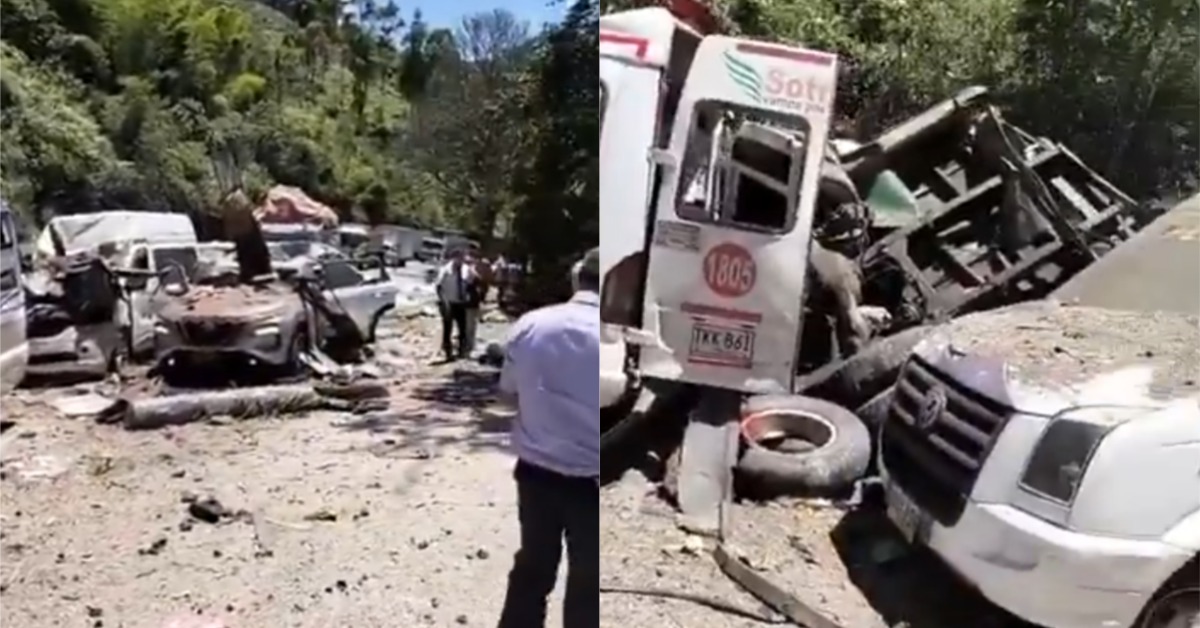
A bus explosion in western Colombia has resulted in 14 deaths and 38 injuries, according to the latest official update from regional authorities. The incident occurred on April 25, 2026, in the Cauca department, specifically in the municipality of Corinto, when an explosive device detonated aboard a passenger bus traveling along the Pan-American Highway.
Colombian news agency EFE and national broadcaster RCN confirmed the casualty figures through statements from Cauca Governor Octavio Guzmán, who stated that the death toll had risen to 14 following emergency response efforts. Among the injured are five minors, all receiving treatment in regional medical facilities. The attack took place during midday hours, triggering an immediate security response from national police and military units deployed to the area.
Preliminary investigations indicate that the explosive device was cylindrical in shape and detonated above the bus roof, causing severe structural damage to the vehicle and surrounding roadway. Video footage circulating online shows extensive damage to the bus’s roof and windows, with debris scattered across the highway. Local media reports suggest the device may have been placed or dropped from an elevated position near the road.
Authorities Link Attack to Ongoing Violence in Cauca Region
Governor Guzmán condemned the bombing as an act of indiscriminate violence targeting civilians and called for intensified national government action to address persistent insecurity in the department. He emphasized that security forces had already been deployed to the scene and were conducting forensic analysis to identify perpetrators.
According to early witness accounts cited by regional outlets, armed individuals had previously blocked the highway by hijacking a truck and another bus, using them to create a roadblock. Graffiti associated with dissident factions of former guerrilla groups was reportedly spray-painted on the seized vehicles, though no group has officially claimed responsibility for the bombing as of April 26.
The Cauca department has long been a focal point of armed conflict due to its strategic location and illicit crop cultivation, particularly coca. Despite the 2016 peace agreement between the Colombian government and the FARC, dissident factions and other illegal armed groups continue to operate in rural zones, often clashing over control of drug trafficking routes and illegal mining sites.
Historical Context of Violence in Colombia’s Southwest
This bombing adds to a pattern of violence affecting Cauca and neighboring regions in recent months. In 2024 and early 2025, multiple attacks on infrastructure and public transport were recorded in the area, including improvised explosive device (IED) incidents targeting military patrols and civilian convoys along key transit corridors.

Colombia has experienced fluctuating levels of armed violence since the demobilization of the FARC, with splinter groups such as Segunda Marquetalia and the Estado Mayor Central refusing to fully disarm. These groups often exploit weak state presence in remote areas to conduct extortion, recruitment, and attacks on public officials.
The United Nations Verification Mission in Colombia has repeatedly warned about the resurgence of violence in Pacific coastal and Andean regions, urging both the government and armed actors to prioritize civilian protection and implement the remaining points of the peace accord, particularly rural reform and illicit crop substitution programs.
National and International Response Underway
Following the explosion, President Gustavo Petro’s administration issued a statement condemning the attack and vowing to strengthen security operations in Cauca. The National Police offered a reward for information leading to the arrest of those responsible, while forensic teams from the Attorney General’s Office began collecting evidence at the blast site.

Regional humanitarian organizations, including the Colombian Red Cross and local health bureaus, activated emergency protocols to transport the injured to hospitals in nearby Popayán and Santander de Quilichao. Psychological support teams were likewise dispatched to assist survivors and families of the deceased.
International bodies, including the Organization of American States (OAS) and the European Union delegation in Bogotá, expressed concern over the incident and reiterated calls for dialogue and adherence to international humanitarian law. No foreign governments have been implicated in the attack, and all indications point to domestic armed actors as the likely perpetrators.
Ongoing Investigation and Next Steps
As of April 26, 2026, authorities have not made any arrests in connection with the bombing. The Technical Investigation Corps (CTI) of the Prosecutor’s Office is leading the forensic inquiry, analyzing blast patterns, video surveillance, and witness testimony to reconstruct the events.
Security checkpoints have been increased along the Pan-American Highway between Cali and Popayán, a stretch historically vulnerable to intermittent disruptions due to protests, roadblocks, and sporadic violence. Travel advisories remain in effect for certain rural corridors in Cauca, urging caution and coordination with local authorities.
Officials have indicated that a full preliminary report will be released within 72 hours, pending completion of autopsies and toxicological analyses. Updates will be provided through official channels, including the Ministry of Defense and the National Protection Unit (UNP), which oversees risk assessments for public figures and infrastructure in high-risk zones.
For the latest verified information on this developing story, readers are encouraged to consult statements from Colombia’s National Police, the Office of the Attorney General, and the Governor’s Office of Cauca. Verified updates will continue to be issued as the investigation progresses.
Worth a look