What We Know About the Suspected Gunman in the White House Correspondents’ Dinner Shooting
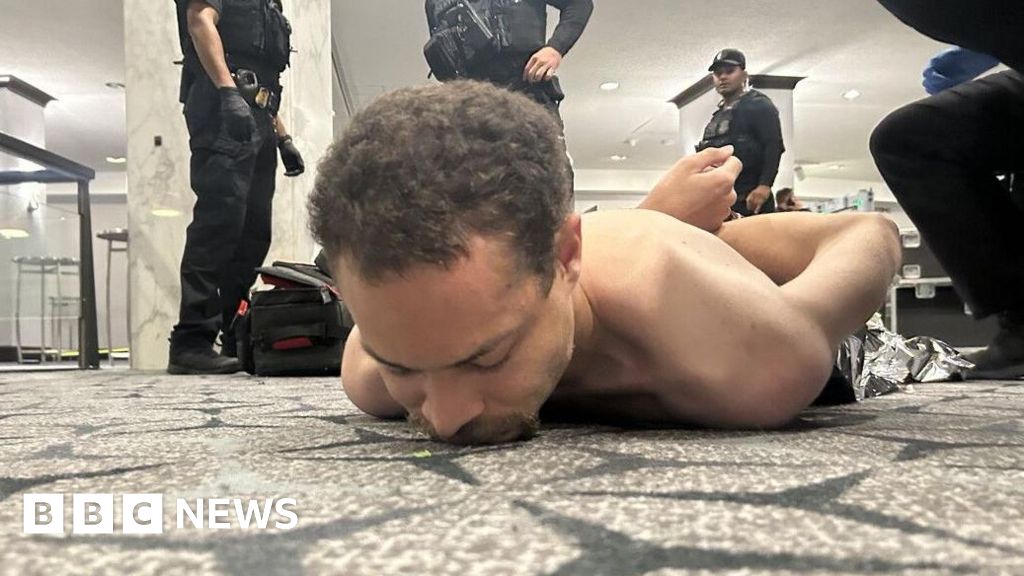
Washington, D.C. — A 31-year-old California man appeared in federal court on Monday to face charges of attempting to assassinate President Donald Trump, following a brazen armed attack at the annual White House Correspondents’ Dinner on Saturday. The incident, which unfolded in a secured hotel ballroom packed with journalists, lawmakers, and administration officials, has sent shockwaves through the nation’s capital and reignited debates over security at high-profile political events.
Cole Tomas Allen, of Torrance, California, was arrested at the Washington Hilton after allegedly storming a security checkpoint armed with a shotgun and a handgun. While President Trump was unharmed and swiftly evacuated, the episode has raised urgent questions about how an armed individual could penetrate layers of Secret Service protection at an event attended by the nation’s top leaders. Authorities have not yet disclosed a motive, but the case is being treated as a direct threat to the president’s life.
Here’s what we know so far about the suspect, the investigation, and the broader fallout from the attack.
Who Is Cole Tomas Allen?
Cole Tomas Allen, a 31-year-old resident of Torrance, California, has been identified as the sole suspect in the shooting incident at the White House Correspondents’ Dinner. According to an FBI affidavit filed in federal court, Allen traveled by train from Los Angeles to Washington, D.C., arriving the day before the attack. He checked into the Washington Hilton, the venue for the dinner, on Friday, April 24, 2026.
Court documents reveal that Allen was carrying a 12-gauge shotgun and a 9mm handgun when he attempted to breach a security checkpoint on the floor above the ballroom where the dinner was being held. While he was charged with firing a gun during the incident, the affidavit does not specify whether he fired the shot that struck a Secret Service agent in his bulletproof vest. The agent was treated at a local hospital and later released.
Allen has no known prior criminal record, and authorities have not yet released information about his employment, political affiliations, or mental health history. The FBI and the U.S. Attorney’s Office for the District of Columbia have declined to comment on whether Allen had any accomplices or if he had communicated his intentions to others before the attack.
The Attack: What Happened at the White House Correspondents’ Dinner?
The White House Correspondents’ Dinner, an annual event that brings together journalists, politicians, and celebrities, was underway on the evening of Saturday, April 25, when chaos erupted. According to court filings and witness accounts, Allen attempted to force his way past a security checkpoint on the hotel’s third floor, where the ballroom was located. He was armed with multiple weapons, including a shotgun and a handgun, as well as knives.

Attendees reported hearing gunfire and screams as Secret Service agents and local law enforcement responded to the threat. President Trump, who was seated at the head table with Cabinet officials and members of Congress, was quickly evacuated from the ballroom. Other high-profile guests, including Vice President Kamala Harris and House Speaker Mike Johnson, were also ushered to safety.
Allen was subdued by law enforcement within minutes of the initial confrontation. No attendees or bystanders were injured in the incident, though the psychological impact of the attack has been profound. Many guests described the security measures as alarmingly lax, with some noting that Allen was able to get dangerously close to the ballroom before being stopped.
Charges and Legal Proceedings
Allen made his first appearance in federal court on Monday, April 27, before Magistrate Judge Matthew J. Sharbaugh. He was charged with three federal offenses: attempted assassination of the President of the United States, discharge of a firearm during a crime of violence, and transporting a firearm across state lines. He did not enter a plea during the brief hearing, and a detention hearing was scheduled for April 30, with a preliminary hearing set for May 11.
U.S. Attorney for the District of Columbia Jeanine Pirro, who is overseeing the prosecution, told reporters after the hearing that additional charges are expected as the investigation continues. “Cole Allen’s journey of accountability in the criminal justice system starts today,” Pirro said. “This was a direct and violent attempt on the life of the president, and we will pursue every available charge to ensure justice is served.”
FBI Director Kash Patel, who joined Pirro at the press conference, confirmed that the bureau is investigating whether Allen had any ties to extremist groups or if he acted alone. “We are leaving no stone unturned,” Patel said. “This was a premeditated act, and we are determined to understand the full scope of his intentions.”
Security Failures and Political Fallout
The shooting has sparked intense scrutiny of the Secret Service’s handling of security at the correspondents’ dinner. The agency, which is responsible for protecting the president and other high-ranking officials, has faced criticism in the past for lapses in protocol, including during the 2016 election cycle and the January 6, 2021, attack on the U.S. Capitol.
In a statement released on Monday, the Secret Service acknowledged that “enhancements” to security protocols at future events would be implemented but defended its agents’ response to the attack. “Our personnel acted swiftly and decisively to neutralize the threat and ensure the safety of all attendees,” the statement read. “We are reviewing all aspects of our security plan for this event and will build necessary adjustments moving forward.”
The incident has also reignited political debates in Washington. On Monday, a group of Senate Republicans previewed legislation that would allow federal funds to be used to construct a ballroom attached to the White House, citing the demand for a more secure venue for high-profile events. The proposal, which has been backed by President Trump, has faced legal challenges in the past, including concerns about the use of public money for what critics describe as a “vanity project.”
What Happens Next?
Allen remains in federal custody, and prosecutors are expected to present additional evidence in the coming weeks. The next major legal milestone will be the detention hearing on April 30, where a judge will determine whether Allen should be held without bail pending trial. Given the severity of the charges, legal experts say We see unlikely he will be released.
The FBI’s investigation is ongoing, with agents reportedly reviewing Allen’s digital footprint, including his social media activity, communications, and travel records. Authorities have not ruled out the possibility of additional suspects or accomplices.
For now, the White House Correspondents’ Association has not announced any changes to next year’s dinner, though security measures are expected to be significantly tightened. The organization released a statement on Monday expressing gratitude for the swift response of law enforcement and extending condolences to those affected by the incident.
Key Questions Still Unanswered
While the basic facts of the case are now public, several critical questions remain unanswered:

- What was Allen’s motive? Authorities have not disclosed whether Allen had a specific grievance against President Trump, the media, or the political establishment. Investigators are reportedly examining his online activity for clues.
- Did he act alone? The FBI has not ruled out the possibility of accomplices or outside influence. Allen’s travel records and communications are being scrutinized for any connections to extremist groups or individuals.
- How did he bypass security? The Secret Service has not explained how Allen was able to get so close to the ballroom with multiple weapons. Some attendees have described security as “perfunctory,” with minimal bag checks or metal detector screenings.
- What will happen to the proposed White House ballroom? The Senate Republican bill to fund a new ballroom has reignited debates over government spending and security priorities. It remains unclear whether the legislation will gain traction in Congress.
The Broader Impact
The attack at the correspondents’ dinner has underscored the growing threats faced by public figures in an era of heightened political polarization. It also raises concerns about the safety of journalists, who have increasingly become targets of violence and harassment in recent years.
For the Secret Service, the incident is the latest in a series of high-profile security lapses that have eroded public confidence in the agency’s ability to protect the president. While the agency has defended its response, the fact that an armed individual could get so close to the president at a major event has alarmed lawmakers and security experts alike.
As the investigation continues, the case is likely to fuel ongoing debates about gun control, mental health, and the adequacy of security measures at public events. For now, the focus remains on Allen’s upcoming court appearances and the search for answers about what drove him to attempt such a brazen act.
What Readers Can Do
For those seeking official updates on the case, the following resources are available:
- U.S. Attorney’s Office for the District of Columbia – Official press releases and court filings.
- FBI’s Washington Field Office – Updates on the investigation.
- U.S. Secret Service – Statements and security advisories.
The next major development in the case will be Allen’s detention hearing on April 30, where a federal judge will decide whether he should remain in custody pending trial. We will continue to cover this story as new details emerge.
Have thoughts or questions about this developing story? Share your perspective in the comments below, and don’t forget to follow World Today Journal for the latest updates on this and other major news events.
- Earthquake: 4.2 quake near Bakersfield
- ICA slutar sälja produkter från Barilla. Konflikt om avtal gör att även Wasa försvinner från butikshyllorna. – Feber
- Excessive Heat Event in North Phoenix and Glendale, Arizona (news-usa.today)
- Trump Administration Rolls Back Endangered Species Act Protections (archyde.com)