
Spain Reflects on Historic Blackout One Year Later as Housing Crisis and Royal Education Plans Make Headlines
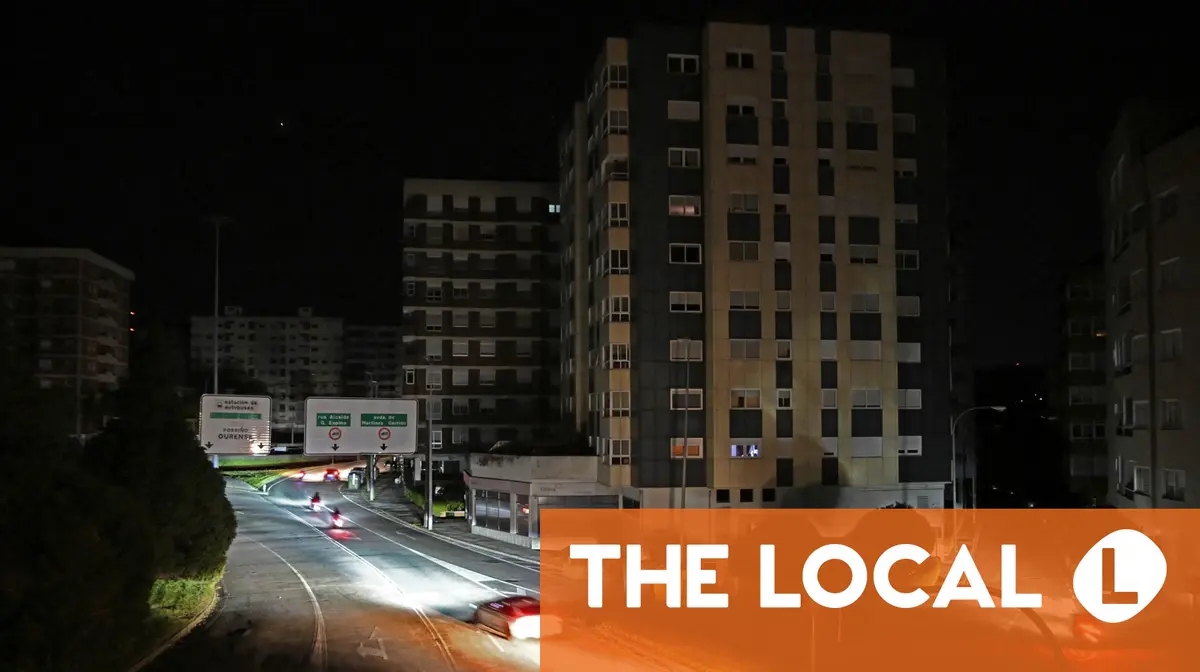
Madrid — Exactly one year ago today, Spain and parts of southern France were plunged into darkness in an unprecedented blackout that left millions grappling with disrupted lives and unanswered questions. As the country marks the anniversary of the April 2025 Iberian Peninsula blackout, new reports suggest the risk of another such event has not been eliminated. Meanwhile, Spain’s housing market continues to squeeze millions of residents, and Crown Princess Leonor has announced plans to study political science at a prestigious Madrid university, signaling a new chapter in her public role.
The blackout, which struck on April 28, 2025, affected all 48 million inhabitants of Spain and extended into neighboring regions, including parts of southern France. Though power was restored within 24 hours, the incident exposed vulnerabilities in the region’s energy infrastructure and sparked a year-long debate over its causes. A March 2026 report by Spain’s electricity grid operator, Red Eléctrica de España (REE), described the event as “a perfect storm of multiple factors,” including extreme weather, grid overload, and delayed maintenance. Still, the report stopped short of assigning blame, and officials have yet to rule out the possibility of another major outage.
The Blackout’s Lingering Questions
The April 2025 blackout was one of the most widespread power failures in modern European history. According to the European Network of Transmission System Operators for Electricity (ENTSO-E), the outage affected nearly 50 million people across Spain and parts of France, disrupting transportation, healthcare, and communication systems. Even as power was restored within a day, the incident raised concerns about the resilience of Europe’s energy grid, particularly as the continent accelerates its transition to renewable energy sources.
In its March 2026 report, REE acknowledged that the blackout was triggered by a combination of factors, including a sudden drop in wind power generation, a surge in electricity demand due to unseasonably high temperatures, and the failure of a key transmission line in northeastern Spain. The report also noted that maintenance delays on critical infrastructure may have exacerbated the situation. However, the agency did not identify a single cause or responsible party, leaving many questions unanswered.

Public frustration has grown over the lack of clarity. Opposition parties, including the conservative People’s Party (PP) and the far-right Vox, have criticized the government’s handling of the crisis, accusing it of downplaying the risks of another blackout. In a statement last month, PP leader Alberto Núñez Feijóo called for an independent investigation, arguing that “Spain cannot afford to be caught off guard again.” The government, led by Prime Minister Pedro Sánchez, has defended its response, pointing to investments in grid modernization and renewable energy as evidence of its commitment to preventing future outages.
Despite these assurances, experts warn that the risk of another blackout remains. In an interview with El País earlier this month, energy analyst María López of the Barcelona-based Institute for Energy Research cautioned that “the underlying vulnerabilities in Spain’s grid have not been fully addressed.” She cited aging infrastructure, the increasing unpredictability of renewable energy sources, and the growing demand for electricity as ongoing challenges.
Spain’s Housing Crisis: Over Two Million Unable to Move
While the blackout anniversary dominates headlines, Spain’s housing market continues to pose a significant challenge for millions of residents. A new report from the National Statistics Institute (INE) reveals that 2.14 million people—or 67.2% of those who attempted to move in 2025—were unable to find a new home due to soaring prices. The findings underscore the depth of the country’s housing affordability crisis, which has left many Spaniards trapped in their current residences.
The INE report, released last week, analyzed data from over 3.2 million individuals aged 16 and older who sought to relocate in 2025. Of these, only about one-third successfully moved, while the remaining two-thirds were forced to stay put. The primary barrier, according to the report, was the cost of housing, which has risen sharply in recent years due to high demand, limited supply, and speculative investment in urban areas.
Madrid and Barcelona, Spain’s two largest cities, have been hit hardest by the crisis. In Madrid, the average price of a home has increased by 45% since 2020, according to real estate portal Idealista. In Barcelona, prices have risen by 38% over the same period. The surge has priced out many middle-class families, particularly young adults and low-income households, who are increasingly reliant on rental markets that are also under strain.
The housing crisis has become a key political issue ahead of Spain’s next general election, expected in late 2026. The Sánchez government has introduced measures to address the problem, including tax incentives for first-time homebuyers and subsidies for social housing projects. However, critics argue that these efforts have been insufficient. In a recent speech, Barcelona Mayor Ada Colau, a prominent housing activist, called for stricter regulations on short-term rentals and vacant properties, which she described as “a drain on the city’s housing stock.”
Princess Leonor to Study Political Science at Madrid’s Carlos III University
In a move that has drawn both praise and scrutiny, Spain’s Crown Princess Leonor has announced plans to pursue a bachelor’s degree in Political Science at Carlos III University in Madrid. The decision, revealed by the Royal Household on Monday, marks a significant step in the 18-year-old heir to the throne’s preparation for her future role as queen.
Princess Leonor, the eldest daughter of King Felipe VI and Queen Letizia, has been groomed for leadership since birth. She completed her secondary education at Santa María de los Rosales School in Madrid, the same institution attended by her father, and later spent two years at the United World College of the Atlantic in Wales, where she earned an International Baccalaureate diploma. Her choice of Political Science reflects a deliberate effort to deepen her understanding of governance, public policy, and international relations—subjects deemed essential for her future responsibilities.
Carlos III University, founded in 1989, is one of Spain’s most prestigious public universities, known for its strong programs in law, economics, and political science. The university has a reputation for academic rigor and a diverse student body, making it an ideal setting for the princess to engage with peers from different backgrounds. However, her enrollment has raised security concerns, as the university’s urban campus in the Madrid suburb of Getafe is not equipped with the same level of protection as the Royal Palace.
The Royal Household has stated that Princess Leonor will attend classes like any other student, though with enhanced security measures. In a statement, the palace emphasized that the princess’s education is “a priority for the Crown” and that her studies will “prepare her for the challenges of modern monarchy.” The decision has been widely interpreted as a sign of the royal family’s commitment to adapting to contemporary expectations, particularly among younger Spaniards who increasingly view the monarchy as a symbolic rather than political institution.
Princess Leonor’s academic pursuits have also reignited debates about the role of the monarchy in Spain. While the institution remains popular, with a 2025 survey by the Center for Sociological Research (CIS) showing that 62% of Spaniards support the monarchy, there is growing pressure for greater transparency and modernization. Some critics argue that the princess’s education should focus more on practical leadership skills, while others see her university enrollment as a positive step toward a more relatable and engaged monarchy.
What’s Next for Spain?
As Spain reflects on the one-year anniversary of the blackout, the government faces mounting pressure to address the vulnerabilities exposed by the crisis. The Ministry of Ecological Transition has announced plans to release a comprehensive energy security strategy in the coming months, which is expected to include proposals for grid modernization, renewable energy integration, and emergency response protocols. Meanwhile, opposition parties are pushing for a parliamentary inquiry into the blackout, which could shed further light on its causes and potential solutions.
On the housing front, the INE’s report is likely to fuel calls for more aggressive policies to tackle affordability. The Sánchez government has indicated that it will unveil new measures in the fall, though details remain scarce. For now, millions of Spaniards continue to grapple with the reality of a housing market that remains out of reach for many.
As for Princess Leonor, her university journey will be closely watched by both supporters and skeptics of the monarchy. Her first day of classes, expected in September, will mark the beginning of a new chapter in her public life—one that could shape the future of the Spanish Crown for decades to come.
What do you think about Spain’s energy security, housing crisis, and Princess Leonor’s education plans? Share your thoughts in the comments below, and don’t forget to follow World Today Journal for more in-depth coverage of global affairs.