
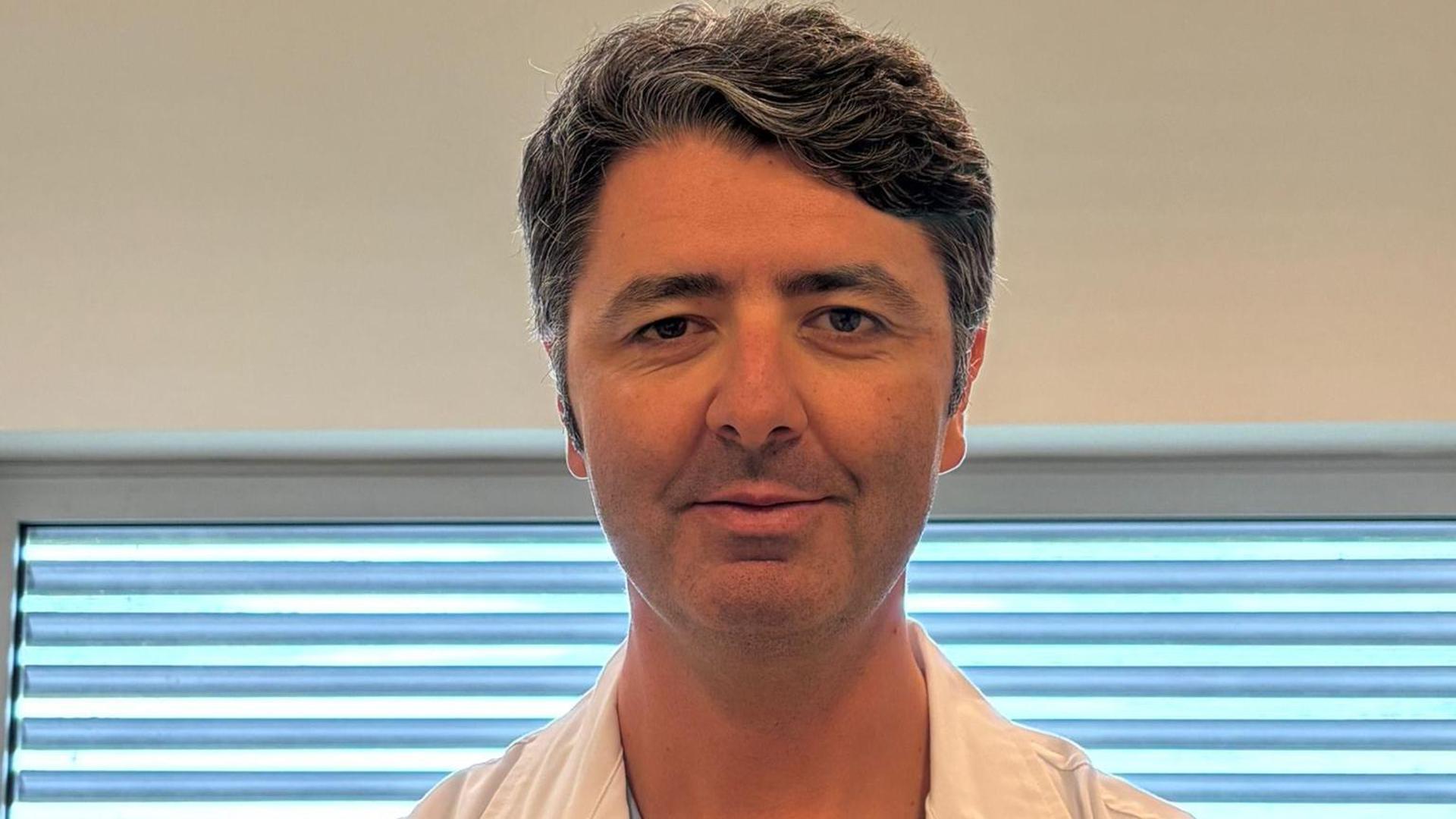
Italian Surgeon Brings Robotic Expertise to Lead Urology Department in Northern Italy
In a significant development for minimally invasive surgery in Italy, Dr. Davide Giraudo, a 45-year-old surgeon from the Piedmont region, has taken the helm of the Urology Department at Legnano Hospital in the Milan metropolitan area. His appointment marks a strategic shift toward advanced robotic techniques in treating prostate and kidney cancers, as well as benign prostatic conditions that affect millions of men worldwide.
Giraudo, who began his fresh role in early April 2026, brings a rare combination of academic rigor and hands-on surgical experience to the Azienda Socio Sanitaria Territoriale (ASST) Ovest Milanese, the regional health authority overseeing Legnano Hospital. His career trajectory reflects a broader trend in European healthcare: the integration of robotic systems into complex urological procedures, which has been shown to reduce recovery times and improve patient outcomes.
“The future of urology lies in precision and personalization,” Giraudo said in a recent interview with La Stampa, a Turin-based newspaper. “Techniques like Holep allow us to perform surgeries with minimal blood loss, shorter hospital stays, and lower recurrence rates—benefits that matter deeply to patients, especially older adults who may have multiple health concerns.”
From Piedmont to Lombardy: A Career Built on Innovation
Born and raised in Beinette, a small town near Cuneo in northwestern Italy, Giraudo’s path to surgical leadership began with a classical education at the Liceo Classico “Silvio Pellico” in Cuneo. His medical training took him to the University of Pavia, one of Italy’s oldest and most prestigious medical schools, followed by a specialization in urology at the University of Eastern Piedmont in Novara. These institutions are known for their strong clinical programs and research in surgical innovation.
Giraudo’s early career was shaped by his work at Biella Hospital, where he developed expertise in laparoscopic surgery—a minimally invasive technique that uses small incisions and specialized instruments. His transition to robotic surgery began in 2022, a period of rapid growth for the field in Italy. According to a 2023 report by the Italian Society of Urology (SIU), the number of robotic-assisted urological procedures in Italy increased by 35% between 2020 and 2022, driven by demand for less invasive treatments for prostate and kidney cancers.
At Legnano Hospital, Giraudo now leads a team that performs a full spectrum of urological procedures, including:
- Robotic-assisted prostatectomies for prostate cancer
- Partial and radical nephrectomies for kidney tumors
- Holmium laser enucleation of the prostate (Holep) for benign prostatic hyperplasia (BPH)
- Endoscopic treatments for kidney stones and bladder tumors
- Kidney transplant donor nephrectomies
The hospital’s urology department, located on the third floor of the “Area B” wing of Legnano’s modernized facility, serves a catchment area of over 500,000 residents in the western Milan province. The ASST Ovest Milanese health authority, which manages Legnano Hospital, has invested heavily in robotic surgery infrastructure in recent years, reflecting a regional commitment to advanced medical technologies.
The Holep Technique: A Game-Changer for Benign Prostatic Hyperplasia
One of Giraudo’s signature contributions to urology is his expertise in Holep, a laser-based procedure for treating benign prostatic hyperplasia (BPH), a non-cancerous enlargement of the prostate that affects up to 50% of men over the age of 60. BPH can cause urinary symptoms such as frequent urination, weak stream, and incomplete bladder emptying, significantly impacting quality of life.
“Holep is not yet widely available in Italy, but it offers clear advantages over traditional surgical methods,” Giraudo explained. “The procedure uses a high-powered holmium laser to remove excess prostate tissue, which is then flushed out of the bladder. Unlike older techniques, Holep is associated with minimal blood loss, a lower risk of complications, and faster recovery—often with patients discharged within 24 to 48 hours.”

Giraudo’s experience with Holep is substantial: he has performed over 400 such procedures, a volume that places him among the more experienced practitioners in Italy. A 2024 meta-analysis published in The Journal of Urology found that Holep resulted in shorter hospital stays and lower rates of urinary incontinence compared to traditional transurethral resection of the prostate (TURP), the previous gold standard for BPH treatment. The study, which reviewed data from 15 clinical trials involving over 1,800 patients, concluded that Holep “should be considered the new benchmark for surgical management of BPH.”
For patients, the benefits of Holep extend beyond clinical outcomes. The procedure’s precision reduces the risk of long-term complications such as erectile dysfunction or retrograde ejaculation, which can occur with more invasive surgeries. Holep is effective for men with very large prostates—a group that often requires open surgery, which carries higher risks and longer recovery times.
Robotic Surgery: Redefining Cancer Treatment in Urology
Giraudo’s work in robotic surgery has focused primarily on prostate and kidney cancers, two of the most common malignancies affecting men. Prostate cancer is the second most frequently diagnosed cancer in men worldwide, with over 1.4 million new cases reported annually, according to the World Health Organization (WHO). Kidney cancer, while less common, is also on the rise, with an estimated 430,000 new cases globally each year.
Robotic-assisted surgery, most commonly performed using the da Vinci Surgical System, allows surgeons to operate with enhanced precision, flexibility, and control. The system translates the surgeon’s hand movements into smaller, more precise motions of tiny instruments inside the patient’s body. A high-definition 3D camera provides magnified views of the surgical site, enabling greater accuracy in removing tumors while preserving surrounding healthy tissue.
“Robotic surgery is particularly valuable in urology because the prostate and kidneys are located in anatomically complex areas,” said Dr. Francesco Montorsi, a leading urologist at San Raffaele Hospital in Milan and a pioneer in robotic urology in Italy. “The technology allows us to perform nerve-sparing procedures, which are critical for preserving urinary and sexual function in prostate cancer patients.”
Giraudo’s adoption of robotic techniques aligns with a broader shift in Italian healthcare. A 2025 report by the National Agency for Regional Health Services (AGENAS) found that 68% of Italian hospitals with urology departments now have access to robotic surgery systems, up from just 32% in 2018. The report also noted that robotic-assisted prostatectomies now account for nearly 40% of all prostate cancer surgeries in Italy, with higher adoption rates in northern regions like Lombardy and Piedmont.
Patient-Centered Care: A Family Legacy
Giraudo’s approach to medicine is deeply influenced by his family’s long-standing commitment to healthcare. His father, Roberto Giraudo, was a pulmonologist who served as a general practitioner in Beinette for decades. “Medicine has always been more than a profession in my family—it’s a calling,” Giraudo reflected. “My father taught me that the best doctors are those who listen first and act second. That philosophy guides my work every day, whether I’m in the operating room or consulting with a patient.”
This patient-centered ethos is evident in Giraudo’s emphasis on shared decision-making. In urology, where treatment options can range from active surveillance to surgery or radiation, he prioritizes educating patients about the risks and benefits of each approach. “A diagnosis of prostate cancer, for example, can be overwhelming,” he said. “My role is to help patients understand their options and make choices that align with their values and lifestyle.”
Giraudo’s leadership at Legnano Hospital also reflects a growing recognition of the importance of regional expertise in addressing Italy’s healthcare disparities. While major cities like Milan and Rome have long been hubs for advanced medical care, smaller hospitals in Lombardy and Piedmont are increasingly becoming centers of excellence in specialized fields. Legnano Hospital, for instance, serves a diverse population that includes both urban and rural communities, many of whom previously had to travel to Milan for complex urological procedures.
What’s Next for Urology at Legnano Hospital?
Under Giraudo’s direction, the Urology Department at Legnano Hospital is poised to expand its robotic surgery program and increase access to advanced treatments like Holep. Plans are already underway to introduce new training initiatives for surgeons and residents, with a focus on mentoring the next generation of urological specialists in minimally invasive techniques.

“Our goal is to make Legnano a reference point for urological care in northern Italy,” Giraudo said. “That means not only offering the latest technologies but also ensuring that our team is equipped to deliver the highest standard of care, regardless of a patient’s background or location.”
The department is also exploring collaborations with research institutions to participate in clinical trials for emerging therapies in urology. One area of interest is the apply of artificial intelligence (AI) in robotic surgery, which could further enhance precision and reduce operative times. A 2025 study published in Nature Medicine demonstrated that AI-assisted robotic systems could improve surgical outcomes by providing real-time feedback to surgeons during procedures.
Key Takeaways for Patients and Healthcare Professionals
For patients and healthcare providers, Giraudo’s appointment and the advancements at Legnano Hospital highlight several important trends in urology:
- Robotic surgery is becoming the standard for complex urological procedures. Hospitals across Italy are investing in robotic systems to improve outcomes for prostate and kidney cancer patients.
- Holep is a promising alternative for BPH treatment. The procedure offers faster recovery times and fewer complications compared to traditional surgeries, making it an attractive option for older patients.
- Regional hospitals are closing the gap in specialized care. Facilities like Legnano Hospital are bringing advanced urological treatments to communities outside major urban centers, reducing the need for patients to travel long distances for care.
- Patient education is critical. Shared decision-making, particularly in cancer treatment, ensures that patients receive care that aligns with their individual needs and preferences.
- Training the next generation is a priority. As robotic surgery becomes more widespread, mentorship and hands-on training will be essential to maintaining high standards of care.
How to Learn More or Seek Treatment
Patients interested in learning more about the urology services at Legnano Hospital can visit the official ASST Ovest Milanese website for contact information and appointment scheduling. The department is located at:
Ospedale Nuovo di Legnano
Via Papa Giovanni Paolo II, 20025 Legnano MI
Area B – 3° piano
Phone: +39 0331 449969
Email: [email protected]
For those seeking information about robotic surgery or Holep, the Italian Society of Urology (SIU) and the European Association of Urology (EAU) offer patient-friendly resources and guidelines on treatment options.
Conclusion
Dr. Davide Giraudo’s leadership at Legnano Hospital represents a significant step forward for urological care in northern Italy. By combining cutting-edge robotic techniques with a patient-centered approach, he is helping to redefine what is possible in the treatment of prostate and kidney diseases. As the field of urology continues to evolve, his work serves as a model for how regional hospitals can deliver world-class care to diverse communities.
The next milestone for the Urology Department at Legnano Hospital will be the launch of its robotic surgery training program, expected to initiate in late 2026. For updates on the department’s initiatives, readers can follow the ASST Ovest Milanese website or contact the hospital directly.
What are your thoughts on the role of robotic surgery in modern medicine? Have you or a loved one undergone a urological procedure? Share your experiences in the comments below, and don’t forget to share this article with others who may uncover it informative.