
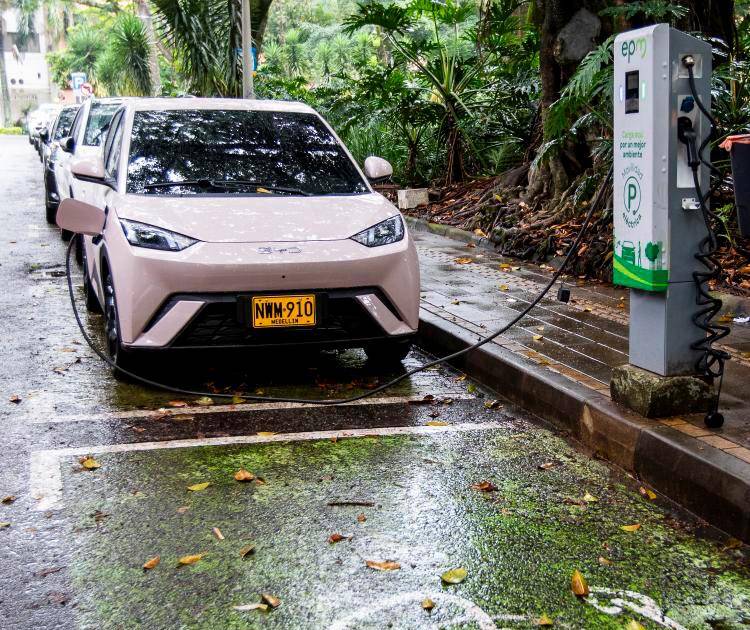
Colombia is currently navigating a paradoxical crisis in its transition to green energy: electric vehicle (EV) adoption is skyrocketing, but the infrastructure required to power them is failing to keep pace. This imbalance has created a critical bottleneck, where the number of vehicles on the road is far outstripping the availability of public charging stations, leading to what industry observers describe as a “fight for the plug.”
The scale of the deficit is stark. Recent data indicates that You’ll see now 174 electric vehicles on the roads for every single public charging station in Colombia. This disparity threatens to dampen the enthusiasm of new buyers and complicates the daily logistics for current owners, who must often compete for limited charging slots in urban centers like Bogotá.
As the country pushes toward a zero-emissions future, the gap between vehicle sales and infrastructure development has become a primary concern for regulators and automotive giants alike. Although the government has implemented incentives to drive sales, the physical network of electrolineras
—electric charging stations—has not seen a proportional investment, leaving the market in a state of precarious growth.
For the global business community, Colombia serves as a cautionary tale of “demand-first” transition. When the rate of consumer adoption exceeds the capacity of the supporting utility grid, the resulting “charging anxiety” can stall the very environmental progress the state seeks to achieve.
The Regulatory Response: Creg’s 2027 Roadmap
Recognizing that the current haphazard growth of charging points is unsustainable, the Colombian government is moving toward a formal regulatory framework. The Comisión de Regulación de Energía y Gas (Creg) is preparing a resolution to standardize and regulate the electric charging sector, with a target completion date of June 2027 according to statements from the agency.
Ángela Álvarez, a commissioner at Creg, has emphasized that the agency is working with key energy operators—including Terpel and Vanti—and the Ministry of Mines and Energy to develop these guidelines. The objective is to move away from fragmented, private installations and toward a cohesive national network that ensures interoperability and fair pricing.
The urgency of this regulation is underscored by the sheer volume of new registrations. In the first quarter of 2026 alone, electric vehicle sales surged by 171%, reaching 9,349 units following new tariffs on gasoline cars. This spike has forced the Creg to accelerate its timeline, with a technical document expected to be published as early as June 2026 to lay the groundwork for the 2027 resolution.
BYD and the Surge in Market Demand
The pressure on the charging grid is being amplified by the aggressive expansion of manufacturers, most notably the Chinese giant BYD. The company has seen explosive growth in the Colombian market, with its Yuan UP model becoming a dominant force in sales.

Industry projections suggest that the electric vehicle sector in Colombia is poised for continued exponential growth. BYD has indicated expectations that the sector could close 2026 with more than 40,000 new electric vehicles entering the market. This influx of hardware, while positive for carbon reduction goals, will place an even heavier burden on an already strained network of chargers.
The competitive landscape is also shifting. BYD is positioning itself to compete directly with Tesla and other high-end brands by focusing on price accessibility. However, the “price-point” advantage of these vehicles is offset by the “infrastructure-point” disadvantage. a cheaper car is less attractive if the owner cannot find a reliable place to charge it during a long-distance trip or in a crowded city center.
The “Charging Anxiety” Bottleneck
In Bogotá, the epicenter of the EV boom, the situation is particularly acute. The city has seen a rapid increase in plug-in hybrid and fully electric vehicles, yet the public charging infrastructure has not kept pace, leading to congestion at the few available charging points. This phenomenon, known as “charging anxiety,” refers to the fear that a vehicle will run out of power before reaching a compatible charger.
The current ratio of 174 vehicles per charger is significantly higher than the targets seen in more mature EV markets, where the ratio is often closer to 10 or 15 vehicles per public plug. This gap creates several systemic risks:
- Economic Friction: Commercial fleets and ride-sharing services, which rely on maximum uptime, face lost revenue when vehicles are queued for charging.
- Consumer Hesitation: Middle-class buyers may revert to hybrid or internal combustion engines if the perceived risk of “stranding” is too high.
- Grid Instability: Unregulated, haphazard charging setups can lead to localized power surges and instability in urban electrical grids.
Comparison of EV Growth vs. Infrastructure
| Metric | Status / Trend | Impact |
|---|---|---|
| Vehicle Sales (Q1 2026) | 171% Increase | Rapidly increasing demand for power |
| Vehicle-to-Charger Ratio | 174:1 | Severe congestion at public plugs |
| Regulatory Timeline | Resolution by June 2027 | Lag between adoption and legislation |
| Market Projection (2026) | 40,000+ new units (BYD) | Potential for further infrastructure strain |
What Happens Next?
The immediate future of Colombian electromobility depends on whether the government can pivot from incentivizing the purchase of cars to incentivizing the construction of chargers. The Ministry of Mines and Energy has already presented a draft resolution to establish technical and regulatory guidelines for interoperability, which would allow a driver to apply different charging networks without needing a dozen different apps or subscriptions.
The next critical checkpoint for the industry will be June 2026, when the Creg is expected to publish its first technical document outlining the conditions for the new charging regulations. This document will determine how charging operators can price their services and what technical standards must be met to ensure safety and efficiency across the national grid.
Until those regulations are codified in 2027, Colombian EV owners will likely continue to face a competitive and often frustrating search for power. For the business world, the lesson is clear: a technological transition is only as successful as the infrastructure that supports it.
Do you believe government regulation is the only way to solve the charging gap, or should the private sector lead the way? Share your thoughts in the comments below.