
Astronomers have identified the interstellar object 3I/ATLAS as a unique celestial body with a composition that suggests it originated significantly earlier than our own solar system. Data analyzed from the James Webb Space Telescope (JWST) indicates that the object, which entered our solar system from interstellar space, possesses chemical signatures pointing to a formation period potentially dating back 12 billion years, according to research published by the European Southern Observatory and associated international research teams.
The discovery of 3I/ATLAS—the third confirmed interstellar object to visit our solar neighborhood—provides a rare opportunity to study material from outside our own system. Unlike the first two visitors, ‘Oumuamua and 2I/Borisov, 3I/ATLAS has exhibited spectral characteristics that suggest it formed in a region of the galaxy with a different chemical enrichment history than the molecular cloud that birthed the Sun approximately 4.6 billion years ago, as reported by Astronomy Magazine.
Understanding the Origins of Interstellar Objects
Interstellar objects are essentially cosmic drifters that lack a gravitational tether to any specific star. 3I/ATLAS, officially designated as an interstellar comet, was first detected by the Asteroid Terrestrial-impact Last Alert System (ATLAS). Its trajectory confirms it is not bound by the Sun’s gravity, meaning it will eventually return to the depths of interstellar space. By using the near-infrared capabilities of the James Webb Space Telescope, researchers were able to break down the light reflected by the comet’s coma, revealing a high concentration of specific isotopes and carbon-based molecules, as noted in the European Space Agency’s technical summaries of JWST observations.

The age estimate of 12 billion years is derived from the comet’s chemical composition, which reflects the “metallicity” of the environment in which it formed. In astronomy, “metals” are any elements heavier than helium. A lower concentration of these heavy elements typically indicates an older, more primitive origin, as the galaxy had not yet been enriched by multiple generations of supernovae. According to the National Aeronautics and Space Administration (NASA), such measurements allow scientists to map the chemical evolution of the Milky Way over eons.
Why 3I/ATLAS Matters to Galactic Evolution
The study of 3I/ATLAS is significant because it acts as a “time capsule” from the early Milky Way. While most of the material in our solar system has been processed and recycled through various planetary and stellar stages, 3I/ATLAS appears to have remained relatively undisturbed in the cold, dark vacuum of space. This preservation allows planetary scientists to observe the conditions of star formation as they existed billions of years ago.

Researchers have highlighted that the detection of such objects is becoming more frequent as telescopic technology improves. The ability to identify these visitors is essential for understanding the distribution of organic material throughout the galaxy. According to a study published in The Astrophysical Journal, the frequency of these interstellar “guests” suggests that there may be a constant, low-level exchange of materials between star systems across the galaxy.
Comparing Interstellar Visitors
When comparing 3I/ATLAS to its predecessors, astronomers note distinct differences in behavior and composition. ‘Oumuamua, discovered in 2017, appeared to be more asteroid-like, lacking the distinct tail associated with comets. 2I/Borisov, discovered in 2019, was clearly a comet but possessed chemical similarities to those found within our own Kuiper Belt. In contrast, 3I/ATLAS shows a chemical profile that is distinctly “foreign,” suggesting it formed in a different type of star system entirely, as documented by Scientific American.
| Object | Discovery Year | Primary Classification |
|---|---|---|
| ‘Oumuamua | 2017 | Interstellar Object (Asteroid-like) |
| 2I/Borisov | 2019 | Interstellar Comet |
| 3I/ATLAS | 2023 | Interstellar Comet (Ancient Origin) |
What Happens Next in Interstellar Research
As 3I/ATLAS continues its journey out of our solar system, ground-based and space-based observatories will continue to track its path and monitor its fading luminosity. The data collected will be integrated into larger models of galactic formation. Astronomers are now pushing for dedicated missions that could potentially intercept an interstellar object, though such an endeavor remains a significant engineering challenge given the high velocities at which these objects travel, as stated by the European Space Agency’s Comet Interceptor project page.
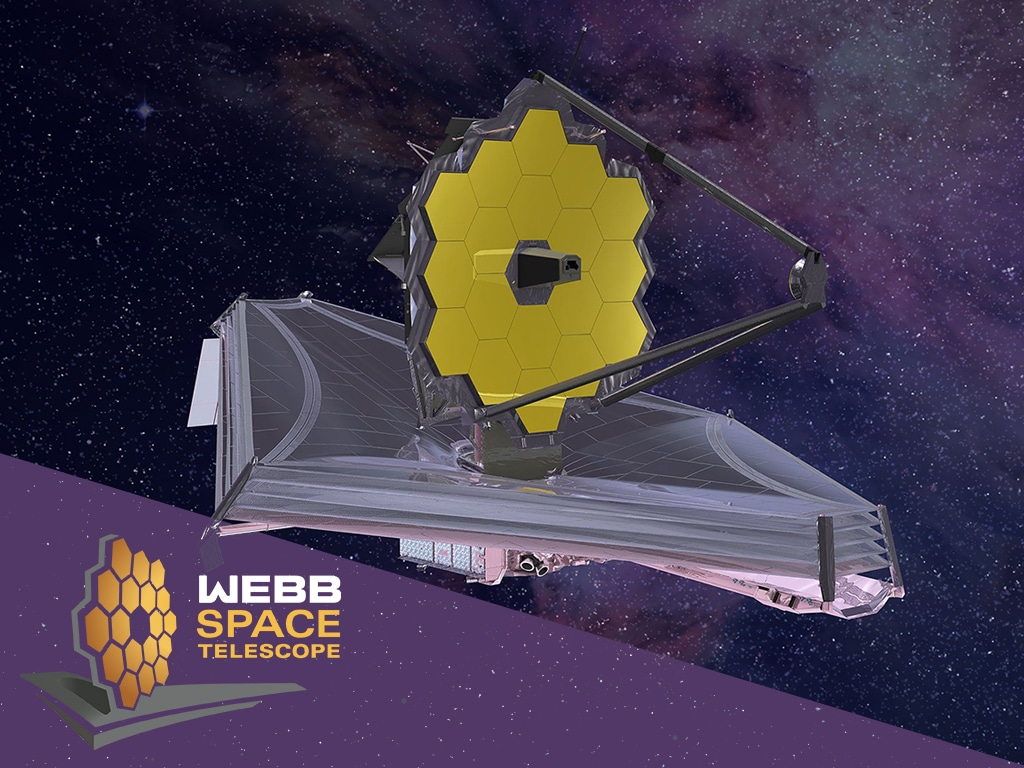
Future updates regarding the trajectory and chemical analysis of 3I/ATLAS are expected to be published as part of the ongoing data releases from the James Webb Space Telescope’s deep-field survey programs. Readers interested in the latest tracking data can visit the NASA Jet Propulsion Laboratory’s Small-Body Database for official orbital parameters and updated observation logs.
We welcome your thoughts on the implications of this discovery. Please share your perspective in the comments section below.