
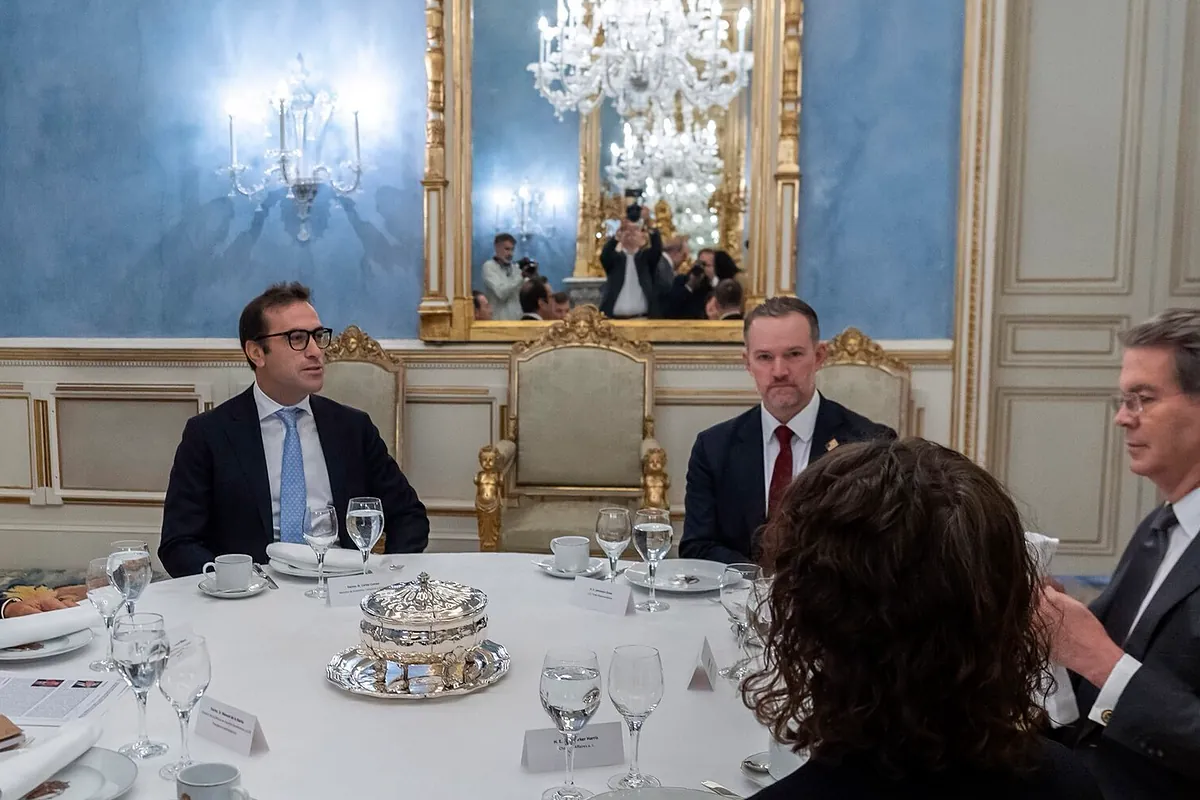
The diplomatic distance between Washington and Madrid has reached a new low, as the United States has reportedly excluded Spain from a critical G20 ministerial gathering. The decision to sideline Carlos Cuerpo, Spain’s First Vice-President and Minister of Economy, Trade and Business, marks a significant setback in Spain’s long-standing effort to secure a permanent seat within the world’s most influential economic club.
This exclusion from the summit of ministers for growth
in Washington is not an isolated incident but rather the latest manifestation of a deteriorating relationship between the administration of Donald Trump and the government of Pedro Sánchez. For the first time since 2019, a Spanish finance chief was absent from a key G20 encounter, signaling a shift from the traditional “permanent guest” status Spain has enjoyed for nearly two decades.
The absence of Minister Carlos Cuerpo from the recent meetings—where G20 members and select guests convened with U.S. Treasury Secretary Scott Bessent and IMF Managing Director Christine Lagarde—is being viewed by analysts as a calculated diplomatic snub. This move follows a pattern of tension, including earlier reports from January 2026 that the U.S. Was blocking Spain from G20 summit preparations as bilateral relations soured according to Bloomberg.
For Dr. Olivia Bennett, who has tracked global economic policy for nearly two decades, this development is more than just a breach of protocol. It represents a strategic pivot by the Trump administration to prioritize allies who align more closely with its “America First” agenda, effectively penalizing nations that it perceives as drifting toward more left-wing European policies.
The Erosion of Spain’s G20 Aspirations
Since 2008, Spain has maintained a status as a permanent invitee to G20 summits, often represented alongside the European Union delegation. This position allowed Madrid to project influence on global trade, climate policy, and financial stability. But, the current administration in Washington appears intent on redefining who belongs at the table.
The exclusion of Carlos Cuerpo is particularly poignant given his role. As the First Vice-President and Minister of Economy, Trade and Business, Cuerpo is the primary architect of Spain’s current economic strategy. His absence from the Washington meetings denies Spain a direct voice in discussions regarding global growth trajectories and fiscal coordination at a time when the U.S. Is aggressively reshaping international trade norms.
The tension is not limited to economic forums. In October 2025, President Trump suggested that NATO should consider removing Spain from the alliance due to disputes over military spending, specifically citing a failure to meet the target of 5% of gross domestic product as reported by Reuters. This broader geopolitical friction has now bled into the economic sphere, turning the G20 ministerial meetings into a tool for diplomatic leverage.
The Impact on Bilateral Trade and Investment
Despite the diplomatic frost, the Spanish government has attempted to maintain a facade of stability. Minister Carlos Cuerpo previously stated that there were no changes to trade relations between the U.S. And Spain, asserting that bilateral relations continue to operate within the existing EU-America framework. However, the reality of being “shut out” from high-level planning contradicts this narrative of business-as-usual.

The strategic stakes are high. Spain is continental Europe’s fourth-largest economy, and its ability to attract U.S. Investment depends heavily on the perceived strength of its relationship with Washington. When the U.S. Treasury Secretary and the IMF head meet without Spain’s representation, it sends a signal to global markets that Madrid is currently out of favor with the White House.
Why This Matters for the Global Economy
The sidelining of a major EU economy like Spain indicates a broader trend in the Trump administration’s approach to multilateralism. By selectively inviting allies and excluding others, the U.S. Is moving away from the inclusive, consensus-based model of the G20 toward a more transactional “club” system.
- Diplomatic Precedent: If the U.S. Can unilaterally decide who is “relevant” among permanent guests, other non-member invitees may discover their access precarious.
- EU Fragmentation: Such moves can create friction within the European Union, as some member states may be favored over others based on their ideological alignment with the U.S. Administration.
- Economic Signaling: The exclusion of a Minister of Economy suggests that political alignment is now a prerequisite for economic cooperation at the highest levels.
This shift is a stark departure from the era of Joe Biden, who maintained a more traditional approach to G20 invitations and bilateral relations with the Sánchez government. The “cooling” of relations is not merely a clash of personalities but a clash of political philosophies regarding the role of the state in the economy and the nature of international alliances.
What Happens Next?
The Spanish government now faces a difficult balancing act. On one hand, it must continue to pursue its goal of full G20 membership—a goal that has been a priority for several administrations. On the other, it must navigate the volatile temperament of the Trump administration without compromising its domestic policy goals or its standing within the EU.

Observers are watching to see if Spain will attempt to bypass Washington by strengthening ties with other G20 powers, such as Brazil or India, to maintain its influence. However, given the central role of the U.S. In the G20’s current orbit, the path to reintegration likely runs through a diplomatic reset with the White House.
The next critical checkpoint will be the official attendee list for the upcoming 2026 G20 Leaders’ Summit. Whether Spain is invited as a full participant or relegated to a diminished “observer” role will be the definitive measure of how far the relationship has deteriorated.
World Today Journal will continue to monitor the diplomatic developments between Madrid and Washington. We invite our readers to share their perspectives on the impact of these diplomatic shifts in the comments section below.