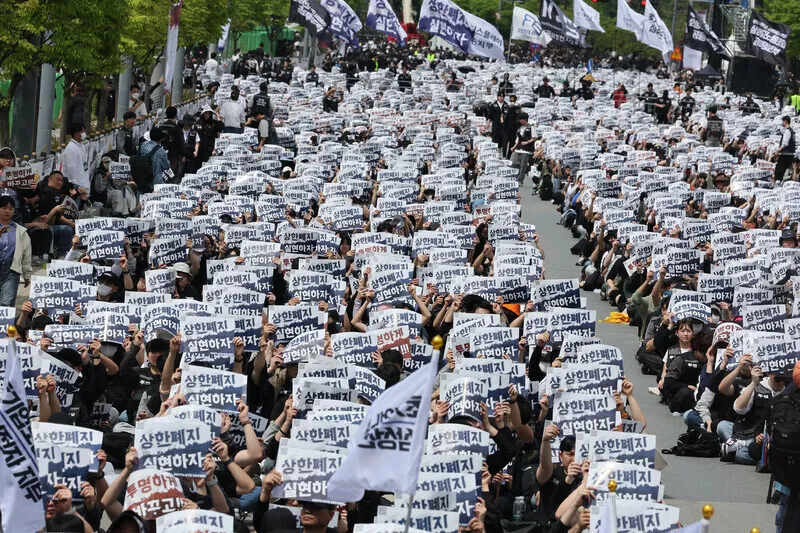
The gleaming corridors of the Pyeongtaek campus in Gyeonggi Province are usually symbols of South Korean industrial precision and the global appetite for artificial intelligence. However, the atmosphere has shifted from clinical efficiency to mounting tension as a deepening Samsung Electronics labor dispute threatens to disrupt the world’s most critical semiconductor supply chains.
At the heart of the conflict is a fundamental disagreement over how the rewards of the AI boom should be distributed. While Samsung continues to dominate the memory chip market, its workforce is increasingly dissatisfied with the opacity and caps placed on performance-based bonuses. What began as a corporate payroll disagreement has evolved into a broader conversation about corporate governance, labor rights, and the social responsibility of the world’s largest chip-maker.
For global markets, the stakes are immense. As the tech ecosystem becomes increasingly dependent on high-bandwidth memory (HBM) and advanced foundry services to power AI models, any significant work stoppage at Samsung could send shockwaves through the electronics industry, affecting everything from smartphone production to data center expansions.
As Chief Editor of Business at World Today Journal, I have tracked the intersection of economic policy and labor markets for nearly two decades. The current situation at Samsung is not merely a local strike; it is a litmus test for how the “K-chip” miracle will reconcile its aggressive growth targets with a modernizing workforce that demands transparency and a fairer share of the operating profit.
The Demand for Profit Transparency and the ’15 Percent’ Threshold
The current labor unrest is driven by a specific and ambitious set of demands from the union. Central to their platform is the removal of existing caps on performance-based bonuses and a demand for payouts equivalent to 15 percent of the company’s operating profit. Given the scale of Samsung’s earnings, this figure is estimated to be around 45 trillion won, or approximately $31 billion.
In the traditional South Korean corporate model, bonuses have often been discretionary, decided by management with limited transparency regarding the formula used to calculate them. The union is pushing for a systemic shift, arguing that the workers who drive the technical breakthroughs in semiconductor fabrication should have a guaranteed, formulaic share of the resulting profits.
This struggle reflects a growing trend among “white-collar” and highly skilled technical workers in South Korea. No longer content with the paternalistic management styles of the past, these employees are leveraging their indispensable role in the AI chip race to secure legally binding profit-sharing agreements. The tension is further exacerbated by the perception that while the company’s valuation and profits soar due to AI demand, the individual contributors are seeing their gains capped by arbitrary corporate ceilings.
Quantifying the Risk: Automation vs. Human Intervention
Industry analysts and global clients are closely monitoring the potential for production outages. The sheer scale of Samsung’s operations means that a total shutdown of its chip plants could be catastrophically expensive, with some industry estimates suggesting losses of roughly $677 million per day.
However, the actual risk to the global supply chain is a subject of significant debate. A critical factor is the level of automation within Samsung’s fabrication plants (fabs). Much of the manufacturing process is approximately 90 percent automated, meaning that the physical production of wafers can continue with minimal human intervention for short periods. This structural resilience suggests that a traditional “walkout” may not immediately halt the flow of chips in the way a strike at an automotive assembly plant would.

Despite this automation, the human element remains vital for maintenance, quality control, and the complex logistics of the foundry lines. Evidence of this vulnerability has already surfaced. During a recent overnight rally involving approximately 40,000 union members at the Pyeongtaek complex, the impact on efficiency was measurable. According to union data, memory fabs saw an 18.4 percent decline in production performance, while foundry lines—which are often more sensitive to operational disruptions—plunged by 58.1 percent during that specific shift.
These figures demonstrate that while the machines can run, the absence of a coordinated, motivated workforce creates immediate bottlenecks. In the high-precision world of semiconductor manufacturing, even a minor dip in efficiency can lead to yield losses that take weeks to recover.
The ‘Social Solidarity’ Debate and Corporate Governance
Beyond the balance sheets, the Samsung dispute has sparked a sophisticated debate within the South Korean labor movement regarding “social solidarity.” Some critics within the broader labor community argue that the Samsung union’s focus on maximizing bonuses for high-earning engineers lacks a connection to the wider struggles of the working class. This tension highlights a divide between the “labor aristocracy” of the tech sector and the precarious workers in the broader supply chain.
From a business perspective, this internal labor friction poses a reputational risk. Samsung is attempting to transition from a family-led conglomerate (chaebol) toward a more transparent, globally aligned corporate governance structure. The inability to resolve bonus disputes through open negotiation, rather than escalating rallies and threats of walkouts, suggests that the cultural shift within the company’s management is lagging behind its technical achievements.
The debate over “fair distribution” is not just about the amount of money, but about the principle of equity. As Samsung competes with rivals like TSMC and SK Hynix for top-tier engineering talent, the company’s ability to offer a transparent and competitive compensation package is a strategic necessity. If the labor dispute continues to fester, Samsung risks a “brain drain” of the very specialists required to maintain its edge in the HBM3E and HBM4 chip markets.
Government Intervention and the Path to Resolution
The South Korean government, recognizing the systemic importance of Samsung to the national economy, has begun to signal its involvement. There are reports that the government may introduce a “post-adjustment” card—a mechanism to mediate the dispute after initial negotiations fail, potentially providing a framework for a compromise that satisfies the union’s demand for transparency without bankrupting the company’s R&D budget.
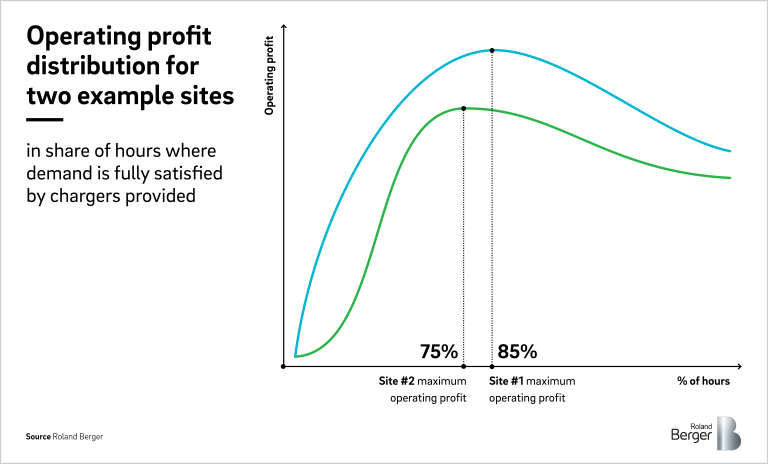
The government’s primary objective is stability. With the semiconductor industry acting as the backbone of South Korea’s exports, any prolonged instability at Samsung is viewed as a national security risk. The strategy is likely to involve pressuring both the union to avoid a full-scale walkout and the company to move away from discretionary bonus caps toward a more predictable, formula-based system.
For the company, the challenge is to balance these demands without setting a precedent that could lead to unsustainable labor costs across its other divisions. The management must navigate the fine line between maintaining fiscal discipline and ensuring that its most valuable asset—its human capital—remains committed to the company’s long-term vision.
- The Core Demand: The union is seeking the removal of bonus caps and a payout of 15% of operating profit, estimated at roughly $31 billion.
- Production Impact: While fabs are 90% automated, recent rallies caused a production drop of 18.4% in memory and 58.1% in foundry lines.
- Global Risk: A full shutdown could cost the company an estimated $677 million per day, potentially destabilizing the AI chip supply chain.
- Societal Tension: The dispute has highlighted a rift between high-paid tech workers and the broader labor movement regarding “social solidarity.”
- Next Milestone: The union has planned a potential walkout starting May 21, beginning with a rally in Seoul.
What Happens Next?
The coming weeks are critical for Samsung’s operational stability. All eyes are now on the May 21 deadline, the date the union has earmarked to launch a walkout. This action is expected to begin with a high-profile rally near the residence of Samsung Chairman Lee Jae-yong in Yongsan-gu, Seoul, signaling that the union intends to bring the dispute directly to the company’s highest level of leadership.
Whether the government’s mediation efforts can prevent this escalation remains to be seen. If the walkout proceeds, the industry will get its first real-world test of how much “automation” can actually shield a semiconductor giant from the effects of a determined workforce. For the global tech industry, the hope is that a resolution is reached before the first shift on May 21, ensuring that the flow of AI-critical silicon remains uninterrupted.
We will continue to monitor the developments at the Pyeongtaek campus and provide updates as official filings and union announcements are released. Do you believe tech giants should move toward formulaic profit-sharing, or should bonuses remain discretionary? Share your thoughts in the comments below.
Worth a look