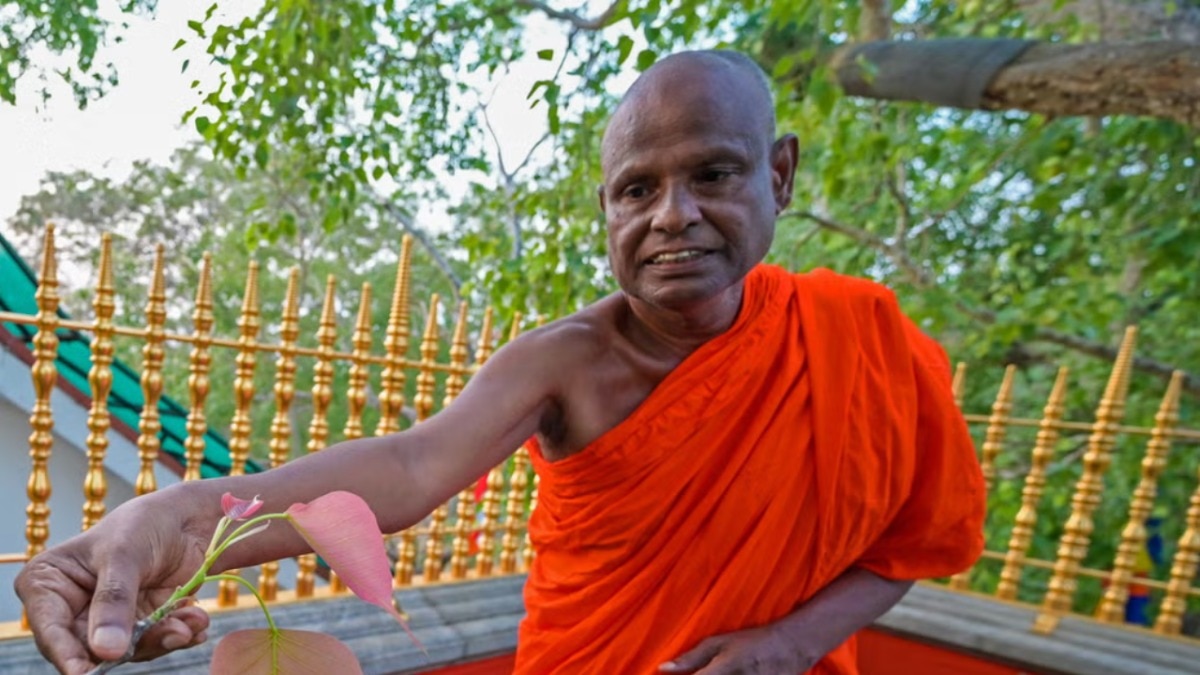
Senior Sri Lankan Buddhist Monk Ordered Arrested Over Alleged Abuse of Minor
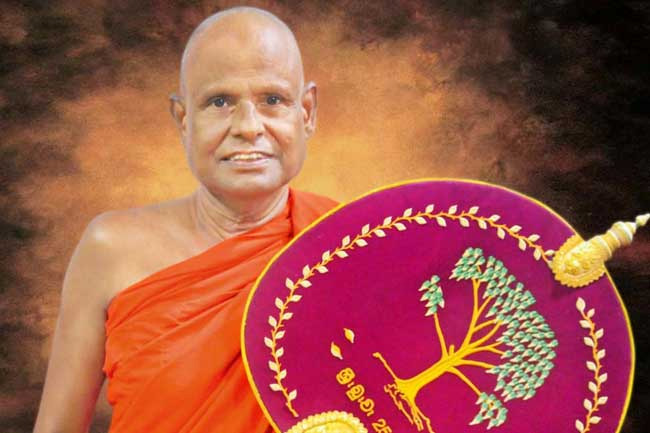
The Anuradhapura Magistrate’s Court has ordered the arrest of Ven. Pallegama Hemarathana Thera, one of Sri Lanka’s most influential members of the Buddhist clergy, following allegations involving the sexual abuse of a 15-year-old girl. The court’s directive marks a significant escalation in a case that has drawn intense scrutiny toward the intersection of religious authority and child protection in the region.
In addition to the order for the monk’s custody, the Anuradhapura Chief Magistrate has named the victim’s mother as a suspect in the case. To ensure the integrity of the ongoing investigation, the court has imposed an immediate overseas travel ban on Ven. Hemarathana Thera, preventing him from leaving the country while legal proceedings continue.
The case is being viewed as one of the most sensitive criminal investigations involving a senior figure within the Sri Lankan Buddhist establishment in recent years. It raises critical questions regarding institutional accountability and the ability of law enforcement to act when suspects hold significant social or religious power.
Court Intervention and Arrest Mandates
The judicial order for arrest followed submissions that highlighted significant delays in the initial investigation. According to records from the court, officials from the National Child Protection Authority (NCPA) informed the magistrate that repeated inquiries to investigators had failed to produce satisfactory explanations as to why the suspect had not been arrested despite the gravity of the allegations.
Given the sensitive nature of the case and the involvement of a minor, the hearing was conducted privately inside the judge’s chambers. This measure was taken to protect the identity and privacy of the victim during the legal process.
During the proceedings, Attorney-at-Law Sajeewani Abeyratne, representing the NCPA, formally requested that Ven. Hemarathana Thera and the girl’s mother be identified as suspects. Following these submissions, the magistrate accepted the request and directed the Sri Lanka Police to execute the arrests without further delay.
The Role of the National Child Protection Authority
The intervention of the National Child Protection Authority (NCPA) proved pivotal in moving the case forward. The NCPA’s insistence on transparency and its willingness to challenge investigative delays suggest a rigorous approach to ensuring that child protection laws are applied regardless of the suspect’s status.
The NCPA’s role in this case underscores the importance of independent oversight in criminal investigations involving minors. By bringing the matter before the Anuradhapura Magistrate’s Court, the authority effectively bypassed the stagnation in the police investigation, forcing a judicial mandate for custody.
Institutional Accountability and Social Impact
The allegations against Ven. Pallegama Hemarathana Thera have sent shockwaves through the Buddhist establishment in Sri Lanka. As a figure of significant influence, the monk’s alleged actions and the subsequent delays in his arrest have sparked a broader conversation about the influence of powerful religious figures on the legal system.
The inclusion of the victim’s mother as a suspect further complicates the case, suggesting a potential failure in the immediate support system surrounding the minor. This detail highlights the complexities often found in abuse cases where familial or institutional structures may be compromised.
Legal observers note that the court’s decision to impose a travel ban and order an immediate arrest reflects a determination to prevent the potential evasion of justice, regardless of the suspect’s standing in society.
As the Sri Lanka Police proceed with the arrest and the investigation continues, the case will likely serve as a benchmark for how the state handles allegations of abuse involving high-profile religious leaders. The focus remains on whether the legal system can maintain objectivity and rigor when facing the influence of the Buddhist clergy.
The next phase of the legal process will involve further investigations by the police and subsequent appearances before the Anuradhapura Magistrate’s Court to determine formal charges and bail conditions.
We invite our readers to share their perspectives on institutional accountability in the comments section below.
Worth a look