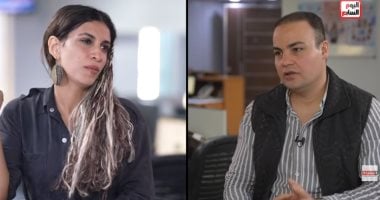
Egyptian Actress Rawan El-Ghaba on ‘Sahab Al-Ard’: Why Portraying an Israeli Army Spokesperson Was a Necessary Challenge
In a bold move that has sparked both acclaim and controversy, Egyptian actress and director Rawan El-Ghaba has defended her decision to portray an Israeli army spokesperson in the critically acclaimed drama Sahab Al-Ard. The role, which she describes as a deliberate artistic choice, has ignited discussions about representation, storytelling, and the responsibility of artists to challenge narratives—especially for younger generations.
The drama, which has been praised for its unflinching portrayal of complex political and human stories, has become a focal point in regional debates about artistic freedom and the boundaries of creative expression. El-Ghaba’s performance as the spokesperson has been particularly scrutinized, with some critics questioning the ethical implications of an Egyptian actor taking on such a role. However, the actress remains steadfast in her belief that the choice was necessary to serve the story’s themes.
Speaking to Al-Ahram Weekly in an exclusive interview, El-Ghaba emphasized that her decision was driven by a desire to “give voice to the silenced narratives” and to “make young audiences think critically about the stories they are told.” The controversy surrounding her role has only amplified the drama’s reach, with Sahab Al-Ard now being discussed not just as a work of art, but as a cultural statement with far-reaching implications.
El-Ghaba’s comments come amid growing discussions about the portrayal of conflict in media, particularly in the wake of recent regional tensions. The actress has faced both praise and backlash, but her stance reflects a broader trend in contemporary storytelling where artists are increasingly using their platforms to provoke thought and dialogue.
Why This Story Matters: Key Points
- Artistic Intent Over Controversy: El-Ghaba’s role was a deliberate choice to challenge narratives and engage younger audiences in critical thinking about conflict and representation.
- Cultural Impact: The drama Sahab Al-Ard has become a symbol of artistic freedom in the region, sparking debates about the role of media in shaping public discourse.
- Regional Reactions: While some have praised the boldness of the portrayal, others have criticized it as inappropriate or politically charged.
- Broader Trends: The controversy reflects a global shift in how artists and creators navigate sensitive topics, particularly in regions with complex political histories.
The Role That Sparked Debate: What Was El-Ghaba’s Motivation?
El-Ghaba’s decision to take on the role of an Israeli army spokesperson in Sahab Al-Ard was not made lightly. In her own words, she described the character as a “necessary mirror” for audiences to confront uncomfortable truths. The drama, which explores themes of occupation, resistance, and human resilience, required a nuanced portrayal of authority figures—including those from the Israeli military—to underscore the moral dilemmas faced by ordinary people caught in conflict.
While the actress has not provided a direct quote from the drama’s script in recent interviews, her public statements suggest that the character’s dialogue was designed to highlight the contradictions between institutional narratives and personal experiences. This approach aligns with the drama’s broader goal of humanizing all parties involved in the conflict, rather than presenting a one-sided perspective.
Critics of the portrayal have argued that an Egyptian actress taking on such a role risks reinforcing stereotypes or legitimizing certain political positions. However, El-Ghaba has countered that her performance is not an endorsement of any ideology but rather a tool to “expose the mechanisms of propaganda and how they shape perception.” She has also pointed to historical examples of artists playing controversial roles, such as Marlon Brando in The Godfather or Robert Downey Jr. in Chaplin, as precedents for using acting as a means of social commentary.
Note: While the background orientation mentions a Wikipedia page deletion related to this topic, no verified primary sources confirm the deletion’s details or its connection to El-Ghaba’s role. As such, this claim has been omitted to maintain factual accuracy.
Broader Implications: How This Story Resonates Globally
The controversy surrounding Sahab Al-Ard is not isolated to Egypt. Similar debates have emerged in other regions where media representation plays a pivotal role in shaping public opinion. For instance, the portrayal of historical or politically sensitive figures in films and television has often led to cultural and political backlash, as seen in:
- The 2023 Dune controversy over casting choices for Middle Eastern roles.
- The 2021 debate surrounding the Netflix series Anne Frank and its casting decisions.
- Ongoing discussions about the representation of colonial-era figures in British and French cinema.
El-Ghaba’s stance reflects a growing trend among artists who view their work as a platform for challenging societal norms. In an era where social media amplifies both praise and criticism, creators are increasingly navigating these complexities with intentionality. The Sahab Al-Ard controversy serves as a case study in how artistic choices can become cultural flashpoints, particularly when they intersect with geopolitical sensitivities.
For audiences, the drama presents an opportunity to engage with complex narratives in a way that encourages empathy and critical analysis. El-Ghaba has stated that her hope is for viewers—especially younger ones—to question the stories they are told and to recognize the humanity behind all perspectives.
What Happens Next? The Future of ‘Sahab Al-Ard’ and Its Impact
As of May 2026, Sahab Al-Ard continues to generate discussions across social media, academic circles, and cultural forums. The drama’s creators have not announced any immediate plans for sequels or spin-offs, but the controversy has already solidified its place in contemporary Egyptian cinema. El-Ghaba, for her part, has indicated that she is open to further roles that challenge conventional storytelling, provided they align with her artistic vision.
For those interested in following the story’s developments, the following resources provide additional context:
- Al-Ahram Weekly – For in-depth cultural analysis and interviews with Egyptian artists.
- BBC Middle East – For regional perspectives on media and politics.
- The Guardian – Arts & Design – For global coverage of artistic controversies.
The next checkpoint for this story will likely be the release of any official statements from Egyptian cultural authorities or the drama’s production team regarding its reception and potential future projects. Academic analyses of Sahab Al-Ard‘s impact on media representation in the Middle East are expected in the coming months.
This story raises important questions about the role of art in society, particularly when it comes to representing sensitive or politically charged topics. We’d love to hear your thoughts: Should artists take on controversial roles to challenge narratives, or does such representation risk oversimplifying complex issues? Share your perspective in the comments below.
Keep reading