
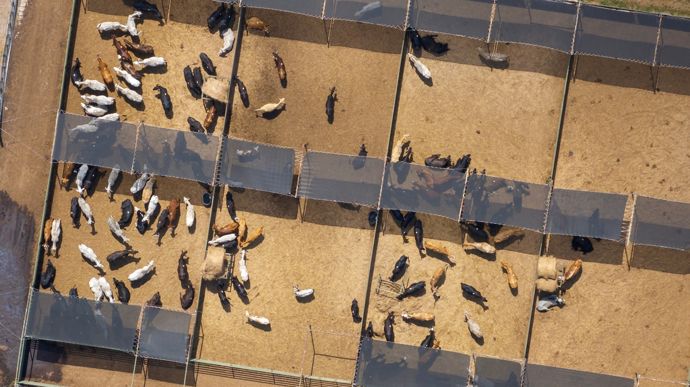
WASHINGTON, D.C. — The U.S. Beef market is facing its most severe supply crunch in nearly eight decades, with cattle herds shrinking to levels not seen since the 1950s—a period when the country’s population was roughly half its current size. The result? Record-breaking prices for live cattle and ground beef, squeezing budgets for American consumers just as summer grilling season heats up. According to verified data from the U.S. Department of Agriculture (USDA) and financial analysts, the average retail price of ground beef for hamburgers reached $6.70 per pound in March 2026, a 12% jump from the same month last year and the highest level recorded since federal tracking began in 1984. Meanwhile, live cattle futures hit a historic $2.51 per pound on April 15, the peak since the 1960s, as ranchers grapple with soaring production costs and a shrinking herd.
Behind this crisis lies a perfect storm of economic and agricultural factors. The U.S. Cattle herd has contracted to its smallest size in 75 years, a direct consequence of years of drought, rising feed costs, and ranchers culling herds to manage expenses. Data from the USDA’s Livestock and Meat Statistics confirms that cattle slaughter fell to 2.2 million head in March 2026, down from 2.5 million in the same period last year. Beef production also declined by 300,000 pounds to 1.9 million, exacerbating the supply shortage.
Despite the sharp rise in prices, consumer demand for beef has remained resilient, according to Barclays analyst Benjamin Theurer, who noted in a client report that “demand has held steady despite lower production levels and upward price pressure.” However, the surge in costs is placing significant strain on restaurants and fast-food chains with high beef exposure. Bank of America’s Sara Senatore warned that chains like McDonald’s, Chipotle, and Cracker Barrel could see weaker same-store sales growth due to beef inflation, a trend already visible in recent financial disclosures from these companies.
Why Are Cattle Prices Soaring?
Several interconnected factors are driving the unprecedented spike in cattle prices. First, the shrinking herd size—now at its lowest since the 1950s—has reduced the overall supply of slaughter-ready cattle. The USDA attributes this decline to a combination of prolonged drought conditions in key cattle-producing states, including Texas, Kansas, and Nebraska, which have devastated pastureland and increased feed costs. Ranchers have been reducing herd sizes to cut losses amid high input costs, including feed, energy, and labor.

Second, the market is experiencing a surplus of fat trim due to heavier steers entering slaughter facilities. As cattle weights hit historic highs, processors are struggling to balance the ratio of lean to fat meat, creating an unexpected demand for lean-blend beef. This shift has further tightened supply chains and pushed up prices for ground beef products, which rely heavily on lean trimmings.
Third, global demand for U.S. Beef remains strong, particularly from international markets like China and Japan, where U.S. Beef is prized for its quality. However, this export demand has not fully offset the domestic supply shortage, leaving American consumers to bear the brunt of higher prices.
Who Is Affected—and How?
The ripple effects of this beef price surge are being felt across the U.S. Economy, from rural ranchers to urban consumers. Here’s a breakdown of the key stakeholders:
- Consumers: The average American household is paying significantly more for ground beef, with prices now 12% higher than last year. For families planning summer barbecues, this translates to a noticeable dent in discretionary spending. The Bureau of Labor Statistics’ Consumer Price Index confirms that beef prices have reached their highest levels since 1984, outpacing declines in other protein categories like eggs and chicken.
- Restaurants and Fast Food: Chains reliant on beef, such as McDonald’s, Chipotle, and Cracker Barrel, are facing higher ingredient costs, which could pressure profit margins. Analysts warn that weaker same-store sales growth may follow if these companies cannot pass on price increases to consumers.
- Ranchers and Producers: While higher cattle prices provide some relief to ranchers, the long-term outlook remains uncertain. Many are still recovering from years of financial strain, and the shrinking herd size could limit future production capacity. The USDA’s Economic Research Service highlights that herd rebuilding takes time, and the current supply crunch may persist for several years.
- Processors and Packagers: Meatpacking plants are adapting to the new market dynamics by increasing the use of lean-blend beef, but this requires additional processing steps and infrastructure adjustments. The surplus of fat trim is also creating logistical challenges for processors.
What’s Next for the U.S. Beef Market?
The outlook for the U.S. Beef market hinges on several critical factors, including weather patterns, herd rebuilding efforts, and global demand. Here’s what to watch in the coming months:
.jpg "Cattle")
- Herd Rebuilding: The USDA projects that cattle herd expansion will remain unhurried in 2026, with ranchers prioritizing profitability over growth. However, if drought conditions ease and feed costs stabilize, herd sizes could begin to recover in 2027.
- Processing Capacity: Meatpacking plants are investing in new technology to handle the surplus of fat trim and increase lean-blend production. This could help stabilize prices over the long term.
- Consumer Adaptation: With beef prices at record highs, many consumers may shift to alternative proteins like chicken, pork, or plant-based substitutes. The National Cattlemen’s Beef Association is encouraging producers to highlight the quality and value of U.S. Beef to maintain demand.
- Policy and Trade: Any changes in U.S. Agricultural policy or trade agreements could further impact beef supply and prices. For example, tariffs or export restrictions could redirect beef to international markets, easing domestic shortages.
The next major checkpoint for the beef market will be the USDA’s June 2026 Livestock and Meat Outlook report, scheduled for release on June 15, 2026. This report will provide updated projections on herd sizes, production levels, and price trends, offering critical insights for ranchers, processors, and consumers alike. Until then, shoppers and businesses should brace for continued volatility in beef prices.
Key Takeaways
- The U.S. Cattle herd is at its smallest size in 75 years, driving record-high beef prices.
- Ground beef prices hit $6.70 per pound in March 2026, a 12% increase from last year.
- Live cattle futures reached $2.51 per pound on April 15, the highest level since the 1960s.
- Drought, high feed costs, and herd culling are the primary drivers of the supply crunch.
- Restaurants and consumers face higher costs, while ranchers navigate uncertain long-term prospects.
- The USDA’s June 15 report will be critical for assessing future market trends.
As the summer grilling season approaches, Americans are confronting a stark reality: the price of beef is not just a temporary blip—it reflects deeper structural challenges in the U.S. Agricultural sector. For now, the best advice for consumers is to plan ahead, explore budget-friendly alternatives, and stay informed as the market evolves. What are your strategies for managing rising food costs? Share your thoughts in the comments below—and don’t forget to follow World Today Journal for ongoing coverage of this developing story.