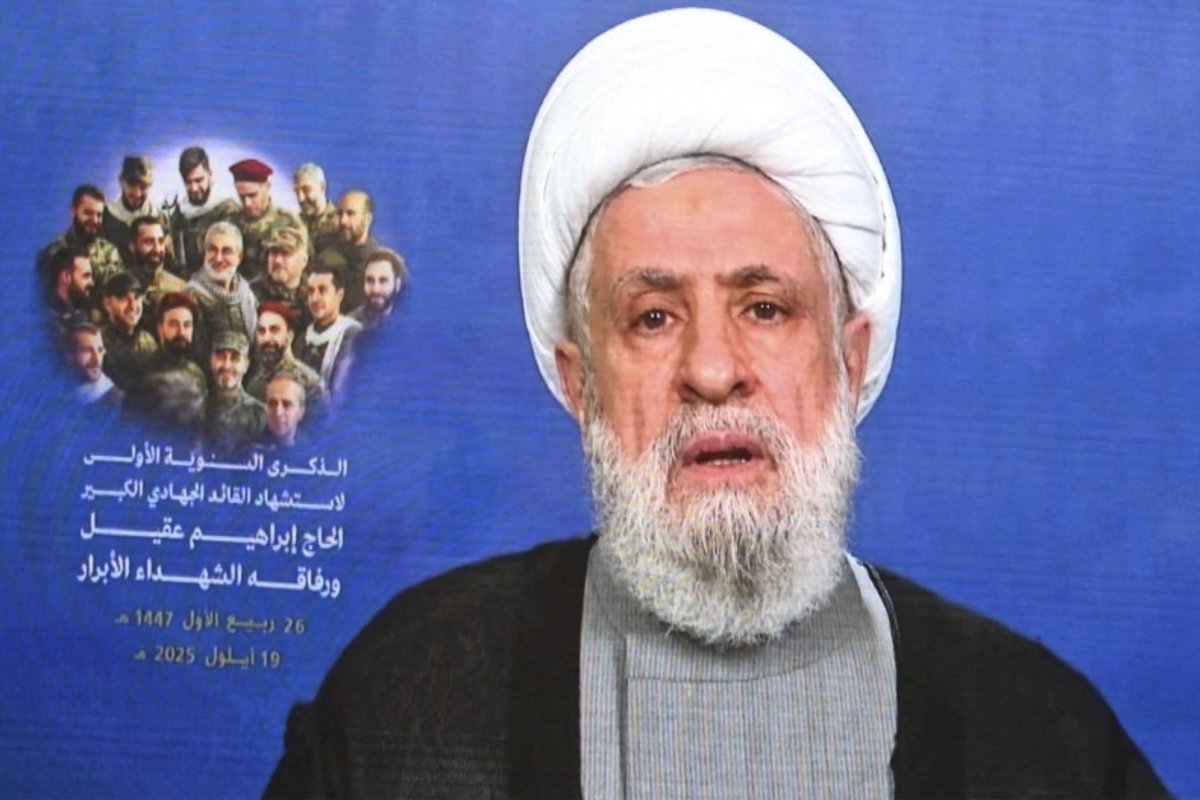
BEIRUT, LEBANON — In a blunt rejection of Lebanon’s political establishment and international pressure, Hezbollah Secretary-General Naim Qassem has declared that the group’s disarmament is “unacceptable” and “non-negotiable,” escalating tensions as the country teeters on the brink of prolonged conflict. His remarks, delivered during a closed-door meeting with senior commanders earlier this month, underscore the deepening divide between Hezbollah and a Lebanese government already fractured by economic collapse and regional warfare.
Qassem’s stance comes as Israel’s military campaign against Hezbollah intensifies, following the U.S.-backed strikes on Iran in early March. Despite sustained Israeli airstrikes targeting Hezbollah’s infrastructure, weapons depots, and command centers—including a reported unprecedented 1,200+ strikes since late 2024—the militant group remains operational, launching daily drone and rocket attacks into northern Israel. The question now is not whether Hezbollah will disarm, but whether Lebanon can survive the consequences of its refusal.
For over four decades, Hezbollah has functioned as both a political party and a heavily armed militia, wielding influence far beyond its estimated 10,000–20,000 fighters and controlling swathes of southern Lebanon as a “state within a state.” Its rejection of disarmament demands—echoed by Iran’s Supreme Leader Mojtaba Khamenei, who has framed the group’s resistance as a “divine duty”—has left Lebanon’s fragile political class scrambling for solutions. Yet with Hezbollah’s military wing deeply embedded in the country’s security apparatus and its social services network serving as a lifeline for Lebanon’s 30% Shia population, any attempt to force disarmament risks triggering civil unrest.
- Hezbollah’s disarmament is framed as a “red line” by its leadership, with Secretary-General Naim Qassem calling demands “unacceptable.”
- The group’s military capacity persists despite Israeli strikes, fueled by Iranian resupply and decentralized command structures.
- Lebanon’s government has warned Hezbollah to surrender weapons, risking a constitutional crisis if the group refuses.
- Public opinion in Lebanon is deeply divided, with Shia communities largely supportive of Hezbollah’s stance while Sunni and Christian factions demand neutrality.
- The conflict’s spillover into Syria and Iraq threatens to regionalize the war, drawing in additional Iranian-backed militias.
Why Disarmament Is a Non-Starter for Hezbollah
Hezbollah’s refusal to disarm stems from three intertwined factors: its ideological commitment to resistance, its dependence on Iranian backing, and its role as a de facto government provider for Lebanon’s Shia community. Qassem’s remarks, while not publicly quoted verbatim, reflect a long-standing position articulated by the group’s founder, Hassan Nasrallah, who in 2000 declared that Hezbollah’s weapons were “non-negotiable” and “part of Lebanon’s sovereignty.”
Iran’s support—estimated at $700 million annually in military aid, including missiles, drones, and training—has allowed Hezbollah to replenish losses sustained during Israel’s 2006 war and more recent clashes. Unlike conventional armies, Hezbollah operates with a decentralized command structure, meaning even if Israel targets its known depots, the group can redirect resources through civilian infrastructure, such as mosques, schools, and private homes.
Domestically, Hezbollah’s disarmament would dismantle its parallel governance system. In areas under its control, the group runs hospitals, schools, and social welfare programs, filling the void left by Lebanon’s bankrupt state. For many Shia Lebanese, Hezbollah’s weapons are not just a tool of resistance but a guarantee of survival. As one Beirut-based analyst told World Today Journal, “Hezbollah’s disarmament would leave the Shia community vulnerable to marginalization—something they’ve spent decades fighting against.”
The Lebanese Government’s Dilemma
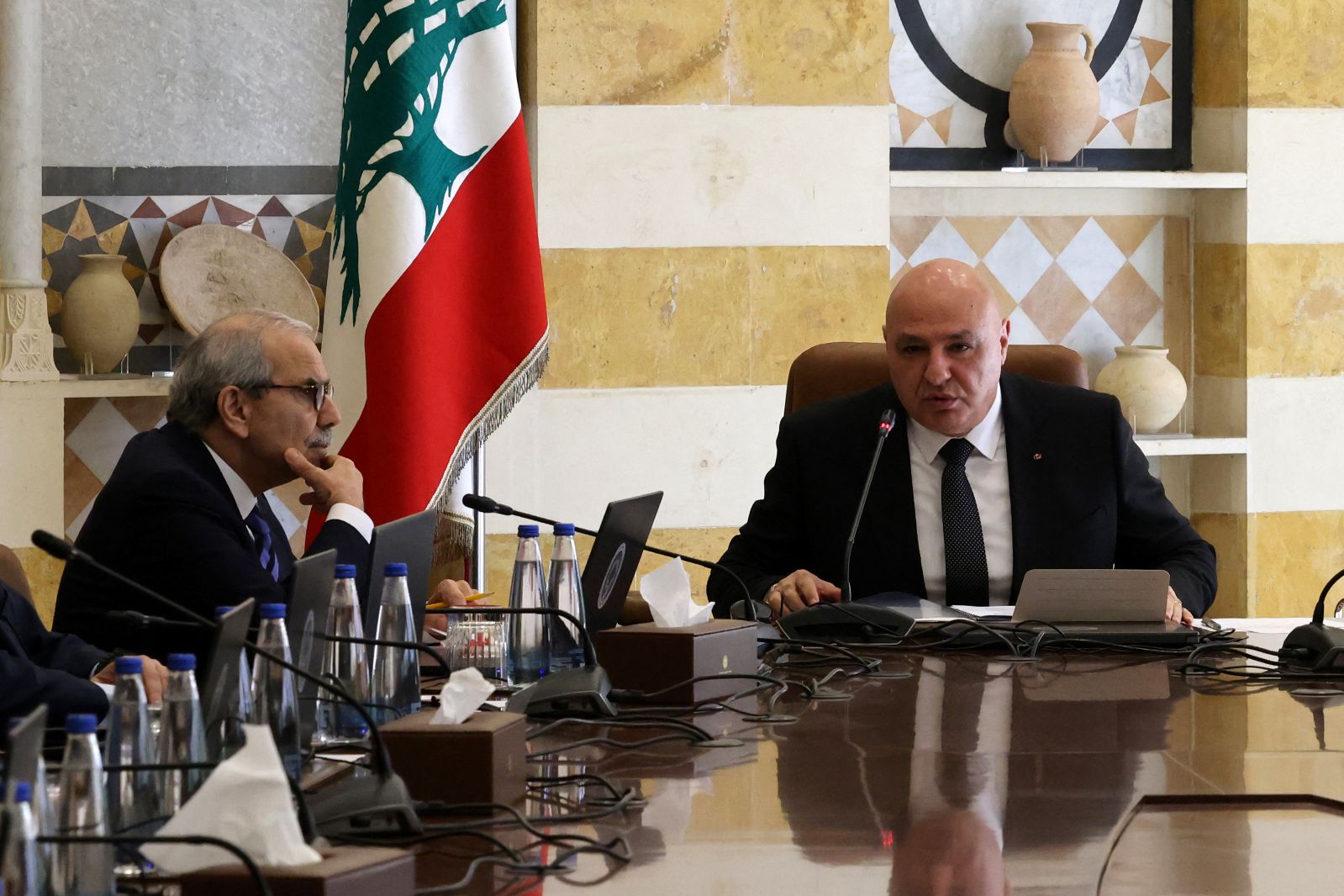
Lebanon’s political leadership is caught between a rock and a hard place. The government, led by Prime Minister Najib Mikati, has formally demanded Hezbollah’s disarmament, citing Article 1 of Lebanon’s constitution, which prohibits “the formation of military or paramilitary organizations.” Yet with Hezbollah’s fighters embedded in the Lebanese Armed Forces (LAF) and its political bloc holding 15 of 128 parliamentary seats, any attempt to enforce disarmament risks triggering a power struggle—or worse, civil war.
Public opinion is similarly polarized. While Hezbollah enjoys strong support among Shia voters—who credit the group with securing their rights and resisting Israeli aggression—Sunni and Christian communities increasingly view Hezbollah’s involvement in regional conflicts as a threat to Lebanon’s stability. Protests in Beirut’s predominantly Sunni neighborhoods have turned violent, with demonstrators chanting, “Hezbollah, you’re destroying Lebanon!” Meanwhile, Christian leaders, including Samir Geagea of the Lebanese Forces, have called for Hezbollah to “stop dragging Lebanon into Iran’s war.”
Israel’s Campaign: Can It Break Hezbollah’s Back?
Israel’s strategy against Hezbollah has evolved since the group’s 2006 defeat. Today, the IDF employs a mix of precision airstrikes, electronic warfare, and psychological operations to degrade Hezbollah’s capabilities. Yet despite targeting over 300 command-and-control nodes since March, Israeli officials acknowledge that Hezbollah’s ability to replenish and adapt remains formidable.
One reason for Hezbollah’s resilience is its use of loitering munitions—drones and missiles that can hover, reconnoiter, and strike repeatedly. These weapons, often smuggled via Syria or Iraq, allow Hezbollah to target Israeli forces with minimal risk to its own fighters. Israeli Defense Forces (IDF) spokesperson Daniel Hagari admitted in a briefing last week that “Hezbollah’s drone swarms have forced us to rethink our tactics,” adding that the group’s “ability to integrate civilian infrastructure into its operations complicates our mission.”
Yet Israel’s campaign is not without costs. Lebanese officials report that Israeli strikes have killed at least 250 civilians since March, including women and children, fueling anti-Israeli sentiment across Lebanon. Hezbollah has exploited these casualties in its propaganda, releasing footage of funerals and damaged homes to rally domestic support.
The Regional Domino Effect
The conflict’s spillover into Syria and Iraq risks turning Lebanon into a battleground for proxy wars. Already, Iranian-backed militias in Syria—such as the Liwa Fatemiyoun and Kataib Hezbollah—have begun deploying fighters to Lebanon to support Hezbollah. Meanwhile, Israel has expanded its strikes into Syria, targeting Iranian Revolutionary Guard Corps (IRGC) bases and supply routes, raising fears of a wider regional conflagration.
U.S. Officials have warned that a prolonged conflict could destabilize the entire Middle East, with Secretary of State Antony Blinken stating in a recent interview that “Lebanon is at a crossroads, and the choices made now will determine whether it survives as a sovereign state or becomes another failed proxy battleground.” The Biden administration has imposed new sanctions on Hezbollah-linked entities, freezing assets and restricting financial flows, but analysts doubt these measures will force the group to disarm.
What Happens Next?
With no clear path to disarmament and the conflict showing no signs of abating, Lebanon’s future hinges on three possible outcomes:

- Escalation: If Israel intensifies its campaign—potentially including a ground invasion—Hezbollah’s response could draw Lebanon into a full-scale war, with catastrophic humanitarian consequences.
- Stalemate: Hezbollah may continue its asymmetric warfare, wearing down Israel through attrition while avoiding a direct confrontation that could trigger a broader regional war.
- Diplomatic Breakthrough: A rare alignment of interests—perhaps between Saudi Arabia, Iran, and the U.S.—could pressure Hezbollah to stand down, but this remains unlikely given Tehran’s deep investment in the group.
The next critical checkpoint will be the Lebanese parliamentary session on June 10, where lawmakers are expected to debate a resolution on Hezbollah’s role in the conflict. Meanwhile, the U.S. And Israel are reportedly preparing for a summit in mid-June to coordinate their next steps. For now, Lebanon remains hostage to forces beyond its control.
What do you think? Will Hezbollah’s refusal to disarm lead to Lebanon’s collapse, or can the country find a way to survive the storm? Share your thoughts in the comments below.
Stay informed: Follow World Today Journal for real-time updates on Lebanon’s crisis and its global repercussions.