By Jonathan Reed | London, UK — May 25, 2026
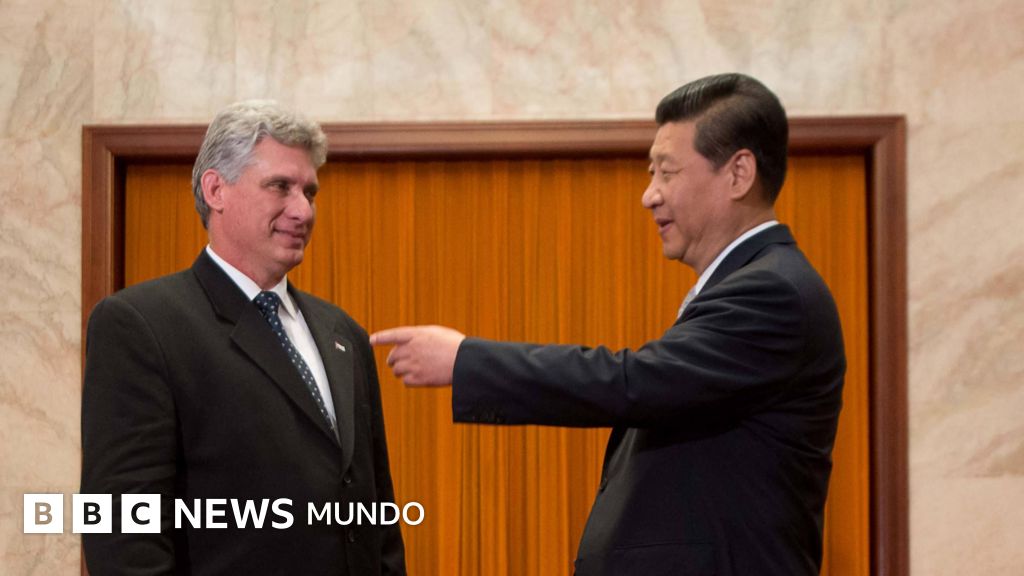
Cuba’s first shipment of 15,000 tonnes of rice from China arrived in Havana on May 23, marking the beginning of a 60,000-tonne emergency aid package approved by President Xi Jinping. The donation comes as the Caribbean island grapples with worsening food shortages, energy crises, and intensified U.S. Sanctions—raising questions about why China, Cuba’s historic ally, is offering aid on a scale that falls short of what many analysts describe as the island’s urgent needs.
President Miguel Díaz-Canel hailed the shipment as a “gesture of solidarity” in a series of posts on Sunday, expressing “deep gratitude” to Beijing while also condemning what he called the U.S. Government’s “collective punishment” of Cuba. Yet the limited scope of China’s aid—just enough to cover a fraction of Cuba’s annual rice consumption—suggests a calculated approach to supporting Havana without provoking further backlash from Washington.
The timing of the donation is significant. Since January 2026, the Trump administration has escalated sanctions, blocking oil exports to Cuba and tightening restrictions on financial transactions. Meanwhile, China has quietly expanded its economic footprint in Latin America, with Cuba emerging as a key partner in Beijing’s push to counter U.S. Influence in the region. But as the world watches, China’s aid to Cuba is unfolding with notable restraint.
China’s “Limited” Aid: A Strategic Calculus
China’s decision to send 60,000 tonnes of rice—enough to feed Cuba’s 11.2 million people for roughly two months—is being framed by officials in Havana as a lifeline. But analysts warn the donation is more symbolic than transformative. According to the International Energy Agency, Cuba imports nearly 60% of its oil, and the U.S. Blockade has further strained its ability to secure fuel, and food. The rice shipment, while significant, does not address the broader structural challenges Cuba faces.

China’s approach reflects a broader pattern of selective engagement with Cuba. In 2025, Beijing provided solar panels to modernize Cuba’s aging energy grid, but these initiatives have been framed as long-term investments rather than immediate humanitarian relief. The rice donation, by contrast, is being positioned as a response to the crisis—but one that avoids direct confrontation with the U.S.
Experts suggest China’s caution stems from two key factors: economic pragmatism and geopolitical risk assessment. While Cuba remains a strategic partner in China’s efforts to expand influence in Latin America, Beijing is wary of alienating Washington. The U.S. Has repeatedly warned against Chinese interference in the Western Hemisphere, and any overtly large-scale aid to Cuba could trigger further sanctions or diplomatic tensions.
Why Not More?
China’s measured response contrasts sharply with Cuba’s historical reliance on Soviet aid during the Cold War. Today, Havana’s economic model—centered on state-run enterprises and subsidies—is ill-equipped to withstand prolonged shortages. The rice donation, while welcome, is unlikely to stabilize Cuba’s food supply long-term, given that the island imports roughly 80% of its food (FAO, 2025).

One possible explanation for China’s restraint is the cost of escalation. Cuba’s economy has contracted by nearly 10% since 2024, and Beijing may be reluctant to assume the financial burden of a full-scale rescue. China’s own agricultural sector faces challenges, including droughts and trade disruptions, which could limit its ability to provide larger shipments.
Another factor is regional competition. Colombia’s President Gustavo Petro, in a move that has drawn international attention, has offered to send excess rice to Cuba following China’s donation. Petro’s proposal, announced on May 24, (El Espectador), signals a shift in Latin American solidarity with Cuba—but also underscores how China’s aid is being matched, or even overshadowed, by other players.
President Gustavo Petro (Colombia): “Colombia is ready to send its rice surplus to Cuba. What we have is not just solidarity—it’s a message that no nation should face hunger due to political pressures.”
—TeleSUR, May 24, 2026
The U.S. Factor: Sanctions as a Weapon
The Trump administration’s hardline stance on Cuba has created a perverse incentive structure for China. While Beijing has condemned U.S. Sanctions as “unjust,” it has avoided direct challenges to Washington’s policies. The rice donation, though framed as humanitarian, is likely designed to maintain Cuba’s stability without provoking a U.S. Response.
U.S. Officials have privately acknowledged that China’s role in Cuba is a sensitive issue. In a May 2026 briefing, a State Department spokesperson stated: “We are monitoring China’s activities in Cuba closely. Any attempt to undermine U.S. Sanctions or exploit Cuba’s crisis for geopolitical gain will not go unanswered.”
This warning underscores the high-stakes game China is playing. While Havana may see Beijing as a savior, China’s leadership must balance its alliance with Cuba against the risk of triggering a U.S. Crackdown on its own trade and investment in Latin America.
What Happens Next?
For now, Cuba’s immediate focus remains on securing the remaining 45,000 tonnes of rice from China. But the broader question is whether Beijing will deepen its involvement—or whether Havana will turn to other allies, like Petro’s Colombia or even Russia, for support.

One thing is clear: China’s aid, while significant, is not a blank check. The limited scale of the donation suggests that Beijing’s support for Cuba is strategic, not unlimited. As Díaz-Canel put it in his social media posts: “We appreciate the solidarity, but we also know that the road ahead is long.”
The next critical checkpoint will be the June 10 U.S.-China economic dialogue, where officials are expected to discuss Latin America as part of broader trade tensions. If China expands its aid to Cuba beyond food shipments—such as fuel or infrastructure projects—it could trigger a U.S. Response, including secondary sanctions on Chinese companies operating in Cuba.
Key Takeaways
- China’s aid is limited but symbolic: The 60,000-tonne rice donation is a fraction of Cuba’s annual food needs, suggesting a calculated approach to avoid U.S. Backlash.
- Geopolitical caution prevails: Beijing is balancing its alliance with Cuba against the risk of escalating U.S. Sanctions, which could disrupt China’s broader Latin American strategy.
- Regional solidarity is shifting: Colombia’s offer to send rice highlights how other nations are stepping into the gap left by U.S. Sanctions.
- The U.S. Is watching closely: Any further Chinese aid to Cuba could trigger secondary sanctions, making Beijing’s next moves critical.
- Cuba’s crisis is far from over: The rice shipment provides short-term relief but does not address structural economic challenges, including oil dependence and trade barriers.
As the world watches this unfolding drama, one question looms: How much longer can Cuba survive under the dual pressures of economic collapse and international isolation? The answer may well depend on whether China—and the rest of the world—are willing to do more than offer rice.
What do you think? Should China increase its support for Cuba, or is the current aid package sufficient? Share your thoughts in the comments below.