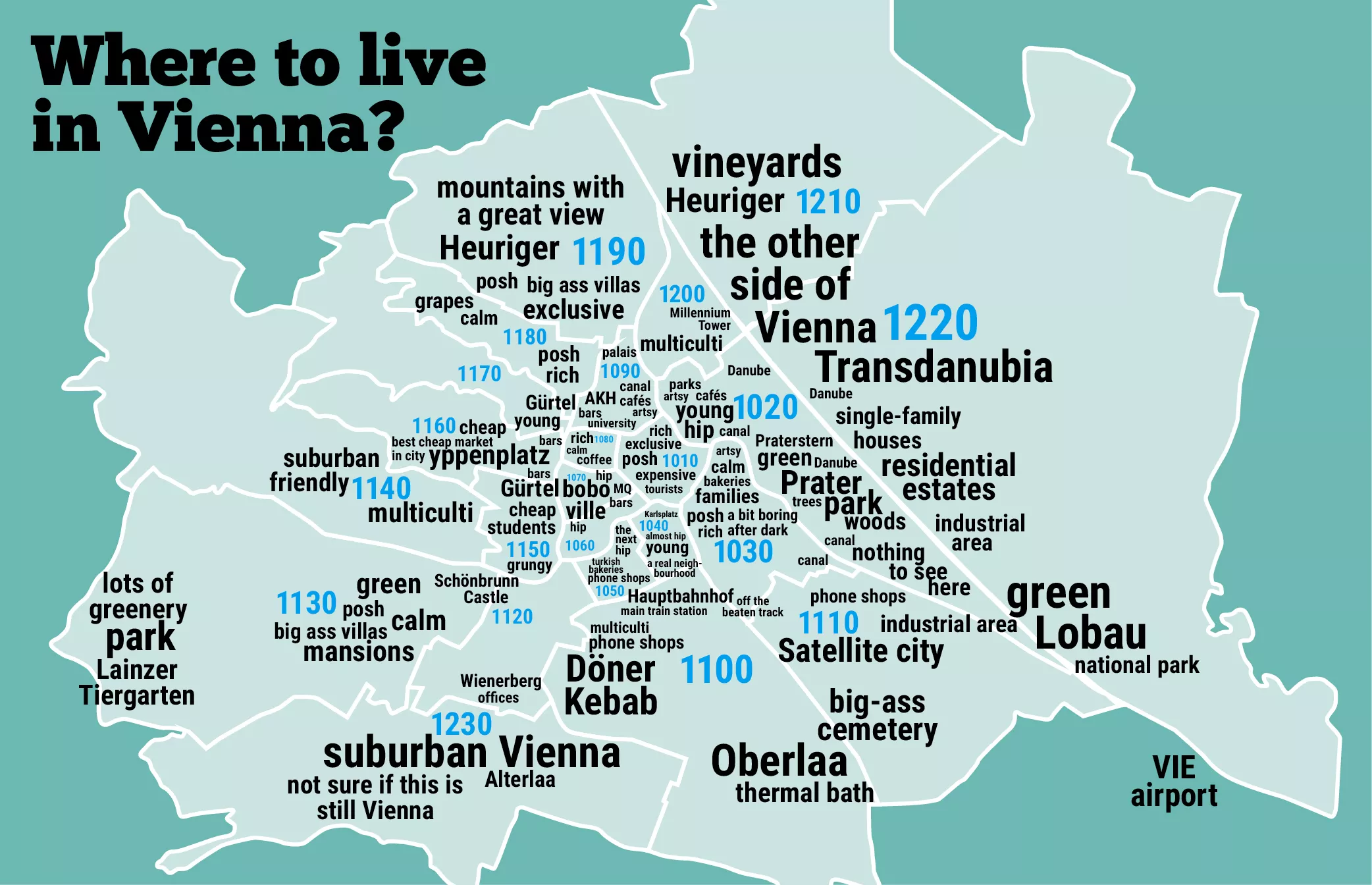
Choosing a residential location in Vienna and its surrounding areas requires navigating a balance between urban accessibility, regional infrastructure, and individual lifestyle priorities. For those considering a move, the capital city offers 23 distinct municipal districts, each with unique characteristics, while the surrounding Lower Austrian region provides additional options connected by the city’s extensive public transportation network.
Understanding Vienna’s District Structure
Vienna is organized into 23 districts, known locally as Bezirke. The 1st district, Innere Stadt, serves as the historic and geographic center of the city. According to the City of Vienna’s official statistical department, population density and infrastructure vary significantly as one moves from the inner districts toward the periphery. The inner districts are characterized by high-density historical architecture and proximity to major cultural institutions, while outer districts often feature more residential space and access to green belts.
Prospective residents frequently evaluate districts based on their proximity to the public transit network operated by Wiener Linien. The U-Bahn (subway) system serves as the primary backbone for commuting, with suburban rail lines (S-Bahn) providing essential links to surrounding municipalities in the federal state of Lower Austria.
Evaluating the Surrounding Region
Beyond the city limits, areas such as Mödling and parts of the St. Pölten-Land district are often considered by those seeking a different pace of life while maintaining access to Vienna. The Government of Lower Austria manages regional planning and infrastructure, which includes the integration of commuter rail services that connect these areas to the capital’s central hubs. When assessing these locations, residents often prioritize travel time to key employment centers in Vienna and the availability of local amenities.

The decision-making process typically involves analyzing the Verkehrsverbund Ost-Region (VOR) transport map, which covers the interconnected transit options for Vienna, Lower Austria, and Burgenland. This network ensures that even municipalities located outside the city borders remain integrated into the broader regional labor market.
Key Considerations for Residential Selection
When selecting a neighborhood or suburban municipality, experts and urban planners generally suggest focusing on three primary factors:

- Commuter Connectivity: Verify the frequency and reliability of public transport connections to your primary place of work or study.
- Infrastructure Access: Consider the proximity to essential services, including healthcare facilities, educational institutions, and local grocery options.
- Regional Regulations: Familiarize yourself with local zoning and housing regulations, which can differ between the City of Vienna and Lower Austrian municipalities.
For those looking for official guidance on municipal services, the Austrian government’s digital portal provides comprehensive information on residency registration (Meldezettel), which is a mandatory legal requirement for all individuals moving to a new address in Austria.
Next Steps for Prospective Residents
If you are currently in the process of evaluating locations, the next confirmed checkpoint for regional development updates is the publication of the annual municipal infrastructure reports by the Statistics Austria agency. These reports provide verified data on population shifts and housing trends that can inform long-term relocation decisions.
We encourage readers to share their experiences with regional transit or their process for selecting a district in the comments section below. Engaging with the community can provide valuable, practical context for those currently navigating the housing market in the Vienna region.
Related reading