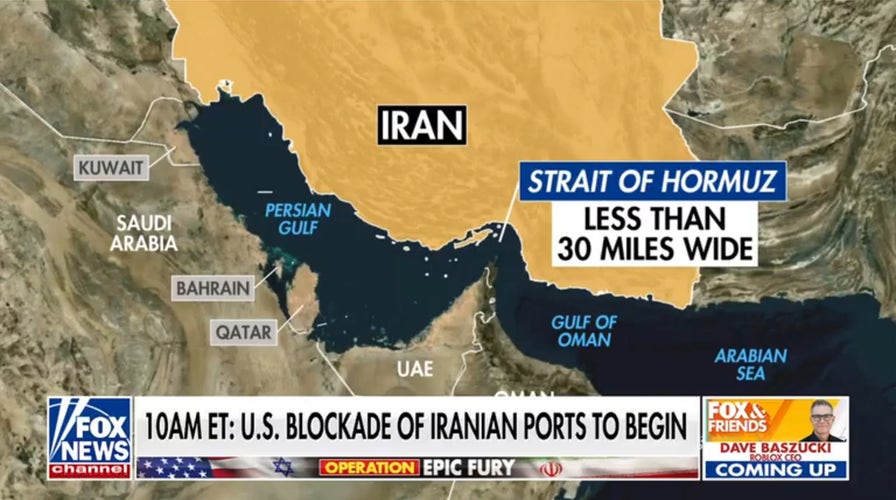
United States military forces have re-established a blockade of Iranian ports following the reported collapse of a recent cease-fire agreement. The strategic maneuver, initiated under orders from President Donald Trump, involves the deployment of naval warships and aircraft to monitor and intercept vessels transiting to and from Iranian territorial waters. The operation marks a significant escalation in maritime tensions within the Persian Gulf and the Strait of Hormuz, a critical artery for global energy supplies.
The enforcement of a naval blockade requires a substantial commitment of military assets, including carrier strike groups, surveillance aircraft, and logistical support vessels, according to defense analysts tracking regional deployments. While the White House has framed the action as a necessary measure to ensure regional security and curb the movement of illicit cargo, the move has prompted immediate concerns regarding the potential for accidental military engagement and the resulting impact on international shipping routes.
Military Strategy and Enforcement Mechanisms
The current blockade strategy relies on a multi-layered approach to maritime domain awareness. According to the U.S. Naval Institute, maintaining a persistent presence in the region requires constant coordination between the Fifth Fleet, headquartered in Bahrain, and regional allies. The primary objective, as described by administration officials, is to conduct “visit, board, search, and seizure” (VBSS) operations on vessels suspected of violating international sanctions or transporting prohibited materials. These operations are inherently resource-intensive, demanding high-tempo surveillance from both manned and unmanned aerial systems, as well as the physical presence of surface combatants to challenge non-compliant vessels.


The logistical burden of such an operation is immense. For every ship intercepted, multiple vessels must be diverted from routine patrols to provide cover and support. Defense experts note that the U.S. military must balance these blockade duties with its broader mission to maintain freedom of navigation in international waters. Any disruption to the flow of oil and commercial goods through the Strait of Hormuz—which sees the passage of roughly 20% of the world’s total petroleum consumption—carries the risk of triggering volatility in global energy markets, as documented by the U.S. Energy Information Administration in its latest regional assessments.
Geopolitical Context and the Collapse of Diplomacy
The return to active maritime interdiction follows the breakdown of negotiations intended to stabilize the region. Diplomatic efforts, which had previously sought to establish a durable cease-fire, stalled amid mutual accusations of non-compliance. Iranian officials have characterized the U.S. blockade as an act of “maritime aggression” and a violation of sovereignty, arguing that the presence of foreign warships increases the risk of miscalculation. Conversely, the U.S. State Department maintains that the blockade is a legal response to what it describes as Iran’s destabilizing activities in the Middle East.
This development occurs against a backdrop of long-standing friction between Washington and Tehran. Since the formal withdrawal from the Joint Comprehensive Plan of Action (JCPOA), U.S. policy has shifted toward a strategy of “maximum pressure,” which utilizes targeted economic sanctions and a bolstered military posture to limit Iran’s regional influence. The current naval deployment serves as the kinetic component of this policy, aiming to squeeze the Iranian economy by restricting its primary maritime trade channels.
Impact on Global Shipping and Market Stability
The maritime industry is bracing for the potential consequences of a prolonged blockade. Major shipping firms have begun reviewing their security protocols for vessels traversing the Persian Gulf. Insurance premiums for tankers operating in the region have historically spiked during periods of heightened military activity, as underwriters factor in the increased risk of seizure or collateral damage. According to data from the International Maritime Organization, ships are increasingly utilizing alternative routes or delaying transit times to avoid areas subject to active military patrols.

For global markets, the primary concern remains the potential for a sudden, sharp increase in oil prices. While current supply chains have shown resilience to previous regional flare-ups, a total blockade of Iranian ports would remove significant volumes of crude oil from the global market. Analysts at the International Energy Agency continue to monitor the situation, noting that the combination of geopolitical uncertainty and physical restrictions on tanker traffic creates a complex environment for energy traders and logistics providers alike.
Next Steps and Official Monitoring
There is no immediate indication of a return to the negotiating table. The U.S. Department of Defense is expected to provide further operational updates through its Central Command (CENTCOM) briefings as the deployment progresses. Observers are also looking toward the United Nations Security Council for potential resolutions or statements, though any formal action remains subject to the veto power of permanent members. Interested parties and stakeholders should monitor the official notices issued by the U.S. Maritime Administration (MARAD) for the latest security advisories and guidance for commercial vessels operating in the region.
This remains a developing situation. Readers are encouraged to share this report and follow our ongoing coverage as new data from the region becomes available.
Worth a look
- Fire Bans Implemented in Glarus, Uri, St. Gallen, and Zurich
- Save Dr. Hussam Abu Safiya: Gaza Hospital Director Facing Torture in Israeli Detention
- India deepens military relations with an African military sanctioned by the US’ Treasury (archyworldys.com)
- Trump Escalates Military Strikes on Iran to Force Negotiations (world-today-news.com)