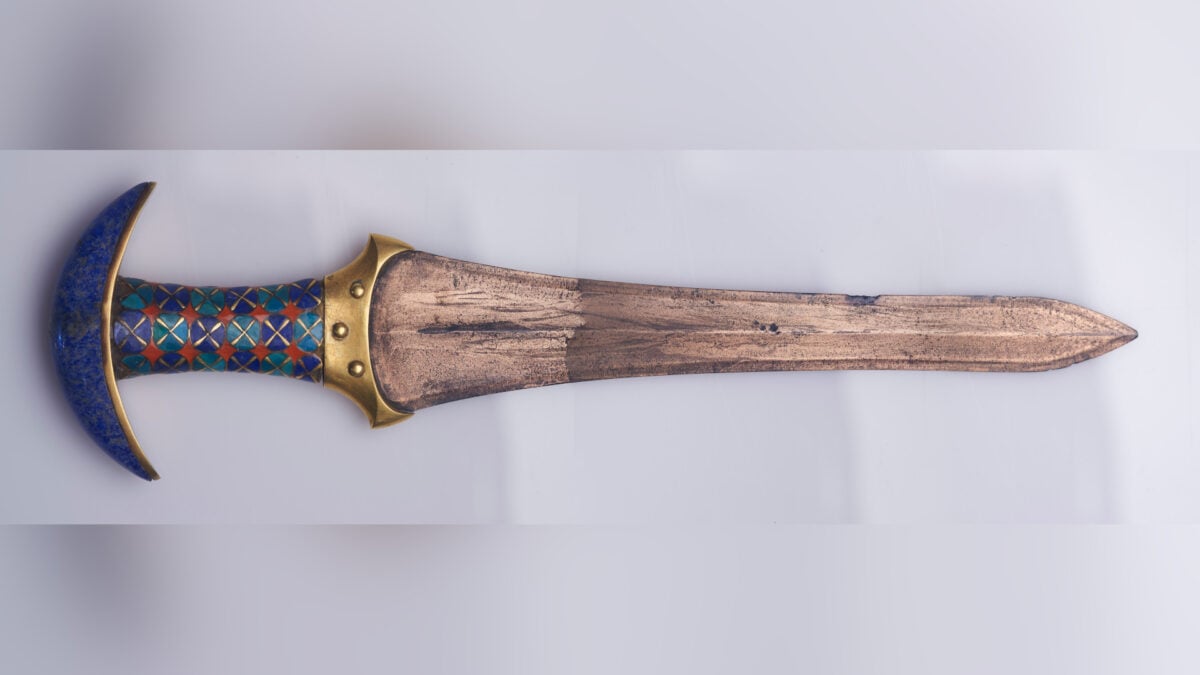
New archaeological analysis of burial goods indicates that princesses and high-ranking women in Ancient Egypt were trained archers, suggesting their roles extended beyond ceremonial royalty into active military or hunting capabilities. The presence of functional bows and arrows in female royal tombs, according to researchers and museum curators, points to a gender-inclusive approach to weaponry training among the elite of the New Kingdom.
For decades, historians often viewed weapons found in the graves of royal women as symbolic “grave goods” intended to represent status or provide protection in the afterlife. However, current evaluations of these artifacts—specifically their wear patterns and construction—suggest they were tools of practical use. This shift in understanding challenges the traditional narrative that combat and archery were exclusively male domains in the Nile Valley.
The evidence centers on the New Kingdom period (approximately 1550–1070 BCE), an era of significant imperial expansion for Egypt. During this time, the bow became the primary weapon of the Egyptian army. The discovery of high-quality archery equipment in the tombs of royal women suggests that the daughters and wives of pharaohs shared the same tactical training as the male heirs to the throne.
The Evidence of Functional Weaponry in Royal Tombs
Archaeologists have identified a pattern of weaponry buried with royal women that contradicts the “symbolic” theory. According to records from the British Museum and other institutions housing Egyptian antiquities, the bows found in these contexts are not merely decorative. They are constructed from composite materials—layers of wood, horn, and sinew—designed for high tension and long-range accuracy.
Analysis of the arrowheads associated with these bows reveals they were designed for penetration, not just for display. In several instances, the placement of the weapons within the tomb suggests they were personal belongings of the deceased, rather than generic offerings provided by priests during the burial process. This indicates a personal proficiency with the weapon during the woman’s lifetime.
Furthermore, the training required to master a composite bow is extensive. It requires significant upper-body strength and years of practice to achieve the precision necessary for hunting or warfare. The presence of these tools in the tombs of princesses suggests a structured education in archery that mirrored the training of princes, who were traditionally taught to hunt and lead troops as part of their preparation for leadership.
Comparing Royal Gender Roles in the New Kingdom
The role of women in the New Kingdom was notably more fluid than in later periods or in neighboring civilizations. While the pharaoh was the ultimate authority, royal women—particularly the “Great Royal Wives” and princesses—held significant political and religious power. The addition of military training to this repertoire suggests a strategy of versatility within the royal house.
In contrast to the Old Kingdom, where female roles were more strictly confined to the domestic and religious spheres, New Kingdom royal women are frequently depicted in more active roles. While few records explicitly describe a princess leading an army, the physical evidence of their training suggests they were prepared for the contingencies of a volatile imperial state.
This training likely served two purposes: prestige and protection. Archery was a mark of the elite. By mastering the bow, royal women signaled their belonging to the warrior class of the Egyptian nobility. Additionally, in an era of frequent palace coups and external threats, the ability to defend oneself was a practical necessity for anyone residing in the royal court.
The Cultural Impact of the “Warrior Princess” Narrative
The realization that royal women were trained archers alters the modern perception of Ancient Egyptian social hierarchies. It suggests that the “warrior” identity was not strictly tied to biological sex but was instead tied to social class and royal blood. If a person was born into the royal line, they were granted access to the skills required to maintain that power, regardless of gender.
This finding aligns with the known history of women like Hatshepsut, who took the full titles of a pharaoh and presided over an era of great prosperity and military stability. While Hatshepsut’s reign is well-documented, the training of the princesses who preceded and followed her provides a broader context for how women were integrated into the power structures of the state.
Experts in Egyptology note that the “hidden” history of these women is often a result of how history was recorded. Scribes primarily documented the deeds of kings. However, the physical record—the archaeology of the tomb—provides a more honest account of the skills these women possessed. The bow, as a tool of precision and power, serves as a tangible link to a side of royal life that the written texts often ignored.
Practical Implications for Modern Archaeology
The shift toward analyzing the “functionality” of grave goods is prompting a re-examination of other female burials across Egypt. Researchers are now looking for similar patterns of wear and tear on other tools and weapons found in non-royal but high-status female graves. This could reveal whether archery training was a perk exclusive to the immediate royal family or if it extended to the broader aristocracy.
Current efforts involve using X-ray fluorescence and 3D scanning to analyze the stress points of ancient bows. By determining if a bow was ever actually strung and fired, scientists can distinguish between a “ceremonial” object and a “working” weapon. This data-driven approach is replacing the intuitive guesses of early 20th-century archaeology.
As more tombs are excavated and analyzed with modern technology, the image of the Ancient Egyptian princess is evolving from a passive figure of luxury to a disciplined practitioner of one of the most difficult skills of the ancient world.
Archaeological teams continue to survey sites in the Valley of the Queens and other royal necropolises to find more evidence of military training among women. Future updates on these findings will likely emerge as new scanning technologies are applied to unopened sarcophagi.
Do you think the “warrior” aspect of royal women was more about status or actual survival? Share your thoughts in the comments below.
Worth a look
- Apple Boosts Vapor Chamber Orders for iPhone Ultra and 20th Anniversary Model
- EA Sports FC 27 Release Date: When Will the New Football Game Arrive?
- Dining at Izumi: Royal Caribbean’s Signature Japanese Restaurant (world-today-news.com)
- Google Renames AI Research Tool to Gemini Notebook Amid Ecosystem Upgrades (time.news)